From healing others to fighting for her own life: A nurse’s battle with kidney and heart failure

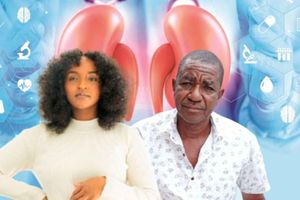
Mary Wanjiku, a nurse who is battling kidney and heart failure.

What you need to know:
- The signs had been there for years. In high school, she suffered recurring anaemia, fatigue, vomiting, and bloating, symptoms she and her mother dismissed as normal.
- In 2022, noticing the same symptoms her father had before his death, she got tested. The diagnosis: Stage 1 chronic kidney disease.
Mary Wanjiku always wanted to save lives. Growing up without her father, who died when she was six, she pushed through poverty to become a nurse. It was a dream she held onto even as her mother struggled to keep the family afloat. But just two months into her nursing career, the young woman who had dedicated herself to caring for others found herself on the other side of the hospital bed, fighting for her own life.
The signs had been there for years. In high school, she suffered recurring anaemia, fatigue, vomiting, and bloating, symptoms she and her mother dismissed as normal. In 2022, noticing the same symptoms her father had before his death, she got tested. The diagnosis: Stage 1 chronic kidney disease. She was 24. Instead of treatment, she went into denial and started planning to work abroad, hoping to earn enough money to fund her future care.
Also read: From skin rash to liver transplant: How Anne Loko’s routine check-up turned life-threatening
By November 2024, her condition had sharply deteriorated. She arrived at Kijabe Hospital barely able to breathe, with critically low haemoglobin, and was told she had end-stage kidney failure. Doctors recommended dialysis, but another physician convinced Mary and her family that hormonal therapy could rejuvenate her kidneys. They left the hospital against medical advice and spent two months and Sh500,000 on the alternative treatment. It failed, and damaged her heart.
In January 2025, she returned to hospital at Kikuyu Hospital in critical state: haemoglobin dangerously low, potassium at 7.9, a level that can trigger fatal cardiac arrest. She was placed on oxygen and survived, then finally began dialysis.
Now 27, Mary undergoes dialysis twice a week and sees a cardiologist monthly. Her medication alone costs Sh20,000 per month beyond her reliable means. She cannot return to nursing. Private hospitals won’t hire someone needing two days off weekly for dialysis, who tires easily, or whose condition flares without warning. A public hospital job, she says, is nearly impossible to get without connections.
The only path forward, her doctors say, is a kidney transplant. Due to her cardiac complications, no hospital in Kenya can perform the procedure. She must travel to India, where the surgery costs an estimated Sh5 million, an impossible sum for a young woman who cannot work and whose family has exhausted their resources.
Dr Joyce Bwombengi, a consultant nephrologist at Aga Khan University Hospital, says Mary’s story is all too familiar. Kidney disease is deceptive because it does not announce itself loudly. "It can progress from stage one to stage five without obvious symptoms. Symptoms like swelling, nausea, and vomiting are nonspecific and come late," she explains.
This silence, she says, is the reason patients delay seeking help. When a lab test shows a problem but the patient feels fine, urgency doesn’t register. Add the cost of long-term treatment, and walking away becomes understandable. "If you're told your kidneys are failing, it's stressful and expensive. And because they don't feel sick, they don't see the need for medication."
In Mary's case, Dr Bwombengi suspects polycystic kidney disease, an inherited condition that would explain her father’s death. Early screening and treatment could have significantly slowed progression. "If you know early, you can slow it down: control blood pressure, blood sugar, urine protein, change diet. But without timely action, damage progresses to stage five, where it's irreversible."
The escalation to heart failure is a direct consequence of failing kidneys. When kidneys cannot regulate fluid and blood pressure, the heart bears the burden. "Fluid builds up, blood pressure becomes hard to control, and potassium can spike, causing irregular heartbeat or heart attack risk. It's a chicken-and-egg situation; if you can't fix one, you may lose the other," she says, adding that kidney and heart specialists must always work together.
On patients traveling to India for transplants, Dr Bwombengi argues that Kenya has the necessary expertise. "We have some of the best cardiac doctors in the world, and many people come from across Africa for treatment here. I don't see why anyone should go to India for heart evaluation or kidney transplantation. If you optimise dialysis, the heart improves, allowing safe transplant locally."
She acknowledges that each case is individual, and if a local assessment deems surgery too risky, that context matters. Still, she maintains that such outcomes are rare given Kenya's specialist quality.
Her parting message for those with a family history of kidney disease: get screened annually and never stop medication without consulting your doctor. "Get screened annually and check all lab work; you can identify problems early. When your doctor prescribes medication, be consistent. Don't change or drop drugs on your own; always use medication in concert with your doctor."
According to the Ministry of Health, roughly 3.1 million Kenyans live with chronic kidney disease, a growing concern driven by rising non-communicable diseases like hypertension and diabetes.
To strengthen governance and ethical oversight in organ donation and transplantation, the ministry has established an independent review committee following concerns raised last year and is developing a National Transplant Registry to improve transparency and accountability.
Specialised training and infrastructure are also receiving investment through initiatives such as the East Africa Centre of Excellence in Urology and Nephrology, with additional renal units rolling out across counties. The upcoming Kenya National Guidelines for Kidney Diseases 2026 will further standardise care nationwide, backed by integrated health data systems under the government's Digital Superhighway initiative.