Kenya faces Sh4.5bn TB funding gap as donors scale back, threatening thousands of lives
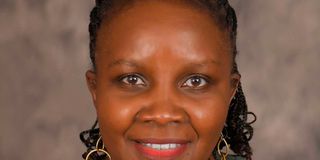
Evaline Kibuchi, the Chief National Coordinator of Stop TB Partnership-Kenya. She says the funding deficit is a major concern as Kenya is among the 30 countries with the highest TB burden globally.

What you need to know:
- The top 10 high-burden counties for tuberculosis are Nairobi, Mombasa, Nakuru, Kitui, Machakos, Makueni, Siaya, Kericho, Embu, Migori and West Pokot.
Kenya has a Sh4.5 billion funding deficit for its tuberculosis (TB) response. Donors cover the majority of the costs, with the government providing only 10 per cent of the required funding.
At a meeting held on Monday by the National TB Programme, in collaboration with the Parliamentary Health Committee, the TB Caucus and Stop TB Partnership-Kenya, stakeholders reiterated the need to plan for domestic funding, especially with the gradual exit of the main funders: the Global Fund and the US government.
This is particularly important because Kenya loses about 44 people to the disease every day, amounting to approximately 16,000 deaths annually.
There was a decline in the number of cases last year, with about 90,933 cases recorded among adults and a further 10,965 among children.
However, experts say that 22 per cent of TB cases in the country remain undetected.
The top 10 high-burden counties for tuberculosis are Nairobi, Mombasa, Nakuru, Kitui, Machakos, Makueni, Siaya, Kericho, Embu, Migori and West Pokot.
Evaline Kibuchi, the Chief National Coordinator of Stop TB Partnership-Kenya, told the Nation that the funding deficit is a major concern, as Kenya is among the 30 countries with the highest TB burden globally.
"One life lost is too many; one of the biggest gaps we have is the funding gap," said Evaline.
"If the government does not take up the roles that were being played by these two funding mechanisms (the Global Fund and the US government), then these deaths are likely to increase," she added.
Evaline said that Kenya previously had a Sh10 million budget for the operations of the National Tuberculosis Programme, but it is no longer available.
"We also have a gap in the licensing of digital X-ray machines, which must be renewed annually. We have about 96 machines nationally, and about Sh8 million is needed to support licence renewals that will facilitate TB screening," she said.
When a patient registered under the Social Health Authority has not paid their annual Social Health Insurance Fund (SHIF) contribution and seeks services at lower-level health facilities, they may not receive screening unless they pay out of pocket.
TB screening is covered under SHIF from Level 4 facilities upwards.
"We are hoping that basic TB services, including screening, X-rays and diagnostics, can be included in the SHA package to reduce out-of-pocket expenditure. The biggest cost burden comes from diagnostics. At present, patients have to pay if they are not referred to higher-level facilities," said Evaline.
Nelly Mukiri, Head of the National TB Reference Laboratory, said during the meeting that there is a funding gap of about Sh863 million for the construction of a Biosafety Level 3 (BSL-3) laboratory, whose renovation had begun but later stalled.
"To conduct TB surveillance, we need a specialised BSL-3 laboratory," she said.
In 2014, the Government of Kenya received support from the Centres for Disease Control and Prevention (CDC) to construct one, but it is no longer in a suitable condition for disease surveillance. Mukiri said the laboratory was closed in 2021 following a World Health Organization assessment. It is currently non-functional and can only resume operations once the required equipment is upgraded.
Dr Robert Pukose, a member of the Parliamentary Health Committee, urged the National TB Programme to consider accessing some services through the National Equipment Service Programme (NESP), a government initiative that supplies public hospitals with modern medical equipment under a fee-for-service model.
"It is also important that people register with SHA and pay their SHIF contributions to reduce any complications that may arise when they need such services," he said.
Slow progress
Samburu Woman Representative Pauline Lenguris said the National TB Programme should also focus on TB prevention so that the country can reduce cases and achieve its targets of a 90 per cent reduction by 2030 and a 95 per cent reduction by 2035.
Seme MP Dr James Nyikal, who is also the chairperson of the Health Committee, said that while Kenya is improving its TB response, progress remains slow.
"As we manage TB today, most programmes are still run within the ministry and operate in silos, despite the devolved system of government. Some components are implemented only at the county level. We should integrate new ideas at both the policy and service delivery levels, particularly within counties," he said.