Nairobi Hospital fully operational after Ebola patient death, management confirms

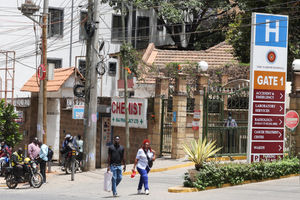
The Nairobi Hospital.

What you need to know:
- The patient died on the evening of October 5 after being admitted to the isolation facility on October 3.
The Nairobi Hospital is operational, its top management has confirmed, allaying fears of a shutdown.
The hospital said its main facility remains fully operational after a patient with Ebola virus disease died on Monday evening, two days after being admitted to the isolation unit.
The isolation unit is physically separate from the main hospital, with its own entrance, access route and dedicated staff.
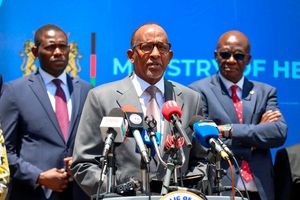
“We want to reassure our patients, their families, our staff and the wider public that the hospital is open, safe and fully operational, and that appropriate measures are in place to protect everyone who comes through our doors,” said Dr Felix Osano, the hospital’s chief executive officer.
“There is no shared clinical space with the hospital, which has remained fully operational throughout,” he added.
The hospital confirmed that emergency care, maternity services, operating theatres, wards and outpatient services have continued as normal.
The patient died on the evening of October 5 after being admitted to the isolation facility on October 3. The hospital did not disclose the patient’s identity or other identifying details, saying it would continue to respect his privacy.
“We are deeply saddened by the death of the patient, who passed away at The Nairobi Hospital on the evening of October 5, 2026, two days after being admitted to our isolation facility. Our thoughts are with the family,” Dr Osano said.
According to Nairobi County, the patient was a 39-year-old Kenyan man who had lived in the Democratic Republic of Congo for seven years. He travelled from the DRC to Uganda before arriving in Kenya on October 3.
The county said he was admitted with fever, muscle aches, intense fatigue, bleeding under the skin at injection sites and a sore throat. Samples collected from the patient were tested at the National Public Health Laboratory and returned positive for Ebola.
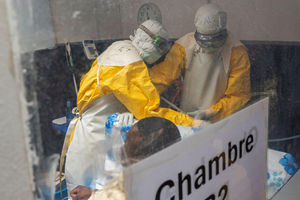
The facility said it had the necessary personal protective equipment and infection prevention and control measures in place when the patient was admitted and throughout his care.
“These measures remained in place throughout the patient’s care,” Dr Osano said. “Patients presenting with an infectious disease risk are identified through screening and managed through controlled isolation protocols.”
The hospital confirmed that all staff involved in the patient’s care wore the required protective equipment and worked under supervision. Healthcare workers who had contact with the patient have also been placed under appropriate monitoring and quarantine measures, in line with established public health protocols.
The hospital’s confirmation came as health authorities were tracing individuals who may have been exposed to the patient before his death.
Nairobi County said 28 contacts of the deceased are being monitored jointly with the Ministry of Health. Authorities are also tracing 27 people who travelled on the same flight as the patient from Uganda to Nairobi. They are being monitored for 21 days, the required follow-up period.
The hospital said there was no cause for panic and that it would continue to work closely with the Ministry of Health and other relevant public health authorities, implementing any additional measures advised.
Nairobi County has recorded 22 suspected Ebola cases in 11 of its 17 sub-counties since the county response began on May 16. Three deaths have been recorded among the suspected cases, including that of the confirmed Ebola patient. The other two people who died later tested negative for Ebola.
The county has intensified surveillance across all 17 sub-counties and activated rapid response teams at sub-county level. Mama Margaret Uhuru Kenyatta Hospital has been identified as the isolation unit for Nairobi. More than 923 healthcare workers and 1,598 community health promoters have been trained to support the identification and reporting of suspected cases.
At The Nairobi Hospital, infection prevention and control measures remain in place while the facility continues to operate as normal.
The county has urged Nairobi residents to remain calm but vigilant and to seek medical attention promptly if they experience symptoms such as fever, severe headache, muscle pain, vomiting, diarrhoea or unexplained bleeding. This is particularly important if they have been in contact with an ill person or have travelled to an area affected by Ebola.
Residents have also been advised to avoid contact with the body fluids of anyone suspected of having Ebola and not to handle the body of anyone suspected of having the disease who dies.
The county has urged residents to cooperate with contact tracing teams and to rely on official health information as surveillance and monitoring continue.
Suspected cases or concerns related to Ebola can be reported via the Nairobi City County Government’s emergency health hotline on 1508.