New cancer centre to ease burden for Lamu's isolated patients
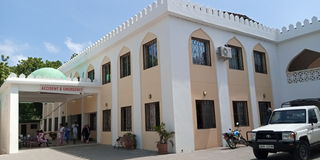
The Emergency and Accident Unit block which also houses the renal unit at King Fahad hospital. The block was constructed with part of the Sh100 million released by the national government in 2017.

What you need to know:
- For years, Lamu's cancer patients have faced immense barriers. Many must undertake a long boat journey across the Indian Ocean, followed by hours on the road, to reach the nearest treatment centres in Mombasa.
The National Cancer Institute of Kenya (NCI-K) has announced plans to establish a new cancer centre in Lamu County, marking a significant step in improving access to care for one of the country’s most geographically marginalised regions.
The announcement was made during a meeting at King Fahad Hospital between NCI-K officials and Lamu County's Deputy Governor, Dr Mbarak Bahjaj.
Also read: How Homa Bay's lack of a cancer centre costs time, money and lives—and the plan to fix it
The discussions focused on a long-term partnership to strengthen cancer prevention, screening, and treatment systems within the island county.
“This initiative will provide vital cancer services to Lamu residents on their doorstep,” said Dr Nashat Noor, head of the Cancer Prevention and Control Directorate at NCI-K. “It aligns with our mission to ensure equitable access and that no one is left behind in the fight against cancer.”
For years, Lamu's cancer patients have faced immense barriers. Many must undertake a long boat journey across the Indian Ocean, followed by hours on the road, to reach the nearest treatment centres in Mombasa. These logistical challenges, combined with high travel costs and limited awareness, often lead to late diagnoses and poor outcomes.
The proposed cancer centre aims to change this by bringing essential diagnostic and treatment services directly to the local community.
According to the Kenya National Cancer Registry, cancer remains one of Kenya’s leading causes of death, with an estimated 42,000 new cases and nearly 28,000 deaths reported each year. The most prevalent cancers are breast, cervical, prostate and oesophageal, yet about 70 per cent of cases are diagnosed at late stages, when treatment becomes more difficult and costly.
The World Health Organization ranks Kenya among the African countries experiencing a rise in cancer incidence, driven by lifestyle changes, limited screening coverage, and inadequate access to specialised treatment in rural and coastal regions.
Regional hub
Lamu County is one of the areas worst affected by limited access to healthcare. The planned cancer centre is expected to serve as a regional hub for early screening, patient referrals and raising awareness, which will significantly reduce diagnostic delays.
Alongside building infrastructure, NCI-K is leveraging the ongoing Mawlid celebrations—a festival commemorating the birth of the Prophet Muhammad—to offer free cancer screenings and education to thousands of residents. The campaign targets cervical, breast, and prostate cancers, which can be detected early through simple screening.
By integrating health awareness into cultural and religious gatherings, NCI-K aims to normalise conversations about cancer and encourage people to get checked regularly. “We’re leveraging community events to break the stigma, raise awareness, and empower people with knowledge,” said Dr Noor.
Dr Bahjaj praised the collaboration as a major stride toward equitable healthcare
“Our people deserve quality healthcare without having to travel hundreds of kilometres. The establishment of a cancer centre here will be transformative,” he said. He added that the county government will provide the necessary land and local support to expedite the project's implementation.
This partnership is part of NCI-K’s national strategy to decentralise cancer services and strengthen prevention and control programmes in all 47 counties. The institute has already supported the development of cancer treatment centres in Kisumu, Nakuru, Garissa and Meru, and is now extending its reach to the coastal regions and the Northern Frontier District.