New malaria drug to be unveiled to stay ahead of resistance
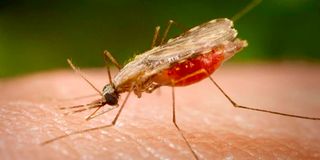
Anopheles mosquito, the main vector for malaria.

Kenya will receive the first batch of a new malaria drug in November and four counties will begin using it in January.
The drug, artesunate-pyronaridine (ASPY), will be used alongside artemether-lumefantrine (AL), the treatment Kenya has relied on for the last 20 years.
“The Ministry of Health is introducing a new molecule ASPY that will be used across the country,” said Dr Regina Kandie, Head of Diagnostics and Case Management at the National Malaria Control Programme.
The first batch will arrive under the Kenya-United States government partnership on health, which is meant to make the drugs affordable at public hospitals.
The decision follows a six-year study by the Kenya Medical Research Institute, published in the Malaria Journal this week. It found signs of resistance to artemisinin, the core ingredient of AL, in seven counties.
Researchers analysed 679 parasite samples from symptomatic patients between 2018 and 2024. The samples came from public and private hospitals in Busia, Kericho, Kisumu, Kisii, Nakuru, Baringo and Laikipia. The counties cover four of Kenya’s five malaria transmission zones.
The study found 24 mutations, four of which are on the World Health Organization’s list of validated markers of partial artemisinin resistance. They are A675V, found in 20 samples, C469Y in three, and R561H and P553L in one each. The authors say the pattern points to mutations developing locally, rather than spreading from Asia.
More than half of the samples with the A675V mutation came from Baringo County. The authors called this new. The county is in the semi-arid zone with seasonal transmission. People there are less likely to be infected each year, and so may have less immunity than people in very high-burden counties such as Kisumu and Busia.
Dr Patrick Boruett, Director of Preventive Health in Baringo, said the county is among those rolling out the new approach.
“Baringo is one of the counties rolling out the multiple first-line therapies and this will help in ensuring we preserve the anti-malaria drugs that we have,” he said.
Fred Imeda, a clinical malaria mentor in Busia County, where resistance cases have also been recorded, said: “Drug resistance usually gives us a challenge with the patients during treatment. You get a patient, you initiate treatment but you find the patient is not improving within the prescribed timelines.”
Dr Kandie described the switch as a way to keep the parasite from adapting.
“The introduction of the new molecule is to confuse the parasite so that the patient can respond to treatment once they have been tested and it has been confirmed that they have malaria,” she said.
She explained that AL is not being phased out and will be maintained “for pregnant women and children under 5 kilogrammes”.
“We are still not certain about the side effects of ASPY on pregnant mothers and children and there are patients who have hypersensitivity reactions to ASPY so these cases will maintain treatment using AL,” she said.
Kenya’s Multiple First-Line Therapies Implementation Plan for 2026 to 2030 will guide the rollout. Under the plan, the drugs will be rotated every two years.
The first phase will cover Baringo, Kakamega, Siaya and Busia from January. The treatment will then be rolled out across the rest of the country.
Baringo’s health officers have been trained as trainers, who will pass the skills to health workers across the county’s facilities. The programme will also work with community health promoters in malaria-endemic counties.
Dr Ndinda Kusu, project lead and senior malaria advisor at Jhpiego, said this is meant to build awareness so the public uses the drugs wisely.
Dr Kandie said moving away from AL after 20 years needs all stakeholders to work together for a smooth switch.
WHO says partial artemisinin resistance has been confirmed in Eritrea, Rwanda, Uganda and Tanzania. It suspects there is resistance in Ethiopia, Namibia, Sudan and Zambia . The UN agency says the parasites emerged independently and did not spread from South-East Asia. The WHO.
According to the World Malaria Report 2025, partial resistance is now confirmed or suspected in several African countries. It also says changes in parasite genes are making rapid diagnostic tests less reliable in some places, and insecticide resistance is weakening vector control.
Dr Kusu said it is better to prevent resistance than to wait for it to spread.
“When you look at resistance whether it is anti-malarial, anti-fungal or antibiotics, it is better to prevent than to think of getting the resistance circulating. We do not have many options in terms of treatment, and when the options are there, they are very costly. We have to prevent anti-malarial drug resistance,” she said.
Follow ourWhatsApp channel for breaking news updates and more stories like this.