New rules close loophole on agricultural emissions
Agriculture accounts for 22 per cent of global greenhouse gases, yet reporting has remained inconsistent. The new LSR Standard introduces strict metrics for everything from livestock digestion to forest conversion.

What you need to know:
- For accuracy, the LSR uses a set of metrics. These include land use change emissions from deforestation and conversion, biogenic emissions from using agricultural products, and life cycle emissions for food and bioenergy products.
- It also tracks carbon capture in geologic reservoirs and carbon storage in long-lived products.
For the first time, there is now a global rulebook for how companies should measure and report the carbon footprint of their farming activities. This is after the Greenhouse Gas (GHG) Protocol officially launched its Land Sector and Removals (LSR) Standard.
For years, the impact of land use remained a major gap in climate reports. This new framework will ensure that agricultural emissions are tracked just as strictly as the electricity or fuel a factory uses. Developed over five years by top global experts, these rules will officially take effect on January 1, 2027.
The GHG Protocol, the world's most widely used greenhouse gas accounting service, provides standardised frameworks that help businesses and governments track their climate-warming emissions. It was established in 1997 by the World Resources Institute (WRI) and the World Business Council for Sustainable Development (WBCSD) to develop comprehensive global standards for measuring and managing GHG emissions from public and private sector operations, value chains and mitigation actions.
The LSR Standard joins existing GHG Protocol standards. These are the Corporate Standard, the foundation for measuring an organisation's overall footprint, and the Scope 3 (Corporate Value Chain) Standard, which addresses indirect emissions from suppliers and customers.
For a long time, the farming and land sector was a missing link in climate action. Science shows that agriculture and land use cause about 22 per cent of the world's greenhouse gas emissions. However, without clear rules, many companies simply did not report pollution from clearing forests or using heavy fertilisers. The LSR Standard fills this gap by giving companies a scientific map to follow, requiring those with large-scale farming in their supply chains to be transparent about their environmental impact.
Flexibility in the standard allows companies to report their emissions at three levels: national, sub-national, or right down to the specific farm. This means that if a company lacks detailed data, they can use national averages to begin with. As they improve their supply chain tracking, they can move to more detailed farm-level data. This stepping-stone approach is vital for places like Kenya, where millions of smallholders produce coffee or tea, making it easier for them to remain part of global markets as reporting requirements become stricter.
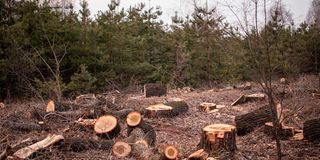
The standard lists specific farming activities that must now be reported. These include land use change, like when a forest is cleared for a new plantation. It also covers enteric fermentation, the gas produced by cows and other livestock during digestion, as well as manure management and rice farming. WBCSD Executive Vice President, Dominic Waughray, said the land sector has been one of the biggest 'blind spots' in carbon accounting.
“This standard removes much of that uncertainty by providing a globally recognised benchmark for measuring agricultural impacts with the same rigor as energy use,” he explains.
For accuracy, the LSR uses a set of metrics. These include land use change emissions from deforestation and conversion, biogenic emissions from using agricultural products, and life cycle emissions for food and bioenergy products. It also tracks carbon capture in geologic reservoirs and carbon storage in long-lived products.
Verification and better government policies
To follow these rules, companies must have their reports checked by independent third parties and then share them with the public. While this means extra work and costs for businesses, it also makes their climate claims much more believable. For African governments, these rules are a helpful guide. As global buyers demand better data, countries can align their own national climate and land policies with these global standards. This helps protect the money the government earns from exporting key crops, ensuring local products remain attractive to eco-conscious international buyers.
The standard also introduces a rule to stop land carbon leakage, forcing companies to keep an eye on hidden risks. It clears the boundary between a company's own climate report and the carbon credits it might sell. While it doesn't run the credit market, the standard ensures that companies don't count the same carbon reduction twice. This could be crucial for Kenya, which already has many active projects where farmers earn money by planting trees or improving soil health.
Beyond just cutting pollution, the standard addresses carbon removals, where farming practices, like planting trees or using better soil management, pull carbon out of the air and store it.
It also covers new technology that sucks carbon from the sky and stores it underground. Managing Director of Programmes at WRI, Craig Hanson, states that the standard will equip businesses, from global food producers and apparel retailers to innovative carbon removal startups. “It provides credible methods that enable companies to track their progress and prove their impact,” he notes.
Currently, the standard excludes general forestry and wild lands. Scientists are still debating the best way to measure carbon in forests, and more testing is needed. A special 'Request for Information' will be sent out later this year to help figure this out. Before release, the framework was assessed by 300 external reviewers, tested by 96 pilot companies, and shaped by 4,000 public comments.