Kenya loses between 20 and 40 per cent of its agricultural produce to post-harvest losses every year, according to the Ministry of Agriculture and data from the United Nations (UN).
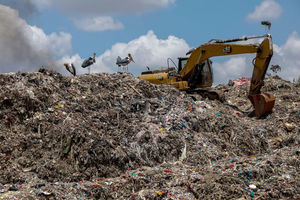
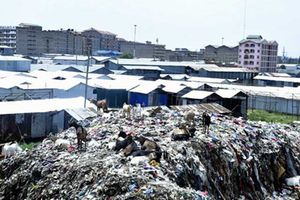
For a country where millions remain food insecure, this contradiction is worrying: farms produce food, markets overflow at peak seasons, while a significant share never reaches the plate. Instead, it rots on farms, is discarded in open-air markets, or ends up in landfills—quietly worsening hunger while fuelling climate change, given that the waste sector is the world’s third-largest source of methane emissions after agriculture and oil and gas, accounting for about 20 per cent of human-caused methane globally.
The losses are often blamed on familiar holdups. Farmers lack adequate storage facilities, cold chains, packaging solutions and reliable roads, especially during heavy rains. Traders in urban markets face the same problem, with heaps of tomatoes, bananas, watermelons, leafy vegetables and potatoes dumped daily because they cannot be sold in time.
Food is lost at almost every stage of the value chain: on the farm, during transportation, in wholesale markets, and finally at the retail and hospitality level. For smallholder farmers who produce the bulk of Kenya’s horticultural crops, the impact is deeply personal. When produce floods the market during peak harvests, prices collapse. Middlemen and brokers exploit them, dictating prices that barely cover production costs.
Ms Seraphin Wanjiku, a plantain banana farmer in Kirinyaga County, knows this reality too well. Three years ago, a surplus in the market nearly broke her commitment to continue farming bananas.
“Every month, I harvested about 300 kilograms. Most of it rotted on the farm or in storage because bananas are highly perishable,” she recalled.
At the height of the challenge, a bunch weighing about 10 kilograms, which previously sold for around Sh100, dropped to as low as Sh30. “Getting Sh300 from a whole bunch is a huge loss to a farmer,” she points out.
On some days, buyers never showed up at all, leaving ripe bananas to rot in the field. Such stories are common across Kenya’s horticultural belts. Bananas, tomatoes, mangoes, potatoes, and leafy vegetables are particularly vulnerable, with losses peaking when supply surpasses demand.
According to processors and traders, farmers can lose more than half their harvest during surplus seasons. At the centre of efforts to address this gap are processing, technology and innovation.
Value addition has long been flaunted as a solution, but it requires capital, skills and market access—resources that many farmers lack.
Ms Triza Mwaniki, co-founder and managing director of Lynt’s Limited, a food manufacturing company based in Kahawa West, Nairobi, has built her business around this idea. The business adds value to plantains by processing them into crisps with a shelf life of up to six months.
“Between January and April, when plantains are in surplus, farmers lose more than 50 per cent of their harvests, value addition is key to improving farmer incomes and reducing waste,” she notes.
However, value-added products also face their own challenges at the retail end. Unsold stock nearing the end of its shelf life can still end up as waste if it does not move fast enough. An official at a major supermarket chain in Nairobi, who requested anonymity, says food waste remains a costly problem.
“Our fresh food section across all our outlets is worth about Sh500 million monthly, however, we lose between 5 and 12 per cent of that every month. That translates to between Sh2.5 million and Sh6 million.”
Over a year, that amounts to roughly Sh72 million for one outlet. This is the gap that Kenyan innovator Kevin Otiende set out to address.
Kevin Otiende is the founder of the Msossi food app, a digital platform that connects hotels, supermarkets and fast-food merchants to consumers at discounted prices.
Photo credit: Sammy Waweru | Nation Media Group
Mr Otiende is the CEO and co-founder of Msossi, a food app designed to reduce food waste by connecting consumers to surplus and “final days” food from retailers at discounted prices.
“We are working with supermarkets and retailers, and in the second phase we are looking at hotels. Our focus is on consumers—people who need food and need it to be affordable. We saw a gap: so much food goes to waste every single day,” Otiende tells Climate Action.
Retailers list surplus food and items nearing expiry on the app, usually from around 6pm. Consumers, he says, can browse available offers in real time, choose between pickup and delivery, and pay via mobile money.
So far, Msossi has on boarded about 50 merchants in Nairobi and more than 1,000 consumers actively ordering food through the platform. By the end of the year, the team hopes to have between 700 and 1,000 stores on board, scaling up gradually to balance supply and demand. Food safety remains a priority. Merchants undergo verification, including licensing and compliance checks, before joining the platform.
Customers can rate food quality, ensuring accountability and traceability through store identification and reference codes.
For Ms Mwaniki of Lynt’s Limited, who is a merchant on the Msossi app, the platform represents a natural extension of her work in reducing food waste through value addition. She describes the concept as revolutionary in a market where few innovations directly target retail-level food waste.
“It involves taking products that are near the end of their shelf life and posting them to the market at discounted rates. This increases visibility and ensures that food does not go to waste,” she says.
Ms Mwaniki believes that if widely adopted, such platforms could reduce food waste by up to 50 per cent. For Mr Otiende, Msossi is about more than technology. It is about changing mindsets.
“Many people do not realise how much food they waste. It’s like leaving the tap running while brushing your teeth,” he says.
As climate shocks intensify and urban populations grow, the pressure on food systems will only increase. Reducing food waste on farms, in markets and on shelves, may prove one of the fastest, cheapest ways to improve food security while cutting emissions.