No mask, no gloves: The toxic trade poisoning Lamu’s boat artisans
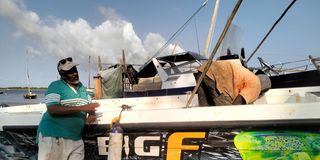
Fibreglass artisan Mohamed Khuzema Salim at a boat manufacturing and repair site near the ocean in Shella, Lamu Island, on August 6, 2026.

What you need to know:
- Experts warn of permanent lung damage and severe dermatitis, while uncontained toxic waste washes directly into vital marine ecosystems
Karisa Katana, a local boat artisan, applies a fresh coat of polyester resin as he bonds glass fibre sheets to a weathered vessel at his Wiyoni workshop, just yards from the ocean shoreline. The 42-year-old has no mask, no gloves, no protective gear of any kind.
The open-air setting feels breezy, but inside Karisa's workspace, the air is thick with an invisible, toxic cocktail. He inhales heavy concentrations of styrene vapour and microscopic fiberglass dust. Without a facemask, he suddenly sneezes and coughs, his body's desperate attempt to expel the sharp, friable particles irritating his nose, throat, and mucous membranes.
Also read: Plastic waste threat in our oceans
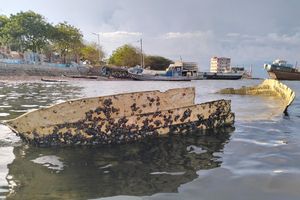
Just steps away, the environmental toll of his labour washes out with the tide. Because repairs happen in the open air directly adjacent to the sea, the breeze carries a steady stream of debris onto the shore. Fine dust from sanding glass-reinforced plastic settles heavily onto the beach.
"I've been working here as a fiberglass repairer and crafter for almost 10 years," says Karisa, sneezing mid-sentence.
His situation represents hundreds of similar cases along the Coast region, where artisans working with fiberglass-reinforced plastics face severe chemical and physical risks without Personal Protective Equipment (PPE).
Fibreglass, also known as fibrous glass or glass wool, is a thermal insulation material composed of tiny glass fibres bonded with phenolic resin or plastic reinforcement. Some respirable fibres are almost microscopic and capable of remaining airborne.
In Lamu, Malindi, Kilifi, Mtwapa, Diani, Vanga and Msambweni, informal workers in the marine and fibre boat-repair sectors routinely operate without protective gear. Many, like Karisa, suffer chronic health conditions from direct exposure to hazardous materials.
For years, Karisa has repaired hulls using fiberglass-reinforced plastic, releasing fine glass dust and toxic chemical vapours like styrene solvent into the air.
"Sometimes my chest feels like someone placed a heavy wet anchor right on top of it, and I can barely catch my breath," says Karisa, who was forced to quit work for the entire last month.
Health and environmental experts warn that working in fiberglass environments without proper ventilation or commercial-grade respiratory protection can bring significant medical complications.
Dr Said Mzee, a dermatologist at Mayfat Beta Medical and Skin Clinic in Mombasa, notes that workers without proper PPEs often experience skin allergic reactions, contact irritation eczema, and toxic build-up in the lungs. Microscopic barbs in synthetic fibers can embed into the skin, causing severe itching, rashes, and dermatitis. Artisans dying their own fibers are exposed to toxic mordants, heavy metals, and azo dyes. Chemical solvents like carbon disulfide can cause severe nerve damage over time.
"Industrial hardeners like Methyl Ethyl Ketone Peroxide are highly corrosive. Direct skin or eye contact without protective gloves and goggles causes chemical burns and chronic occupational contact dermatitis," says Dr Mzee. "Those coming into contact with fibreglass insulation should wear safety goggles with side shields, safety glasses, and gloves. Loose-fitting clothing can also help prevent fibres from contacting the skin."
Dr Duncan Chai of Blue Nile Medical Centre in Mkoroshoni, Kilifi County, cites conditions like Karisa's sudden chest heaviness as classic physiological responses to inhaling hazardous vapours and microscopic fibers. Such circumstances trigger intense airway inflammation, reduce lung capacity, and can cause occupational asthma or chemical pneumonitis.
"Cutting, grinding, or laminating fiberglass without dust masks releases microscopic glass shards into the air. Inhaling these particulates can cause pneumoconiosis, progressive lung function decline, and severe asthma," says Dr Chai.
"Many artisans have shied away from wearing PPEs. They brush off temporary reactions to strong smells, but what they ignore is acute chemical exposure. Styrene vapour is absorbed into lungs, risking long-term chronic cough, decreased lung capacity, and neurological damage."
Environment and Climate change expert Mohamed Dirie Rashid acknowledges significant health and environmental dangers when fiberglass is irresponsibly handled. Without protective gear, artisans inhale a known respiratory irritant and suspected carcinogen, leading to chronic asthma, severe skin dermatitis, eye damage, and long-term effects on the liver and nervous system.
The practice of working directly along the shores is risky for Lamu and the Coast. Resin, acetone, sanding dust and fibre offcuts wash into the sea, smothering corals and seagrass, killing fish larvae, and polluting mangrove ecosystems with persistent microplastics.
"Styrene is highly toxic to marine life. The National Environment Management Authority and the Coast County governments should consider moving all yards adjacent to the high-water mark into designated contained sites with proper ventilation. They should enforce strict collection and disposal of fiberglass waste and make PPE wearing mandatory," says Dirie.
Microscopic fiberglass shards wash into the water column, where filter-feeders like oysters and mussels mistake them for food.
"The glass fibers clog their digestive glands, causing severe internal inflammation and potentially starving the organisms. This introduces non-biodegradable toxins directly into the local marine food chain," says Dirie.
Mohamed Khuzema Salim, a fiberglass boat artisan from Lamu with over 30 years of experience, pleads with national and county governments plus well-wishers to provide special training to craftsmen and set up specific boat manufacturing workshop zones far from human and marine habitats.
A July 2024 study revealed worrying levels of fibreglass in oysters and mussels. The collaborative effort from the Universities of Brighton and Portsmouth marked the first time glass reinforced plastic particles were found entering the food chain. Using micro Raman spectroscopy, researchers found up to 11,220 fibreglass particles per kilogram in oysters and 2,740 particles per kilogram in mussels collected near an active boatyard in Chichester Harbour, South England.
The findings raise urgent environmental and health concerns about a material once thought durable and beneficial, now causing unexpected harm to marine life.