Puzzle of Kenya prepared to detect Ebola, but not fully ready to fight it

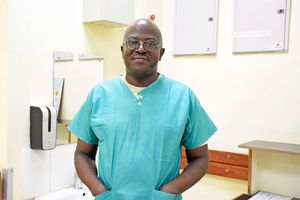
Health Cabinet Secretary Aden Duale.

Kenya's internal government assessment has revealed significant weaknesses in the country's ability to manage an Ebola outbreak if the virus crosses its borders.
The assessment, conducted by the Bundibugyo Virus Disease Incident Management System under the Ministry of Health's Kenya National Public Health Institute (KNPHI), found that Kenya is strongest in activities that occur before a patient arrives, such as surveillance, contact tracing and laboratory testing, but considerably weaker in treating patients and sustaining outbreak operations.
When the emergency response began in May, Kenya's overall preparedness score stood at 66 per cent.
The weakest area was case management, which scored only 36 per cent, indicating major gaps in the country's capacity to provide care for Ebola patients. Operations support and logistics scored 50 per cent, infection prevention and control 56 per cent, and points-of-entry screening 60 per cent.
Other indicators showed stronger performance. Contact tracing was rated at 100 per cent, rapid response teams 90 per cent, and laboratory capacity 87 per cent. Safe and dignified burial practices and risk communication and community engagement each scored 75 per cent.
Despite those strengths, the report identified unresolved nationwide gaps in holding, temporary and permanent isolation facilities. It said analysis of the country's full isolation shortfall was still ongoing more than seven weeks into the outbreak response.
Shortages of personal protective equipment (PPE), testing kits and infection-control commodities remain a concern, while emergency funds are not rapidly accessible at either the national or county level. The report also found that some emergency operations centres lack sufficient capacity and that delays have affected the importation of health products and technologies.
At key border crossings, including Malaba in Busia County, Lwakhakha in Bungoma County and Suam in Trans-Nzoia County, unstable internet connectivity has hampered screening operations. These crossings are considered critical because they handle significant traffic from Uganda, which has reported confirmed Ebola cases.
New Ebola strain
The preparedness assessment comes amid a regional resurgence of the Bundibugyo strain of Ebola. The outbreak was declared in the Democratic Republic of the Congo (DRC) and Uganda on May 15, 2026.
The World Health Organization (WHO) designated it a public health emergency of international concern the following day, while the Africa Centres for Disease Control and Prevention (Africa CDC) declared a Public Health Emergency of Continental Security on June 18.
On June 24, France confirmed its first imported case involving a doctor who had returned from the DRC.
As of July 4, the DRC had recorded 1,561 confirmed cases and 506 deaths, with more than 10,000 people under monitoring. Uganda had reported 20 confirmed cases, 17 recoveries, one patient still admitted and two deaths.
Kenya has not recorded any confirmed case. However, Health Cabinet Secretary Aden Duale has warned that the country faces a heightened risk because it serves as a major transportation, trade and travel hub connecting East and Central Africa.
To strengthen surveillance, Gate 16 at Jomo Kenyatta International Airport has been designated for passengers arriving from Uganda and the DRC.
As of July 7, Kenya had investigated 119 alerts and tested 122 samples, all of which were negative. The samples came primarily from Nairobi (71), Uasin Gishu (13), Garissa (4), West Pokot (4), Bungoma (4), Kiambu (4), Busia (4), Kisumu (3), Nyeri (3), Nakuru (3), Kilifi (2), Mombasa (2) and one each from Nyamira, Wajir, Laikipia, Trans Nzoia and Kajiado.
Screening has been implemented at 15 points of entry, with more than 199,000 travellers screened cumulatively.
The government has assembled a 343-member standby response team, including 102 veterans of the 2014–2016 West Africa Ebola outbreak, 51 graduates of the Field Epidemiology and Laboratory Training Program, 118 members of the Africa Volunteer Health Corps and 72 personnel trained through the Basic Public Health Emergency Management programme.
More than 3,161 healthcare workers at national and county levels have been briefed on Ebola response protocols.
For treatment, Moi Teaching and Referral Hospital has a 20-bed isolation unit that can be expanded to 50 beds, while Kenyatta National Hospital has an eight-bed isolation unit prepared for an initial response. Assessments of quarantine, holding and isolation sites in the 25 highest-risk counties have also been completed.
PPE has been distributed to Kenyatta National Hospital, Busia County and Kakuma refugee camp, and response supplies have been delivered to 16 points of entry.
On Thursday, the United States Embassy announced US$14.5 million (Sh1.9 billion) in support for Kenya's Ebola preparedness in 22 high-risk counties.
The funding will support training for laboratory professionals, deployment of disease detectives, rapid response team training, operation of KEMRI Ebola-testing laboratories, mobile diagnostic laboratories, and activation or establishment of county and national emergency operations centres.
“As a major transportation, trade, and travel hub linking East and Central Africa, Kenya plays an important role in regional infectious disease preparedness and control,” the embassy said.
“Strengthening preparedness will protect the health and economic well-being of Kenyans, reduce the risk of cross-border spread, and advance the shared regional and global health security mandate.”
Meanwhile, Mombasa County has established a specialised Ebola training facility at Port Reitz Sub-County Hospital to improve detection, response and containment capacity. County Health Executive Dr Swabah Ahmed said the facility is a precautionary measure and does not mean Ebola has reached Kenya.
The centre will train healthcare workers in surveillance, infection prevention, patient management, laboratory procedures and simulation exercises, and it can also serve as an emergency isolation unit.
Health officials continue to urge the public to rely on verified information from the Ministry of Health and the WHO, stressing that Kenya has no confirmed Ebola cases but must remain prepared because of its close transport links with affected countries.
Follow our WhatsApp channel for breaking news updates and more stories like this.