Relief as Wajir man tests negative for Ebola, diagnosed with malaria
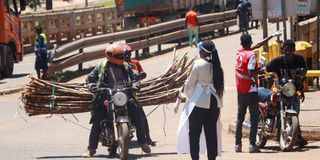
Members of the Kenya Red Cross response team direct travellers at the Malaba crossing-point between Kenya and Uganda after a man who had been living in the Democratic Republic of Congo travelled and died of a new Ebola outbreak involving the Bundibugyo species at the Nairobi Hospital, in Malaba, Kenya October 8, 2026.

A 20-year-old man from Wajir who presented with symptoms similar to those of Ebola has tested negative for the disease, Health Cabinet Secretary Aden Duale has confirmed.
Mr Duale told the Daily Nation that a report from the National Public Health Virology Laboratory in Nairobi showed that the patient had malaria.
“The patient was started on antimalarials last night,” said Mr Duale.
A statement from Wajir Governor Ahmed Abdullahi said the man had been isolated because he had a travel history from the Democratic Republic of the Congo (DRC), through Uganda, to Kenya.
“Because of his clinical presentation and travel history, our health teams acted swiftly and in line with established public health protocols. Samples were collected and referred to the National Public Health Virology Laboratory in Nairobi for Ebola testing,” said the governor.
“The results are reassuring. The County Department of Health and the Ministry of Health will continue to monitor the patient and provide appropriate medical care in accordance with established health protocols,” he added.
The governor also urged residents, especially those from Habaswein Sub-County in Wajir, to avoid spreading unverified information.
As of this morning, about 66 patients who were contacts of the confirmed case reported by the Ministry of Health on Monday were being held in isolation at the National Police Service Isolation Centre.
“At the National Police Service Isolation Centre, where we have put those in isolation, we have security so that you can’t sneak out. If there were no security personnel, some people would sneak out. You know it is very traumatising to be isolated. In the DRC, people are even burning hospitals because they think Ebola is witchcraft. But the good thing is that if you seek early treatment, the survival rate is 48 per cent,” said the Cabinet Secretary.
More people, especially those who were on the same flight as the deceased man, are still being traced.
So far, the country has trained about 4,971 health workers, and more than 652,000 travellers have been screened at 15 points of entry.
Surveillance teams have investigated 263 alerts from 17 counties.
Five laboratories, including mobile units, are testing samples, with a turnaround time of about six to 12 hours. More than 268 samples have been tested, and one has returned a positive result.
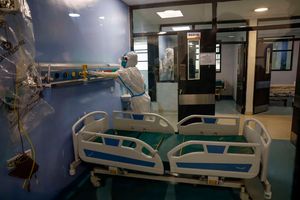
“Isolation, treatment and quarantine facilities have been designated at Kenyatta National Hospital, Moi Teaching and Referral Hospital, the National Police Service Hospital, Port Reitz Hospital and The Nairobi Hospital. Together, they offer 241 beds. More facilities are being prepared in Busia County and other priority areas,” Mr Duale said.
For protection, the World Health Organisation (WHO) has supplied 1,000 sets of personal protective equipment, while the Government of India has donated another 6,000. The Kenyan Government has also mobilised its own supplies, while the US government, IGAD and Africa CDC are providing assistance.
Follow our WhatsApp channel for breaking news updates and more stories like this.