Ebola: Eight medics question move to quarantine them with high-risk contacts
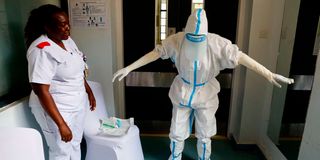
A nurse in protective gear at Nairobi Hospital where an Ebola patient from the Democratic Republic of Congo was isolated and treated shortly after arrival. The patient later died.

What you need to know:
- The workers said they cared for the patient while wearing the recommended gear and reported no breach or exposure.
- The health workers want clarity on whether the East Wing has been fully decontaminated and formally cleared for occupancy.
The doctors and nurses who treated Kenya’s first Ebola patient say they are being quarantined where the person died, despite following protocols and reporting no breach in their protective gear.
In a statement, the eight Nairobi Hospital workers said their concern is that the current arrangements do not distinguish between people according to their level of exposure, putting some of them at new risk.
“Our concern is specific. Everyone who interacted with the patient is being handled as if they carry the same risk,” they said.
The workers added that they were initially informed they would complete 21 days of home quarantine and monitoring but were later directed to report to the hospital’s East Wing.
“That is where the patient was managed and died,” they said in the letter.
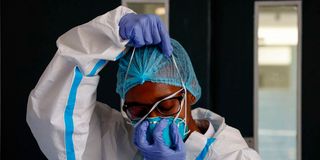
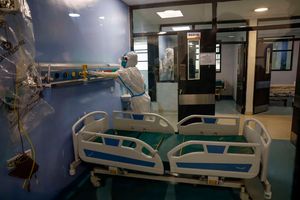
A nurse wears a protective mask at Nairobi Hospital where an Ebola patient was isolated immediately upon arrival and treated at the hospital's East Wing Isolation Facility, but later died, in Nairobi, on October 7, 2026.
The Ministry of Health says the patient was isolated in a separate room in the Accident and Emergency Department before being moved to the East Wing Isolation Facility.
Nairobi Hospital says the unit is separate from the main hospital, with its own entrance, access route and staff. The health workers want clarity on whether the East Wing has been fully decontaminated and formally cleared for occupancy.
“Quarantine exists to contain risk if it is medically necessary and should not create additional or avoidable exposure,” the letter said.
The workers said they cared for the patient while wearing the recommended gear and reported no breach or exposure.
They cited WHO guidance that calls for health workers with possible occupational exposure to undergo individual risk assessment and be managed according to their level of exposure.
WHO guidance says properly protected health workers without unprotected exposure are not considered contacts requiring the same measures as other exposed people.
“We ask that our risk be assessed on our actual exposure and actual PPE use. Proximity to the patient alone is not the measure,” the workers said.
They also object to being housed with people who had higher risk contact with the patient.
“Healthcare workers who wore appropriate PPE and had no documented breach are not equivalent to people who had unprotected or high-risk contact. They should not be managed as if they had the same exposure,” they said.
They asked for individual en-suite rooms, no mixing of people from different exposure categories, minimal movement through shared areas, proper medical and infection-prevention monitoring and adequate food, water and other supplies.
The health workers said where appropriate, 21 days of individual home monitoring under ministry supervision, should remain an option.
WHO guidance recommends monitoring potentially exposed health workers for 21 days after their last possible exposure, with management determined by the nature and level of exposure.
The workers are also seeking counselling and occupational health follow-up, proper accommodation and welfare support wherever quarantine is imposed and clear and consistent communication from the hospital and the Ministry of Health.
They demand compensation, hazard pay or occupational benefits for workers placed at risk while managing a case.
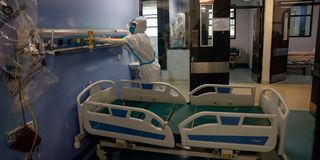
A nurse in protective gear in a ward at Nairobi Hospital where an Ebola patient from the Democratic Republic of Congo was isolated and treated shortly after arrival. The patient later died.
WHO guidance includes psycho-social support and, where appropriate, hazard pay among measures to support exposed health workers.
In an October 6 internal memo, Nairobi Hospital CEO Felix Osano said staff assessed to have had relevant contact would be contacted, risk-stratified and monitored.
Kenya Medical Practitioners, Pharmacists and Dentists Union (KMPDU) Secretary-General, Davji Atellah, took a different view.
“There’s a WHO protocol on isolation. Hospitals cannot have their own protocols. If someone was in direct contact with the patient, you cannot house them with healthcare workers who were protected,” Dr Atellah said.
He added that workers exposed while doing their job deserve protection and not blame.
“The doctors who were exposed were doing their job to save a life and should not be mixed with primary contacts,” he said.
Dr Atellah argued against relying on home isolation for people considered at risk.
“Somebody who says he can do something by himself is a danger to other people, trust me,” the KMPDU boss told the Daily Nation.
Follow our WhatsApp channel for breaking news updates and more stories like this.