Show us the clause: Hospitals demand answers over SHA's 2pc deduction

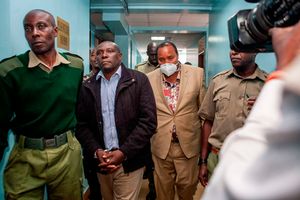
Social Health Authority (SHA) CEO Dr Mercy Mwangangi.

Every month, without explanation, two per cent disappears from the claims hospitals submit to the Social Health Authority (SHA). Now, healthcare providers want to know who is deducting the money, under what legal authority, and where it is going.
Hospital owners are demanding that SHA publicly identify the contractual clause or legal provision authorising the deduction from every approved claim. They say the charge has been applied since SHA was launched but was never disclosed during onboarding, explained in official communications, or included in any agreement signed with healthcare providers.
They are asking SHA to identify the specific provision in the Social Health Insurance Act, the Digital Health Act or the service-level agreements that permits a private company to deduct money from public health insurance claims before hospitals receive payment.
“It was not disclosed at contracting. It was not explained in any public SHA communication. When hospitals began noticing their payments arriving short and asked SHA to account for the difference, the response pointed them to companies most had never heard of, operating under arrangements they had never agreed to,” said one hospital administrator, who requested anonymity.
She said hospitals have found themselves trapped in a system where responsibility is unclear.
“We cannot complain to SHA because SHA says it is not their system. We cannot complain to the company because we were never officially introduced to them. So who do we take this to? We are just watching money leave our claims and going somewhere we cannot account for.”
Her hospital has been on the SHA platform since its launch and has lost two per cent from every processed claim. Yet, she says, she has never seen any contract, clause or schedule authorising the deduction.
“Show us where it says they can do this. Show us the clause. Show us the agreement. Every month money is deducted from our claims, but nobody has ever explained why.”
A second hospital owner, whose facility is on Nairobi’s outskirts, questioned the purpose of what SHA describes as a system service fee.
“We are rendering services to patients. SHA is supposed to pay us. Then we are told two per cent has been deducted for logistics. Logistics to where? To do what? Nobody has ever sat us down and told us where that money goes or who receives it. Is this even legal? Were hospitals consulted before this deduction was introduced?”
After months of complaints, SHA has defended the deduction, saying it is lawful.
In a statement, Chief Executive Officer Dr Mercy Mwangangi said the two per cent is a system service fee provided for under the Digital Health Act, 2023, and related regulations.
According to SHA, the fee supports the digital infrastructure used to process claims electronically, verify patients and healthcare providers, and securely exchange health information across hospitals.
The authority said the digital platform reduces paperwork, manual processing and payment delays, lowering administrative costs for healthcare facilities. It added that the deduction is applied only after claims have been approved for payment and is processed automatically within the system.
Social Health Authority signage at Mutuini Hospital in Dagoretti South Sub-County, Nairobi, on August 27, 2025.
SHA also clarified the roles of different institutions involved in processing claims.
It said SHA remains responsible for receiving, reviewing, approving and paying eligible claims in line with the Social Health Insurance Act, while the Digital Health Agency provides the digital infrastructure that enables hospitals to submit and process claims electronically. The private consortium supporting the platform, it added, only provides technical services and neither controls SHA funds nor determines payment amounts.
However, hospital owners say the statement sidesteps the questions they have been asking.
They argue that SHA did not identify the specific clause authorising the deduction, explain why hospitals were never informed before joining the scheme, or clarify why providers only discovered the charge after payments began arriving short.
“If it is provided for in law, why was it never disclosed during onboarding? Why weren’t hospitals told that two per cent of every approved claim would be deducted before payment reached their accounts?” another administrator asked.
The trail of the deductions leads to a company that many hospitals had never heard of until they started querying their payments: Finsprint Ltd.
According to an industry insider familiar with SHA’s payment architecture, claims submitted by hospitals are first reviewed by SHA, processed through the Digital Health Agency, passed to technology firm Apeiro Ltd and finally routed to Finsprint, which executes payments using the banking details of contracted hospitals.
Sources familiar with the system say Finsprint is the entity that applies the two per cent deduction before transferring funds to healthcare providers.
Hospital owners say SHA routinely refers them to Finsprint whenever payment disputes arise. One hospital owner said she was directed to the company’s offices in Nairobi’s Kilimani area after her facility went unpaid for three months.
Official records from the Business Registration Service show Finsprint Ltd was incorporated on July 12, 2020, four years before SHA became operational, with a nominal share capital of Sh100,000.
The company’s majority shareholder, holding 575 of its 1,000 ordinary shares, is Impactsoft Technologies Group Limited. The registry identifies it as a Kenyan company but provides no physical address, raising further questions among hospitals about the ownership structure of a company that handles payments within Kenya’s national health insurance system.
The arrangement has also attracted scrutiny from oversight institutions.
Auditor-General Nancy Gathungu, in her audit of the SHA project, questioned the government’s control over the digital platform, noting that intellectual property rights belong to the private consortium rather than the State.
She further found that the contract was awarded without competitive procurement, contrary to constitutional and statutory requirements, and concluded that the arrangement was not in the public interest.
Follow our WhatsApp channel for breaking news updates and more stories like this.