The quiet exodus from HIV treatment: Why young Kenyans are abandoning their ARVs
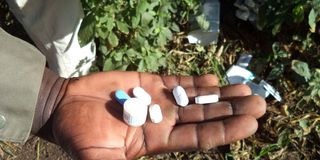
Stopping ARVs lets the virus multiply rapidly: viral load rises, CD4 cells fall, and the virus can mutate into drug-resistant strains, rendering cheap, effective first-line drugs useless.

What you need to know:
- Juma hasn’t taken his medication for two weeks. Gabriella dropped to 46kg before her parents found out. Taylor stayed on course for the first six months before pill fatigue set in. Keylor defaulted and developed tuberculosis.
- They’re not alone. A new study confirms what many already know: Kenya’s HIV treatment adherence is in crisis.
People living with HIV are quietly stepping away from life-saving medication. Drug fatigue, long distances to clinics, and the crushing weight of stigma are pushing them off treatment, with potentially fatal consequences.
For some, the daily ritual of swallowing a pill is a relentless reminder of a diagnosis they never wished for, a burden too heavy to carry alone. For others, it’s the smell of antiseptic in crowded waiting rooms, the fear of being seen, the whispered judgments. And for many, it’s exhaustion, not in the muscles, but deep in the mind.

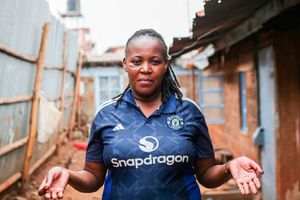
Taylor Murathe, a radio host and HIV warrior.
A new study confirms what those living with HIV already know: adherence to antiretroviral therapy is in crisis.
Juma*, 29, has swallowed his antiretroviral pills every morning for nearly seven years ever since he contracted HIV in 2019 following a sexual assault. He has never spoken publicly about his status. His friends, who know him as the guy who finds the cheapest phone screens in Nairobi’s Central Business District, have no idea.
Juma runs errands for a small electronics shop. His days are loud and fast: weaving through matatu chaos, darting between store rooms and shop floors, and keeping customers happy. Nobody sees the metallic aftertaste he lives with every morning.
“The fatigue isn’t physical. It’s the mental exhaustion of permanence. The pill represents survival, but it’s also a reminder of a status I never asked for. I wasn’t born with this. Every time I take it, I think about the clinics, the antiseptic, the soft-spoken counsellors talking about ARV science,” he says.
Two weeks ago, Juma stopped taking the pills. No dramatic decision. No single breaking point. He simply couldn’t do it anymore, not that day, and not the next.
“I’m extremely exhausted,” he admits. “I feel like my body is clogged with medication. Other warriors complain of it too, and default on purpose. Some take weekends off. Some take treatment only twice a week because they’re so tired of the routine.”
He knows the science.
He knows what defaulting means for his viral load, his immune system, his future. But knowing and doing are very different when you’re carrying the weight of a stigmatised diagnosis alone.
I never planned to stop, but I nearly did
Taylor Murathe, 36, a radio host, is one of the few young people in Kenya willing to say aloud that he is living with HIV. He found out in August 2022 after collapsing with symptoms he mistook for severe malaria: blood in his urine, persistent vomiting, fever, chills, and body aches so intense he could barely stand.
He had contracted the virus from a romantic partner who chose not to disclose their status. Then, in the weeks that followed, his family, including his father, a prominent figure in Kenya’s business world, withdrew entirely.
“It was one of the most difficult moments of my life,” Taylor says.
“The abandonment made the emotional weight even heavier. You’re trying to process what this means for your future, and the people who should hold you are nowhere to be found.”
He started antiretroviral therapy (ART) almost immediately. For the first six months, he stayed on course. Then pill fatigue set in. “It was more mental and emotional than physical. Some days, looking at that pill, everything it represented felt unbearable. But I pushed through. I’ve never stopped. I’m now undetectable —the virus is suppressed to the point where it cannot be transmitted sexually.”
“Pill fatigue is very common among people living with HIV,” he says. “But many can’t openly share their journey because of stigma and fear. That silence is dangerous.”
Taylor credits an NGO that gave him psychosocial support, safe spaces, and financial help during unemployment and homelessness. He has since built a TikTok community where he shares his journey openly, reaching thousands of young people navigating similar struggles in silence.
At 18, Keylor* thought he was stepping into adulthood. Fresh out of high school and trying to find his footing in Nairobi, he went to meet someone he knew. The meetings turned into a violent sexual assault that left him with HIV.
“I discovered my status by chance when I went to the clinic for other services, and HIV testing was part of the process,” says the now 24-year-old. “I was fresh out of high school and didn’t know enough about STIs and risks.”
The diagnosis left him isolated and overwhelmed. Without counselling or a support system, lifelong treatment became difficult.
“When I started taking ARVs, it was very hard because I had no support system. You get emotionally drained. No motivation from people around you. Carrying that burden alone is heavy.”
Three times
Over the years, he stopped taking his medication three times. These interruptions, sometimes called “drug holidays” among youth, lasted between one and six months. The first time he defaulted, he developed tuberculosis, which pushed him back to the doctor. The second and third times were due to pill fatigue.
“Pill fatigue is very common,” Keylor says. “But beyond that, the current integration of HIV services has hurt many young people. Specialised youth clinics that once offered safe, stigma-free spaces have either been absorbed into mainstream hospitals or shut down entirely. There’s no longer that free access. There’s fear of stigma from the community and even from staff in some facilities because the people trained in youth-friendly care are gone.”
He notes that support groups and peer mentors helped him regain consistency after the second and third defaults, helping him cope with stigma and treatment. But Keylor believes the rise in new HIV infections among young people is also fuelled by declining condom use and poor treatment adherence.
“We’ve normalised not using condoms. Young people living with HIV take these drug holidays and then engage in unsafe sex, which increases transmission of HIV and other STIs.”
Today, he works in the NGO sector and advocates for young people living with HIV. But his own journey with treatment adherence has been marked by fear, stigma, emotional exhaustion, and repeated interruptions, experiences he says are increasingly common among Kenyan youth.
Gabriella*, 23, recalls abandoning her ARV treatment when she joined university and was placed in a hostel shared with three other students. The pills felt like a heavy secret she didn’t know how to reveal. Fearing judgment, she stopped taking them altogether for three months.
But even before university, the daily routine of swallowing pills had become emotionally draining, a burden she quietly carried while navigating life as a young woman in Nairobi. As weeks without treatment passed, her health deteriorated rapidly.
“I lost a lot of weight. I was 55 kilogrammes and dropped to 46. People noticed, and that affected me so much,” she says. At her home in Dandora, Gabriella notes that access isn’t the problem —the clinic is just Sh20 away. The burden is the pills themselves, and the emotional and social environment surrounding treatment.
She says many young people were more comfortable in specialised youth-friendly centres that offered privacy and a sense of belonging. But with the USAID funding withdrawal and the subsequent integration of HIV services into general hospital systems, many youths now fear exposure and stigma.
“Most young people are scared because the clinics are within the community and people know each other. There’s no privacy anymore. In youth-friendly clinics, we could interact freely without fear of judgment. It felt safer: you were around people your age who understood you. Now you’re mixed with everyone else, and some young people avoid going completely.”
“Some miss appointments or delay treatment because they fear being recognised by neighbours or relatives at local facilities. Sometimes we ask medics to wrap our medication in brown parchment paper for privacy.”
Two years ago, when she abandoned treatment, the dramatic weight loss forced her to disclose to her parents. “I was born with the virus and had taken ARVs for a long time. But now I was very sick. My parents found out and took me for counselling. The counselling sessions eventually helped me return to medication and rebuild consistency.”
These four stories reflect a national crisis: many people living with HIV are stopping their medication because they are simply fatigued.
Now, a new study by the Kenya Medical Research Institute (Kemri) in collaboration with the Ministry of Health, Nairobi Health Directorate, University of Eldoret, and the Ambassador for Youth and Adolescent Reproductive Health Programme confirms that young people living with HIV in Nairobi County are struggling to access and adhere to ARVs, threatening Kenya’s progress towards global health targets.
The peer-reviewed study, published on April 20 in the East African Journal of Health and Science, was conducted across all 17 sub-counties in Nairobi.
From the findings, Antiretroviral uptake among young people aged between 15 and 24 stands at just 68.6 per cent. This figure falls significantly short of the UNAIDS "95-95-95" target, which aims for 95 per cent of those diagnosed with HIV to receive sustained treatment by 2030.
The research surveyed 322 respondents and examined what affects HIV-positive young people's ability to stick to their treatment and clinic appointments.
The findings revealed that young people who knew and understood their specific ART regimen were significantly less likely to miss clinic appointments, reinforcing how much patient education matters. On the flip side, those who used alcohol or drugs were more than three times as likely to miss appointments and skip doses, with substance abuse emerging as one of the most consistent barriers across the study.
Distance to the health facility also played a big role. “Those living more than 10 kilometres away were nearly twice as likely to skip their medication, and those living even further had more than double the odds of non-adherence. This speaks directly to the issue of healthcare accessibility in a city where transport costs and time can be real obstacles,” says the study.
Monthly basis
The timing and consistency of counselling also turned out to matter more than people might assume. “Young people who received ART counselling on a monthly basis were four times more likely to keep their clinic appointments and significantly less likely to skip doses compared to those who were counselled only during routine visits, suggesting that regular, structured check-ins, rather than conversations during visits, have a measurably positive impact on behaviour.”
Social support was another important thread running through the results. Those who were not part of any HIV support group were noticeably more likely to skip their medications.
The duration of living with HIV also mattered. Those who had been diagnosed for two or more years were significantly more likely to miss appointments compared to those who had been living with HIV since birth, pointing to the psychological weight of a later diagnosis and the need for targeted support during those early years after finding out.
“The barriers the study identifies will sound familiar to anyone who has tried to access healthcare in this city. Young people living more than 10 kilometres from a health facility are significantly more likely to skip medication. Those who use alcohol or drugs are three times more likely to miss doses or appointments. People who have lived with HIV for two years or more, those diagnosed later in life, not at birth, are four times more likely to miss clinic appointments, a pattern researchers link to psychological distress and stigma. And those without a support group are nearly 1.7 times more likely to default on their treatment.
Dr Samuel Kinyanjui of the AIDS Healthcare Foundation says this trend has accelerated since US PEPFAR funding withdrew, gutting youth-clinic support structures. “Without mentorship or programmes like OTZ and DREAMS, many young people drift from life-saving regimens,” he says. “They call it a treatment break. But this growing trend of self-prescribed drug holidays is dangerously unsafe.”
The medical fallout is severe. Stopping ARVs lets the virus multiply rapidly: viral load rises, CD4 cells fall, and the virus can mutate into drug-resistant strains, rendering cheap, effective first-line drugs useless.
“A drug holiday gives viruses time to multiply. Drugs kill weaker viruses, but tougher ones survive. By the time you return to first-line ARVs, your virus may already be resistant,” Dr Kinyanjui explains.
Consequences extend beyond HIV. Kenya has high latent TB, held in check by a functional immune system. Untreated HIV collapses immunity, triggering active TB.
“You’re headed for advanced HIV disease, with TB flaring and opportunistic infections,” he says. “Many will end up on second- or third-line drugs; more expensive, toxic, and less effective. You’re reducing both length and quality of life.”
His clinic has responded by expanding services: free STI screening, lab testing, psychosocial support, and youth-friendly spaces. In the last three days alone, nearly 400 young people came for STI screening alone.
One tool showing particular promise is the buddy system, which pairs each young person living with HIV with a peer who checks in on them, encourages them to stay on treatment, and creates a sense of shared accountability.
"It is much like the gym," Dr Kinyanjui says. "Sometimes you feel unmotivated, but because you are with others who encourage you, you keep going."
The study's authors are calling on policymakers to urgently decentralise HIV services, introduce youth-friendly clinic days, and use technology such as SMS reminders and community health workers to reach young people where they are. With Nairobi County recording a youth HIV prevalence rate of 3.1 per cent, significantly higher than the national average of 1.9 per cent, the stakes could not be higher.
For now, Juma is still on his two-week break. He knows he needs to go back. Part of him wants to. But the clinic is far, the day is long, and the pill still carries the weight of everything he has never been able to say out loud. He is tired. He hopes someone is listening.
*Names changed to protect identity.