The unsung guardians of Kenya's digital health dream
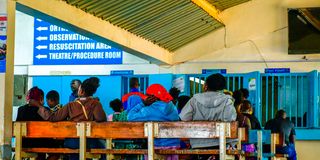
Patients wait for treatment at the Accident and Emergency Department of Jaramogi Oginga Odinga Teaching and Referral Hospital in Kisumu on August 5, 2026. Kenya is rolling out a digital health superhighway across 2,300 facilities, with over 32 million users already registered.

What you need to know:
- Kenya is rolling out a digital health superhighway across 2,300 facilities, with over 32 million users already registered.
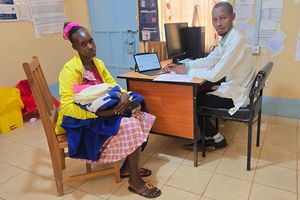
The records room at a sub-county hospital already smells of old paper and printer toner. Before the first patient is called, Faith*, a health records officer, pulls yesterday's stack of outpatient cards and begins the quiet, invisible work no one in the queue outside will ever see: matching each diagnosis scrawled by a clinician to a standard ICD-10 code, checking that a child's malaria case and a grandmother's hypertension visit are logged correctly. By the 5th of next month, this single folder becomes one line in a national count.
She is not a nurse. She is not a doctor. Under the Health Records and Information Managers Board, which licenses her annually to practise, her title on this government payslip reads Health Records and Information Officer (HRIO), the public-sector name for work that, across town at a private clinic, would be called a Medical Records Officer instead. Hers is the job of patient registration, medical coding, monthly reporting, and the quiet legal duty of keeping a stranger's health history safe.
By mid-morning, the pile has become a spreadsheet. Faith enters bed occupancy, disease tallies, and referral numbers into DHIS2, the system that carries her sub-county's data upward to the county, then to the Ministry of Health. If she miscodes a diagnosis, or if a malaria case is logged twice, the error does not stay in her drawer. It travels, invisibly, into national disease-burden statistics that will one day inform a budget line or a vaccination drive in a district she has never visited.
She trained for this at a certificate programme, the standard first rung, offered at institutions like the Kenya Medical Training College, before deciding, like a growing number of her colleagues, to pursue a diploma and eventually a degree in Health Information Management. It is a pathway built for people who want to climb without leaving the records room: certificate, then diploma, then degree, each one unlocking more responsibility over the data that quietly keeps a hospital's memory intact.
No one in the waiting room outside knows her name. They know the nurse's uniform and the doctor's white coat. Faith's badge means nothing to them until, one day, their file is the one that goes missing, or the one that saves a life because it was there, complete and correct, when it mattered most.
“Health records staff begin with the patient's bio-data, then build out a fuller history as the patient moves through care. That history becomes the raw material for analysis. From that history, analysis is done, and the information is processed for decision-making. Each month, each facility generates reports showing how many patients were attended to, their demographics, where they're coming from, and most critically, what diseases they're suffering from, making it possible to track disease burden across different age groups,” Faith explains.
This data has research value beyond routine reporting. A pattern such as diabetes clustering in a particular age group can be traced further to a specific region, prompting deeper questions about what makes that locality unique.
Kenya's own disease map bears this out. Non-communicable diseases such as cancer, diabetes, hypertension and other cardiovascular conditions, and chronic respiratory disease are concentrated in certain regions, and lifestyle is a major driver, pointing to a need for more people trained to do this kind of research and translate it into public health action.
“As you're doing your report, you can see that the majority of patients diagnosed with a disease like diabetes are from a certain age group. You can go further and see that, on top of coming from a specific age group, they're coming from a specific region. You can then try to find out what is so unique about that locality,” says Faith.
“We need research to find out what the risk factors are for these non-communicable diseases and how we can create awareness so that we can change policy. If we can do more preventive medicine, then we can solve some of these challenges; we can make the numbers reflect the truth. And that can only come from research, from people collecting accurate data and making decisions based on facts. That's exactly what health records do,” she adds.
This scene plays out across the country, capturing the daily friction points of Kenya's grand health transformation. High-level policy directives promise a seamless, paperless electronic health record network spanning over 2,300 facilities under the national digital health initiative and digital superhighway strategy. Yet on the frontlines, high-tech ambitions consistently collide with the realities of rolling power outages, absent internet connectivity, and an acute shortage of adequately trained personnel.
Kenya is building a unified health network to power universal health coverage and enable instant data sharing across all 47 counties. This initiative connects public and private facilities to a centralised network known as the Digital Health Superhighway. Overseen by the Digital Health Agency, this framework allows patient records, insurance systems, and hospital inventories to communicate seamlessly with one another.
The strategy rests on infrastructure, identification, and governance. To establish a strong foundation, the government is distributing digital devices to public facilities and connecting local clinics to the central network to ensure data exchange across all levels of care. For identification, the system utilises biometric verification and digital IDs linked to the Social Health Authority to track patients accurately and reduce insurance fraud.
Also read: From memes to lifesaver: Student team creates digital 'purple book' to reduce maternal deaths
On the data governance side, the country is building national and county health data banks to safely store standardised medical records, guaranteeing patient privacy and easy record portability. This digital transformation has already made significant progress. Over 32 million users are registered in the digital health ecosystem, and thousands of digital tools have been deployed nationwide. Platforms like the AfyaYangu app and integrated electronic medical records now allow doctors to view patient histories instantly, creating a more continuous and reliable healthcare experience.
While national plans focus on software rollouts and cloud connectivity, experts warn that a digital system is only as reliable as the hands entering the data and the power grid keeping the servers alive.
“When a government comes with a policy directive on the digital health strategy, it solves a lot of problems because we have been having challenges in processing information. The digital health strategy is a good thing, but we need to ask ourselves critical questions: whether we have equipped the workforce and the system itself with the necessary skills,” says Esther Kaguu, head of Department for Health Records and Information Management at Outspan Global University.
For rural communities, the gap between policy and practice remains vast.
“We need to look at it in two ways: the workforce and the resources. We require computers, electricity, and internet. If we go to many remote areas, we still face challenges even with electricity, let alone computers and the internet. Even in big hospitals, anybody providing care to a patient will require technological skills to input that information,” Kaguu explains.
When digital tools are deployed without proper ground preparation, the immediate victim is patient turnaround time. A doctor struggling to navigate an unfamiliar interface takes twice as long per patient, turning brief consultations into hours of waiting.
“With a digital health strategy, it means that in that facility there will be no paper. So anybody who will be providing care to that patient will be required to have the technological skills so that he or she can be able to input that information in the system,” says Kaguu.
“On the ground, the number of clients being attended to is critically reduced as healthcare providers try to navigate the system with sometimes inadequate skills. If the people inputting data do not have the necessary skills, then the quality and completeness of the data collected will be compromised.”
Beyond slow queues lies a far more dangerous threat of total system downtime and data loss. In an integrated national network, a single technical failure can freeze operations across dozens of facilities.
“We are still in Kenya, where sometimes we have a downturn in the system. You can imagine if all facilities in Kenya are integrated into one system and that one system experiences a downtime, at that particular time, care will be compromised. If that system crashes, the amount of data that will be lost is massive and sometimes cannot be recovered. Care does not stop just because the system has challenges,” Kaguu stresses.
As artificial intelligence and automated diagnostic tools begin integrating into hospital systems, Kaguu points to a subtler risk already playing out at the reception desk: patients who arrive having self-diagnosed online.
“We are in an era where clients know their rights, and also the era of AI, so there is a tricky balance. Most of the time a client is coming to the facility already guided by ‘Dr Google’, and sometimes that diagnosis is not liked when a real clinician offers a different one. The healthcare provider has to know how to move that patient from what they believed online to the clinical reality,” she says.
The same caution, she says, applies further up the chain to the software itself.
“Technology and AI are very good, but we need to balance. If you have a healthcare provider who is not keen, the system can end up treating and even prescribing on its own. We are supposed to empower our graduates with skills to responsibly adopt AI, not let AI do everything for them.”
“At the same time, maintaining public trust requires strict safeguards around sensitive patient data under the Data Protection Act. With the Data Protection Act, we ensure that whatever information we collect is handled with the utmost confidentiality for its intended purpose and can only be released following strict legal procedures,” Kaguu adds.
Part of the challenge facing Kenya’s digital transition is a deep-seated cultural misperception about who actually keeps a hospital running. While doctors and nurses occupy the public eye, health records officers serve as the quiet backbone of clinical safety and public health surveillance.
“If you interact with most community members, they know that in a hospital we only have two cadres: nurses and doctors. They are the first people to interact with the client and the last people to handle patient information. In a hospital layout, every cadre has a big safety role. If one cadre is not doing what they are supposed to be doing, at the end of the day, the care provided to the patient will be compromised,” Kaguu notes.
Far from merely filing forms, health records officers act as frontline sentinels. Their monthly tallies track disease burdens such as rising rates of non-communicable diseases like cancer, diabetes, and hypertension in regional hotspots, providing the raw data necessary for targeted research and preventive medicine.
In emergency scenarios, they bypass routine monthly reporting timelines altogether to protect public health.
“Data collected from facilities is supposed to go all the way to the national level by strict monthly deadlines from the facility to the sub-county by date 5, to the county by date 10, and to the Ministry of Health by date 16,” Kaguu explains. “But there are special circumstances that do not wait for those timelines. If our health workers spot cases of cholera, measles, or a maternal death, those are notified immediately to the surveillance team.”