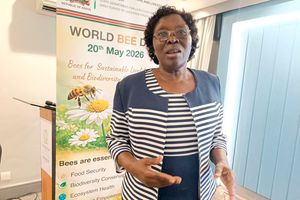
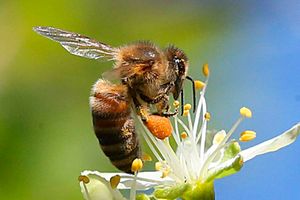
The women of Kitui who are building a honey empire and saving their forests
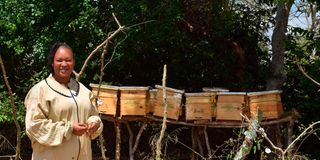
Malia Makau inspects an apiary in Muti Village, Kitui County on May 21, 2026. Beekeeping has boosted environmental conservation campaigns in the county.

What you need to know:
- Although Kitui is among the top honey producers in the country, environmentalists have raised alarm over charcoal production in the region.
- The felling of trees to produce charcoal has hit honey production hard since mature acacia tortilis and other indigenous trees, preferred by charcoal producers, are a major source of bee foliage.
As Kenyans joined the world in celebrating this year's World Bee Day with renewed calls to safeguard pollinators for food security, Malia Makau spent hours inspecting three of her beehives in Muti Village on the margins of Mutomo Township in Kitui County. She is among a handful of women who have defied retrogressive myths in the region that prevent women from keeping bees.
Malia has carved a name for herself in the semi-arid region by promoting sustainable ways of boosting household incomes. "Nothing prevents a woman from owning a beehive. Modern beehives are designed to make it easy for women to maintain apiaries and harvest honey," she says.
The chairlady of Kamusyi Community-Based Organisation, a women's group that champions climate-smart farming, has discovered a simple trick to boost honey production: setting apiaries under shades. Instead of dried grass and twigs, she uses dry donkey dung as beekeeping smoker fuel. "Dry donkey poop produces a steady smoke which lasts long," she says.
When she is not championing honey production and goat keeping, both suited for the semi-arid region, Malia sells motorcycle spares in Mutomo Township. Her influence has grown recently after the group secured nine modern beehives from Safaricom Foundation. The women's group, which is big on table banking, has since added two more modern beehives and sells the produce to customers at Mutomo Township. "We are looking forward to owning 100 beehives in the next three years and setting up our own honey processing facility," Malia notes.
Although Kitui is among the top honey producers in the country, environmentalists have raised alarm over charcoal production in the region. The felling of trees to produce charcoal has hit honey production hard since mature acacia tortilis and other indigenous trees, preferred by charcoal producers, are a major source of bee foliage. To address the problem, government agencies and multiple non-governmental organisations have rolled out ambitious landscape restoration campaigns laced with environmental conservation messages.
Take the case of Kitui Governor Julius Malombe's administration. The county government has rolled out an ambitious rainwater harvesting programme, which has seen it set up hundreds of earth dams and sand dams. At the same time, it promotes drought-resistant crops such as sunflower, which provide bee foliage while building resilience to the effects of climate change.
On its part, Miangeni Rural Development Programme, a non-governmental organisation that promotes beekeeping in Kitui County, supports nursery operators and distributes free seedlings to farmers while rallying communities to conserve mature trees and existing forests.
"We encourage beekeepers to provide bees with water right at the apiaries to prevent them from abandoning the hives. This cuts the time and energy they spend going for water in lakes, rivers and wells. We also encourage the use of bee catchers to ensure that hives do not run out of bees at any one time," says David Mutunga, an environmentalist who heads the organisation.
The environment conservation campaign has given the beekeeping community a reason to conserve acacia tortilis and other indigenous trees, which are a major source of bee foliage.
"A mature acacia tortilis can hold up to three beehives. This translates to at least 60 kilos of honey and Sh60,000 per year. It has become unthinkable to fell such a tree to produce five bags of charcoal worth Sh5,000," says Malia, reflecting a changing attitude in the region.
Livestock Principal Secretary Jonathan Mueke says Bomet, Kitui and Taita Taveta counties have huge potential in honey production. Kitui is betting big on emerging farmers like Malia to unlock its full potential in honey production.
"We should double our efforts in honey production to meet the huge demand in local and export markets," Mueke told a recent forum in Mombasa.