Uptake of lifesaving HIV pill stalls at 39pc amid rising infections among youth
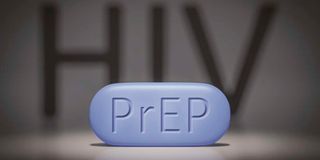
The pre-exposure prophylaxis. It stops the virus from multiplying in your body once you come into contact with it.

What you need to know:
- To break past the 39 per cent plateau, Kenya's strategy is shifting away from forcing a daily compliance model onto young people and toward expanding options that fit their lifestyles.
- Earlier this year, Kenya became one of the first countries on the continent to introduce long-acting injectable PrEP.
Kenya’s aggressive push to halt new HIV infections has hit a severe bottleneck, with national Pre-Exposure Prophylaxis (PrEP) uptake stalling at 39 per cent. According to data from the National Syndemic Diseases Control Council (NSDCC), the life-saving daily pill is losing momentum at a time when the country needs it most.
Between 2018 and 2020, PrEP was in its infancy, with initiation rates hovering between a low 17 and 22 percent. A massive national scale-up followed, driving initiation up to 34 per cent (82,664) in 2021 and 39 per cent in 2022 (94,527) and 2023 (150,579). In 2024, coverage peaked at 40 per cent, with a record 166,684 Kenyans starting the regimen.
However, numbers dropped in 2025 to 147,913, pulling coverage back down to 39 per cent. The NSDCC points directly to two critical systemic failures driving this plateau: a failure in ongoing demand creation and severe challenges with patient adherence.
This preventative flatline comes at an incredibly high stake. Adolescents and Young People aged 15 to 39 now bear the brunt of the epidemic, accounting for a staggering 62 per cent of all new HIV infections in Kenya. The crisis is also deeply gendered and highly localised. Out of the 13,936 new infections recorded nationally, women and girls make up nearly double the number of men (9,044 females compared to 4,891 males), with adolescent girls and young women in high-burden zones facing an annual incidence rate of over one per cent. Furthermore, the wildfire of new infections is unevenly distributed; a massive 62.3 per cent of all new transmissions are concentrated in just 10 hotspot counties, led by Migori, Nairobi, Homa Bay, Kisumu, and Siaya. Stalling out on
PrEP coverage at 39 per cent means leaving the very demographic and geographic engines driving Kenya's epidemic entirely unprotected.
Dr Barbara Mambo, lead HIV prevention specialist at the National AIDS and STI Control Program (NASCOP), explains that the stall is driven by a complex mix of human behaviour, shifting individual risk, and quiet structural shocks within the health workforce. Unlike treatments for chronic conditions, where public health data often assumes a straight line from initiation to indefinite adherence, Dr Mambo notes that PrEP is fundamentally different. Its success depends entirely on an individual's self-awareness of their own risk profile.
"People abandon PrEP because they are not fully aware of their own risk profile," explains Dr Mambo.
"PrEP is not given to everybody all the time; it is given to those who have an ongoing risk. As an individual, you have to be able to assess that risk such as being aware of your partner's sexual status and whether they have other partners. If I am in a trusting marital relationship, I won't put myself on PrEP because I do not feel exposed. But the reality is that many people simply do not know what their true risk profile is."
She adds that adherence itself presents a major hurdle. "Taking the drug consistently and as required is hard. What we see is someone taking it once a day, then skipping to once a week, then taking it at another time. To remain on the regimen, you must stay aware of your HIV status through regular testing, which itself can become a barrier to continuity. PrEP is not a linear cascade; you enter care, and you come out of care."
The friction of remaining in oral care, including mandatory, repeated HIV testing acts as a persistent barrier to retention.
While the NSDCC and the Kenya AIDS Integration Strategic Framework 2025–2030 point to profound supply chain fragilities and an 80 per cent reliance on external donor funding as systemic threats, Dr Mambo clarifies that the current issue is not a shortage of the physical medicine. The true bottleneck is human resources.
“When donor funding fluctuates or freezes, it directly shocks the health workforce payroll within the counties. When PEPFAR funding was withdrawn, we had commodities and test kits, but some counties were affected because they did not have people to carry out the testing and administration of PrEP. Without a healthcare provider to test the patient, the free pill stays on the shelf, and uptake plummets," she says.
To break past the 39 per cent plateau, Kenya's strategy is shifting away from forcing a daily compliance model onto young people and toward expanding options that fit their lifestyles. Earlier this year, Kenya became one of the first countries on the continent to introduce long-acting injectable PrEP.
"We introduced long-acting PrEP earlier this year. Kenya is one of the first countries to have taken on this initiative. It is actually one of our lasting solutions for people dropping in and out of care or forgetting to take their medication," says Dr Mambo.
Rather than navigating the daily cognitive load and social stigma of carrying a pill bottle, Kenyans now have the autonomy to choose prevention methods that align with their personal lives.
"PrEP is a choice in Kenya. We have different options: oral PrEP and long-acting PrEP. When you go to a facility, you take what best suits your lifestyle and needs. On the long-acting products, we have one that's used every two months and one that's used every six months. So, you decide what works best for you," she emphasises.
As the government works toward mainstreaming these commodities into national budgets and local manufacturing, health officials hope that robust demand-generation campaigns and longer-lasting injection windows will finally give young Kenyans the flexible, uninterrupted protection they need to turn the tide.