What a second Ebola case means for Kenya
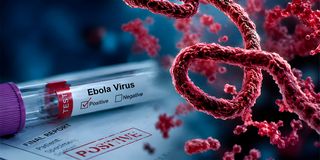
Blood sample drawn from patients suspected to be infected with Ebola should be tested within a short time to avoid further transmission.

Kenya has confirmed its second Ebola case, a close relative of the first patient who died. It is the first known spread of the virus from person to person inside the country.
On October 14, the Ministry of Health said it had listed 128 contacts linked to the first case and traced 113 of them as of 13 October. Of those, 108 are in quarantine in Kenya and five are outside the country. Tracing of the other 15 continues.
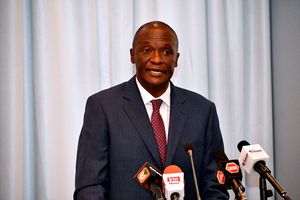
Prof Shem Otoi, an infectious disease modelling expert at Daystar University, explains what it means and what happens next.

Prof Shem Otoi, an infectious disease modelling expert.
Why does a second case matter?
The first case was imported. The second shows the virus has passed from person to person inside the country. That is secondary transmission, and it makes exposure and quarantine matter even more important.
The relative may have been caring for the patient, handling his equipment, clothes and bedding.
How does quarantine work?
We quarantine anyone who was in contact with the patient, and the level of exposure matters. Some people were very close to the patient. Others shared the same space without being close. All of them should be quarantined.
Are the 15 untraced contacts a risk?
It could be yes or no. The Ministry will try to establish how exposed each of the 15 was, and where they are, so that none becomes a threat to the community.
If any of them had serious exposure to the first patient and is infectious, there is a risk, because nobody knows where they are and they could pass Ebola on. If their exposure was minimal, the risk is low. Either way, they should be found, quarantined, and tested after 21 days to see whether they were infectious.
I expect an update on whether some or all of the 15 have been placed in quarantine.
Why 21 days?
Twenty-one days is how long it takes to know whether an exposed person has caught the virus. Contacts are tested at three points: when they are first found, around day 10 or 12, and on day 22. If all the tests are negative, we are safe.
Positive results do not necessarily mean wider spread. If one or two contacts turn out to be infectious but were already in quarantine, we are safe, provided they had no contact with community members. The risk is a contact who was infectious and moving freely among others.
Why are funerals dangerous?
In Guinea in 2013 and 2014, 85 contacts were traced to a funeral that became a super-spreader event. In Sierra Leone, where Kenyans helped with the response, 28 contacts were traced to a funeral. Funeral rites can spread Ebola widely, so burial protocols must be followed strictly.
Is there treatment?
There is no approved treatment for Bundibugyo (virus). A vaccine exists for the Zaire strain.
Patients get supportive care. The disease drains the body of fluids through vomiting and diarrhoea, so treatment replaces fluids and electrolytes. It is restorative, not curative.
Ebola damages the circulatory system. Without enough good blood reaching the liver, lungs and kidneys, those organs fail. Lack of fluid then leads to shock, confusion and death. That is why some patients die within a day or so of reaching hospital. The first patient landed in Kenya on Saturday and died two days later.
How deadly is it?
The case fatality rate ranges from 30 to 90 per cent, and averages about 50 per cent. In the DRC, about 4,000 of 8,000 cases have died.
Who decides a patient can leave isolation?
A patient is released only when clinicians, specialists and pathologists are satisfied that they are no longer infectious. They rely on the CT value, a laboratory measure that estimates how much virus is in the body.
A low CT value means a high viral load, and a high CT value means a low one. A patient is cleared only when the CT value is so high that the virus is effectively undetectable.
What should the public do?
Communities where untraced contacts may be living need to cooperate with the authorities and help get those people identified and into quarantine. Anyone who knows someone who travelled to the DRC and had contact with a patient should come forward.
As a country, we need to be sober and not panic. The Ministry should increase risk communication, so people know which precautions to take before and after infection. Anyone who suspects they are infected should go to a health facility to be tested.
Follow our WhatsApp channel for breaking news updates and more stories like this.