Which hospital should you go to? A guide to Kenya’s six levels of care

According to the World Health Organization (WHO), health is a fundamental human right, not an economic privilege.

When you fall sick in Kenya, the kind of care you receive depends on the level of the facility you visit. The Ministry of Health set up a six-tier healthcare delivery system, regulated by the Kenya Medical Practitioners and Dentists Council (KMPDC).
Under the 2010 Constitution, healthcare is devolved. County governments manage Levels 1 to 5. The national government oversees Level 6 facilities.
Level 1: Community health units
Focus: Preventive, promotive and basic community care.
Managed by: Community Health Extension Workers (CHEWs) and Community Health Promoters (CHPs).
Services:
- Basic health education, sanitation promotion and hygiene instruction.
- Routine immunisation outreach, child growth monitoring and nutritional screening.
- Treatment of minor ailments, such as first aid and basic oral rehydration.
- Early detection, screening and referral of patients to Level 2 or 3 facilities.

When systems are strong care is consistent.
Level 2: Dispensaries and clinics
Focus: Basic outpatient services at the village or neighbourhood level.
Managed by: Registered nurses, clinical officers and laboratory technicians.
Services:
- Outpatient management of common conditions, such as flu, malaria and skin conditions.
- Antenatal and postnatal check-ups, basic family planning and child immunisations.
- Basic laboratory tests, including rapid malaria tests, blood sugar and HIV testing.
- Standalone speciality clinics, such as optical, dental and mobile clinics.
Level 3: Health centres and comprehensive clinics
Focus: Inpatient observation, basic emergency care and maternal delivery.
Managed by: Medical doctors, clinical officers, nursing officers and pharmacists.
Services:
- Level 3C (Basic Health Centre): Ambulatory preventive and curative care.
- Level 3B (General Clinics): Outpatient medical care and minor dental procedures.
- Level 3A (Comprehensive Health Centre): Inpatient maternity, basic minor surgical procedures and minor operating theatre services.
- 24-hour emergency maternity care, short-stay inpatient wards, and basic diagnostic ultrasound and X-ray.
Level 4: Sub-county hospitals
Focus: Comprehensive inpatient and outpatient care, and first-line emergency surgeries.
Managed by: Medical officers, specialist consultants, clinical officers and specialised nurses.
Services:
- Level 4A (Primary Care Hospital): Inpatient medical, paediatric, surgical and obstetric wards.
- Levels 4B and 4C (Specialist Medical and Diagnostic Centres): Dedicated diagnostic centres, day-care surgeries and outpatient speciality consultations.
- Fully equipped operating theatres for C-sections, emergency surgeries and appendectomies.
- Complete diagnostic imaging, including X-ray, ultrasound and CT scans in larger facilities, as well as clinical laboratories.
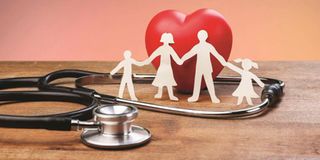
Employers benefit from a healthier, more productive workforce, with reduced absenteeism and stronger organisational resilience.
Level 5: County referral hospitals
Focus: Specialised clinical care, secondary referrals and medical training.
Managed by: Chief Executive Officers (medics), multidisciplinary teams of specialist and sub-specialist doctors, medical interns and allied healthcare professionals.
Services:
- Specialist services in general surgery, orthopaedic surgery, internal medicine, paediatrics, obstetrics and gynaecology, ENT, ophthalmology and oncology.
- Intensive Care Units (ICU), High Dependency Units (HDU) and Neonatal ICUs (NICU).
- Advanced imaging, including CT and MRI, and comprehensive blood bank operations.
- Clinical research, medical internships and paramedic training programmes.
Examples: Homa Bay County Referral Hospital, Machakos Level 5 Hospital, Kiambu County Referral Hospital, Mbagathi Hospital and Coast General Teaching and Referral Hospital.
Level 6: Tertiary National teaching and referral hospitals
Focus: High-level specialised care, advanced surgical procedures, national health policy research and tertiary medical education.
Managed by: The national government. They are staffed by senior medical professors, super-specialists and sub-specialist teams.
Services:
- Complex surgeries, such as open-heart surgery, neurosurgery, organ transplants and complex oncology interventions.
- National specialised services, including oncology suites, comprehensive renal dialysis, specialised burn units, psychiatric care and spinal rehabilitation.
- Principal training grounds for medical students, residency programmes and medical research institutes.
Key national referral hospitals (Level 6)
Level 6A (Teaching and General Referral):
- Kenyatta National Hospital (KNH), Nairobi
- Moi Teaching and Referral Hospital (MTRH), Eldoret
- Kenyatta University Teaching, Referral and Research Hospital (KUTRRH), Nairobi
- Othaya Level 6 Hospital (Mwai Kibaki Hospital, KNH Annex), Nyeri
Level 6B (Specialised Referral Facilities):
- Mathari National Teaching and Referral Hospital (mental health)
- National Spinal Injury Referral Hospital (spinal care and rehabilitation)
- National Tuberculosis and Lung Disease Centre
Follow our WhatsApp channel for breaking news updates and more stories like this.