Zero allocation for neglected tropical diseases puts millions of Kenyans at risk
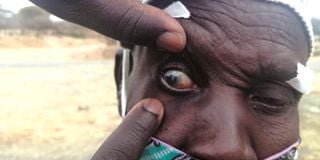
Trachoma-infected eyes.Trachoma is a neglected tropical disease.

What you need to know:
- Budget documents for the State Department of Public Health and Professional Standards show that the NTDs project received Sh20 million in 2025/26.
- However, the 2026/27 estimates show nothing. Projections for 2027/2028 and 2028/2029 are also blank.
Kenya is at risk of a rapid resurgence of deadly and disabling diseases after the government failed to allocate any funding for Neglected Tropical Diseases (NTDs) in the financial year beginning July 2026.
The budget decision leaves millions of Kenyans in endemic zones, including Turkana, Baringo, Marsabit, Kisumu, and coastal counties, without the only structured government programme protecting them against diseases such as kala-azar, schistosomiasis, lymphatic filariasis, and trachoma.
Budget documents for the State Department of Public Health and Professional Standards show that the NTDs project received Sh20 million in 2025/26. However, the 2026/27 estimates show nothing. Projections for 2027/2028 and 2028/2029 are also blank.
The diseases in question carry a significant burden.
Schistosomiasis alone affected approximately 236 million people globally in 2019, ranking as the second most economically significant parasitic disease after malaria. In Kenya, the disease is endemic along Lake Victoria and the Tana River basin, where fishing and farming communities are most at risk.
The World Health Organization (WHO) estimates that soil-transmitted helminths affect around 1.5 billion people worldwide, including more than 870 million children. These worm infections interfere with nutrient uptake, causing anaemia, malnourishment, and impaired mental and physical development.
Kala-azar, which is endemic in Turkana, Baringo, West Pokot, and Marsabit, has a fatality rate of more than 90 per cent without treatment.Collectively, NTDs affect nearly two billion people globally, causing approximately 200,000 deaths and nearly 50 million disability-adjusted life years each year, according to WHO.
The budget decision contradicts public commitments made just four months ago.
On January 30, Kenya commemorated World NTD Day in Kajiado County, bringing together representatives from national and county governments, development partners, health professionals, and community stakeholders.
Represented by Kenya National Public Health Institute acting Director General, Dr Kamene Kimenye, Health Cabinet Secretary Aden Duale emphasised the importance of cross-border collaboration in tackling NTDs. He reaffirmed Kenya's commitment to working closely with Tanzania to strengthen disease surveillance, harmonise service delivery, and ensure continuity of care.
Now, health advocates fear those promises may amount to little without the funding to back them.
At the same event, Alex Kilowua, Kajiado County's Executive Health executive, noted that mass drug administration has significantly reduced the impact of neglected tropical diseases on local communities. He called the approach "a proven and effective intervention for managing helminthic infections and improving the socio-economic wellbeing of affected populations." However, he warned that without domestic funding, these gains risk being reversed.
Kenya has already eliminated guinea worm disease and reduced leprosy prevalence below the elimination threshold. River blindness has been controlled in previously endemic river systems. These successes were built on years of sustained mass drug administration, community health networks, and consistent investment from both the government and its partners. Still, schistosomiasis, kala-azar, trachoma, and soil-transmitted helminth infections continue to threaten multiple counties.
WHO's acting Country Representative, Dr Neema Kimambo, pledged continued technical and strategic support to Kenya, commending the country for "implementing an essential package of care aimed at improving the quality of life of people affected by NTDs."
Development partners including AMREF Kenya, the END Fund, and the African Institute for Health and Development praised the strong partnership with the Kenya National Public Health Institute as a critical foundation for public health security, disease surveillance, and emergency preparedness. However, that partnership now lacks a domestic anchor.