For 17 years, Olgah Ayuma lived with daily physical pain, emotional exhaustion, and unwanted attention, all because of her excessively large breasts. The breasts made everyday tasks nearly impossible and exposed her to ridicule, harassment, and invasive questions.
“I had accepted my extra-large breasts, which seemed to grow every day, as part of my normal,” says the 36-year-old.
Walking through Nairobi streets, she often faced rude remarks due to ill-fitting bras that exposed parts of her breasts. “Some women would insensitively ask, ‘Na ni nini hii iko hapa kwa matiti inatokea hivi? (What is this peeping out of your boobies?)’”
“I can still remember a street boy shouting on a busy street in Nairobi, ‘Na mathe si umebeba ma Brookside zote. Si unipatie ! (Mum you are carrying all of Brookside milk. Give me some!).’”
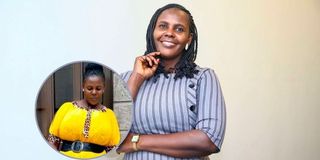
Olgah Olika during the interview at Nation Centre on September 6, 2024.
Photo credit: Wilfred Nyangaresi | Nation Media Group
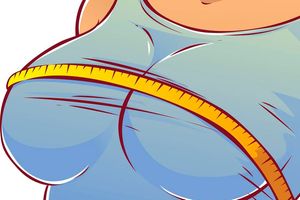
gigantomastia, a condition that causes excessive breast tissue growth. This results in disproportionately large breasts, affecting both men and women, although more commonly seen in women.
Even more distressing were the unsolicited touches and crude remarks about her body. “I had to develop a thick skin to endure it all, but eventually, the physical pain became unbearable.”
Her large breasts caused severe pain in her back, neck, and shoulders, making simple daily tasks impossible. “I couldn’t bend to do chores, and even washing clothes for 30 minutes was a struggle,” she recalls.
Finding suitable bras was another challenge. She could only afford second-hand ones, each costing at least Sh2,000, and often had to wear two at a time for enough support, as a single bra couldn’t bear the weight.
In September 2021, weary and in pain, Ms Olika finally sought help at Kenyatta National Hospital (KNH). After an initial examination, she was referred to the German Medical Centre in Upper Hill, Nairobi, for a breast scan. Fear delayed her visit—she was terrified the results might reveal cancer.
“I took three months before going in, terrified of what the results could reveal,” she says.
Fortunately, the scan showed that her condition was not cancerous but confirmed that her breasts were still growing due to gigantomastia. The doctor warned that without treatment, the weight could eventually cause her spinal cord to fail. Surgery was the only option, with an estimated cost of Sh1 million in India—far beyond her means. “I went home, prayed, and endured six more months of pain,” she recalls.
In January 2022, Ms Olika came across a Facebook post by Ruth Makena, a gigantomastia survivor and founder of the Gigantomastia Foundation. The foundation subsidises breast reduction surgeries and works to raise awareness about the condition. When they met, Ms Makena was shocked by Ms Olika’s condition and informed her that the foundation could cover between 60 and 70 percent of the surgery costs, leaving her to raise the remaining balance.
“By then, the pain in my back and neck was unbearable. It is like my breasts were growing every day. Yet I was in my 30s.”
By the time she underwent surgery, she had already stopped working due to constant pain.
“I needed a caregiver for six weeks and couldn’t sleep on my side.” “The doctors had also advised that I walk around frequently so that I do not get the clots,” she adds.
After three months, the bandages were finally removed, and she enjoyed her first full shower. “I stood under the water for two hours. It was one of the best moments of my life,” Ms. Olika recalls. The day she wore a properly fitting bra without any extra layers was truly monumental.
Having spent about three months indoors, she longed to get outside. “People would look at me and ask, ‘What has happened to you? You’ve lost a lot of weight…’ Then came the insensitive comments, like, ‘Hiyo bust ilikua kubwa sana. Ulikua unakaa mumama’ (That bust was huge. You looked like an old mother…).”
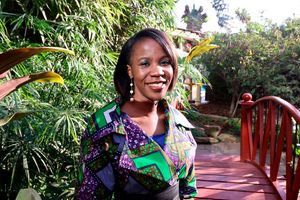
Olgah Olika during the interview at Nation Centre on September 6, 2024.
Photo credit: Wilfred Nyangaresi | Nation Media Group
But the journey didn’t end there. Emotional healing proved just as important as physical recovery. “I felt lonely despite the support around me,” she admits. Well-meaning comments from others often triggered difficult feelings. “People would say, ‘You look different,’ or make remarks about how I used to look. Even friends would ask when I’d start dating, as if my new body came with new expectations.”
Then, the audacity. “I remember one of my friends asking me, ‘Now that you are in a good body, when are you starting dating?’ I told her that I have not even gotten to the dating stage that I am still at the healing phase.
Ms Olika had long avoided romantic relationships, recognising that men often focused on her body, not her. “Delivering clothes to clients, some men would ask to touch my chest, not understanding the pain I endured,” says the entrepreneur behind the online clothing store, Olgah Olive Collection.
To heal both physically and psycho-socially, Ms Olika woke to the realisation that she had to work on her emotions. At some point, she sought professional counselling.
“By then, all the negative comments, images, and perceptions I had absorbed over those 17 years—from family, friends, and strangers on the streets—were flashing through my mind, their voices deafening,” she recounts. “‘You are not worthy.’ ‘You are not beautiful.’ ‘Your breasts are sagging too much.’ ‘You’re eating a lot.’ Others even said to my face, ‘Your big bust is because of family planning.’ ‘Maybe you’ve been procuring abortions.’ ‘Perhaps someone has bewitched you.’ All these painful words kept replaying sharply in my mind.”
Forgiveness was key to her recovery. “I had to forgive those who hurt me and even myself for my negative self-image,” she says.
Through this journey, her faith wavered. “I questioned God despite serving in church. But after the surgery, I reconciled with Him. I would ask, ‘Why am I different? Why am I going through this, and I am in your house serving you faithfully? On many nights when the pain became unbearable, I would sit down at night, ask God so many questions.
After the surgery, she started investing in herself, especially her dressing. “I felt that I needed to dress well. I even had to learn how to walk straight; I had been accustomed to walking leaning forward. I used to call it bend-walk.”
Gigantomastia is a silent struggle for many women, most of whom simply accept their condition because they are unaware that help is available.
Ms Olika, like Ms Makena, has embraced social media as a powerful advocacy tool to raise awareness and encourage others living with the condition to seek medical help.
“I have seen a number of women coming out and embracing their transformation journeys and healing. Patients come from as far as Wajir, Marsabit, and far-flung areas of the country to Nairobi to seek treatment.”
Last year alone, about 60 patients went through the surgery.
“The awareness has gone beyond Kenya, and gigantomastia patients are coming from Tanzania, Uganda, Malawi, Sierra Leone, Ghana, Cameroon, Nigeria, South Africa, and the UK.”
However, the biggest challenge to this has been access to financing.
Medical insurers still term gigantomastia treatment, normally breast reconstructive surgery, as cosmetic, she says.
“We hope that one day the government will start paying for treatment,” Ms Olika says.