Who should use GLP-1 injections such as Ozempic, Wegovy and Mounjaro to lose weight and who should stay away?
As more Kenyans turn to GLP-1 medications to shed excess weight, some are obtaining the injections from beauty parlours without proper medical assessment. Doctors explain who qualifies, the potential risks and why these drugs should never be treated as quick fixes.
Dr Lyudmila Schukina, a weight-loss specialist at Nairobi Bariatric Centre, says GLP-1 medications are recommended for adults living with obesity, or those who are overweight and have weight-related health complications.
Before one is given the shots, doctors take into account a person’s body mass index (BMI), waist circumference, medical history, general health, and previous attempts at trying to manage their weight.
Generally, people with a BMI of 30 or above may be prescribed these weight loss injections, while those with a BMI of 27 or higher may also qualify if they have conditions such as type 2 diabetes, high blood pressure, high cholesterol, or sleep apnea.
“For somebody who is already at a healthy weight and just wants to lose five kilogrammes to look slimmer, I wouldn’t recommend these injections,” she says.
“These are medical treatments, not something to take just because it’s fashionable.”
A qualified professional’s assessment is necessary to establish whether it is appropriate, taking into account their health history and any potential risks.
“Before prescribing the injections, we check the patient’s weight, BMI, blood pressure, medical history and any medication they are already taking,” says Dr Schukina.
“We also do blood tests to check blood sugar, kidney function, and often liver function and cholesterol.”
The doctor also asks if a person has had previous diseases such as pancreatitis, gallbladder problems, stomach conditions and if they are pregnant.
“The medications should not be used during pregnancy,” she cautions. “We also don’t prescribe them to patients with certain rare thyroid cancer conditions, particularly medullary thyroid cancer or MEN2 (multiple endocrine neoplasia type 2). For patients who have serious problems with stomach emptying or a history of pancreatitis, we have to employ careful consideration.”
To understand why these medications are prescribed for weight management, it helps to first understand what GLP-1 does in the body.
GLP-1, or glucagon-like peptide-1, is a hormone that the body naturally produces to help regulate blood sugar and appetite. Medications that mimic its action were initially developed to treat type 2 diabetes.
However, doctors noticed that patients taking them were also losing considerable amounts of weight.
Further studies were conducted, leading to the development of certain formulations specifically approved for weight management, including in people who do not have diabetes.
Beyond their effects on appetite and weight, GLP-1 medications also differ in how they work. Semaglutide, which is sold under brand names such as Ozempic and Wegovy, acts only on one hormone, GLP-1.
Tirzepatide, on the other hand, sold as Mounjaro, works on two hormones, GLP-1 and GIP (glucose-dependent insulinotropic polypeptide).
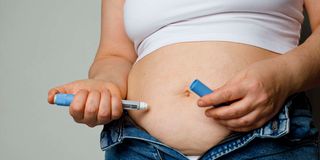
Both semaglutide and tirzepatide are taken as an injection under the skin once a week, in the stomach area, thigh, or upper arm.
Semaglutide also comes in tablet form, although not all forms are approved for weight loss in every country.
Treatment starts at Sh45,000 per month for the initial dose, with the cost increasing as the dosage is gradually raised, and depending on the clinic that one visits.
“People also need to understand that this is not a one-month treatment,” says Dr Schukina.
“Most patients will need several months, and some may need it much longer. So we discuss the costs from the beginning. We want patients to understand what they are starting and be able to continue the treatment properly.”