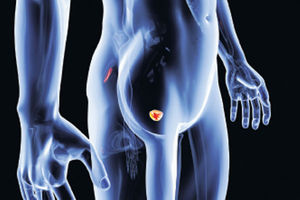
For men who hope to have children, a prostate cancer diagnosis brings questions that extend beyond treatment and recovery. One of them is whether they will still be able to father children after surgery.
Yet fertility is not always part of the early conversations patients have with their doctors, despite the potentially life-changing implications of some prostate cancer procedures.
Dr Winstar Ombuki, a consultant urologist at Aga Khan Hospital, says men scheduled to undergo removal of the prostate and seminal vesicles need to understand how the procedure affects their reproductive ability.
“After removal of the prostate and seminal vesicles, a man no longer ejaculates semen and cannot father a child through sexual intercourse, even though his testicles may still produce sperm,” he says.
For men who have not started families, or those hoping to have more children, fertility preservation should be discussed before treatment begins.
One option is sperm freezing, medically known as sperm cryopreservation. The procedure involves collecting and storing sperm for future use in assisted reproductive treatment, allowing a man to preserve the possibility of having biological children.
Dr Ombuki advises men to raise the issue with their doctors early enough to explore their options before surgery. This is particularly important because sperm collection and storage need to be arranged before the procedure.
However, men who have already undergone surgery without preserving their sperm may still have an alternative.
“Sperm can sometimes be collected directly from the testicles afterwards for fertility treatment, but success is not guaranteed,” Dr Ombuki says.
This may involve a procedure known as testicular sperm extraction (TESE), in which sperm is retrieved directly from testicular tissue. The retrieved sperm can then be used in assisted reproductive techniques, such as intracytoplasmic sperm injection (ICSI), where an individual sperm is injected directly into an egg.
This means that surgery does not necessarily rule out the possibility of having biological children. However, the available options depend on an individual's circumstances, and the chances of success need to be assessed by fertility specialists.
For men who are yet to become fathers, or those who wish to expand their families, these considerations can be as important as understanding the risks, benefits and expected outcomes of cancer treatment.
Dr Ombuki says patients should be open with their doctors about their reproductive plans before making treatment decisions. Raising the subject early gives them an opportunity to understand the available options and make informed choices.