Kenyan creators chasing a shortcut through artificial intelligence to generate content cannot claim copyright over AI-generated works or commercially exploit them as their own original creations.
As AI systems become increasingly sophisticated, their outputs are also becoming harder to distinguish from works created by human hands.
For creators, businesses and consumers, the technology presents opportunities to work faster, reduce costs and unlock new forms of innovation.
But one of the biggest questions AI has raised is ownership. Who owns AI-generated content and who should profit from it? Is it the person who wrote the prompt, the company that developed the AI model, or no one at all?
Many Kenyan creators believe they should own copyright because of their human input in the final product.
As AI systems become increasingly sophisticated, their outputs are also becoming harder to distinguish from works created by humans.
Photo credit: Shutterstock
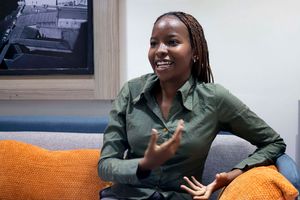
However, intellectual property lawyer Manasses Mwangi says creators cannot claim copyright over works in which AI is responsible for the substantial creative output.
"If the larger part of the work created is attributable to AI, then a creator cannot claim copyright, even if they initiated the process," says Mwangi.
"The only way you can protect works where AI has been involved, is when you create the original work and only use AI to refine it. AI should be complementary. If you can demonstrate the extent of your human contribution vis-à-vis that of AI, then you stand a chance of owning the copyright," he explains.
Mwangi likens the process to writing an academic paper that incorporates interviews with researchers.
"You acknowledge their contribution, but that does not mean the final work ceases to be yours. The same principle applies to AI."
He insists that creators who intend to rely on AI must prioritise human originality if they hope to secure copyright protection.
"You must focus on human originality and authorship. AI should only help refine human ingenuity. That is the only way you can claim copyright over works involving AI."
His position mirrors a recent Copyright Tribunal decision—the first of its kind in Kenya—involving an author who used AI to produce content for a company that had commissioned her work.
The Tribunal emphasised that copyright protection for AI-assisted works depends on demonstrable human creativity.
The dispute involved Cynthia Beldina Akoth, an author of Bible scripture stories, who used AI tools while producing content for Aryeh Movement Ltd, the company that had contracted her.
After the working relationship broke down, Beldina discovered that Aryeh had registered the literary works with the Kenya Copyright Board (Kecobo) in its own name.
She filed a complaint seeking the revocation of the copyright registration, arguing that she had neither consented to the registration nor transferred ownership of the works to the company.
Kecobo agreed and revoked Aryeh's registration certificate. Aryeh appealed the decision before the Copyright Tribunal.
Although the dispute centred on ownership and registration, it also forced the Tribunal to confront a question Kenya's Copyright Act has never expressly addressed: “Can AI-generated content attract copyright protection? And if so, who owns it?”
In its judgment, the Tribunal held that Kenyan law recognises only human authorship. It noted that the Copyright Act defines an author as the person who first creates a literary, musical, dramatic or artistic work.
Although AI is capable of generating content and creators are free to use it, the Tribunal observed that AI lacks the legal personality required to qualify as an author.
It further held that originality, creativity and intellectual effort—the foundations of copyright protection—cannot be attributed to a machine. Consequently, AI cannot own copyright or be recognised as an author.
While Kenya's Copyright Act does not expressly address AI-generated works, it already requires literary works to possess sufficient originality arising from human effort before they qualify for protection.
"There has to be an element of sufficient human intervention to determine the extent of copyrightability of works generated by AI," the Tribunal observed.
It added that AI-assisted works qualify for copyright protection only where the author can clearly demonstrate substantial human contribution that gives the work its original character.
The ruling means creators remain free to use AI platforms such as ChatGPT and image generators during the creative process. However, AI alone cannot produce a copyrightable work. Human creativity must remain the driving force behind the final product.
For Kenya's growing community of writers, musicians, illustrators and other creators experimenting with AI, the decision draws a clear distinction: AI may be a collaborator, but it cannot be a co-owner, nor can it transform someone else's creative labour into a registrable asset.
Anyone seeking to monetise AI-assisted works will therefore need to keep detailed records demonstrating the extent of their own creative contribution relative to AI's role.
The ruling offers both reassurance and caution. It confirms that using AI does not automatically disqualify a work from copyright protection, but that protection extends only as far as a creator can prove genuine human creativity shaped the final work.
Beyond the AI question, the Tribunal also clarified Kecobo's powers. It ruled that the Board exceeded its mandate when it revoked Aryeh's registration certificate in an attempt to determine ownership following Beldina's complaint.
According to the Tribunal, Kecobo's role is limited to maintaining the copyright register. Where ownership is disputed, the matter must be resolved by the courts or other competent judicial bodies—not the regulator.
Aryeh had argued that it commissioned the work and that copyright therefore belonged to the company.
The Tribunal, however, found significant gaps in the evidence. "For the Appellant (Aryeh) to prove that the said works were commissioned, an agreement is imperative."
Although documents presented outlined the responsibilities of those involved in the project, they did not expressly identify the author of the literary works.
The closest evidence was an agreement naming Aryeh as the copyright holder while crediting Beldina and a colleague, Pauline Mwangi, for their contributions.
The Tribunal acknowledged Beldina's moral rights as a scriptwriter and illustrator using AI-generated imagery, but stopped short of determining legal authorship because neither party had presented sufficient evidence.
Rather than speculate, it urged the parties to resolve the question of authorship and any resulting commercial ownership arrangements themselves.