Hello

Your subscription is almost coming to an end. Don’t miss out on the great content on Nation.Africa

Ready to continue your informative journey with us?

Hello

Your premium access has ended, but the best of Nation.Africa is still within reach. Renew now to unlock exclusive stories and in-depth features.

Reclaim your full access. Click below to renew.

Nichole M. Bess
Caption for the landscape image:

How mishandling of black designer led Nichole to start Noir Fashion

Scroll down to read the article

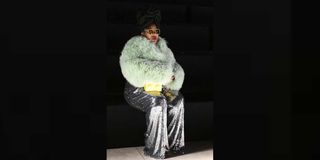
Nichole M Bess is a global fashion industry leader and the Founder of Noir Fashion Week.

Photo credit: Pool

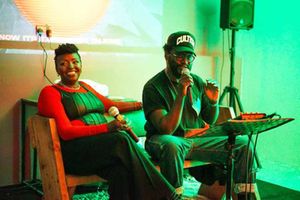
Nichole Bess, founder of Noir Fashion Week, speaks to Buzz.


First off, I like your fashion sense.

Thank you. I always wear our own designers. My earrings are from a South African designer who now lives in Cambodia. My jacket is by a Nigerian designer based here in the States, and my ring is from an American designer living in Bali.


How did you discover this side of yourself?

All the women in my family are fly — my mother, grandmother, aunts, even my male cousins. But interestingly, I originally wanted to study politics. I think my mother wanted to live through me a little bit, so she pushed me into fashion school.

Fashion wasn’t really my first love. I was in student government, Future Business Leaders of America; always entrepreneurial. I made my first perfume when I was nine. My mom bought it from me. At 12, I had a babysitters’ club. So I always had that business mindset, but I genuinely thought I would end up in politics.

Even now, every few years, my dad asks me, “Are you going to run for mayor yet?” And I’m like, “No, I’m too far gone in fashion.”

When I first went to fashion school, my dad actually asked my mom, “Why would you send my daughter to do something so stupid? Are you trying to make her dumb?” But 24 years later, here we are.

What has always remained constant, though, is wanting to change the world — being a changemaker, a culture shifter, helping people who feel overlooked. I like to call myself the ‘Harriet Tubman of fashion’ because I built an underground railroad to global access. That’s how, later in life, I merged fashion with purpose.


You built this ‘underground railroad,’ but you were already succeeding in the industry yourself. Why did you feel the need to reach back and bring others with you?

I worked directly within New York Fashion Week for 29 seasons. I usually say 30, but technically the 30th season was when I started Noir.

During my 29th season, I witnessed a young Black male designer being treated horribly. He couldn’t find his Covid card, and at the time nobody was allowed in without it.

He and his mother had spent nearly $60,000 (Sh7.8 million) — basically their life savings — on his showcase. I’ll never forget it.

He was from Buffalo, New York, and had an older mother who was supporting him.

The heartbreaking part is that I didn’t have my card either, but I was allowed in. He wasn’t. They made him stand outside and watch his own show through a window. Even now, talking about it shakes me up.

That was the moment I realised I couldn’t continue being the Black woman navigating white spaces alone. I needed to create something where people who looked like me had the same access to the same rooms.

The very next season, almost ten seasons ago now, I launched Noir in Soho, intentionally. People associate Soho with luxury, wealth and whiteness, but many people don’t know it was originally African-owned farmland. So I said, “We belong here.”

At the time, there used to be a Fashion’s Night Out in Soho, but it was eventually shut down because, according to some people, it became “too Black.” Back then, people even referred to us as “New York Fashion Week Black.”

But we showed up in Soho anyway, because that’s our home too.


When you first started Noir Fashion Week, what did it take to pull it together?

Honestly, the story itself moved people. The idea behind Noir — “No artist left behind” — resonated deeply.

People often think Africa gets its style from the West, but it’s actually the opposite. That vision touched people in the industry. Since then, we’ve been featured in Forbes, Essence, among others, and we’ve had more than 20 billboards in Times Square. We’ve helped over 200 artists globally.

People naturally gravitated toward what Noir represented.


How many designers did you have during that first showcase?

Around 22 designers. And the show lasted about four days; we were absolutely exhausted.

At what point did you realise you were heading in the right direction?

It was the overwhelming love from the city. The line wrapped around blocks. The owner of the building actually came with his wife, mother-in-law and children because he wanted to make sure we weren’t over capacity.

We absolutely were over capacity.

I remember hugging him and begging him to let us continue. It was so packed that people were standing shoulder-to-shoulder against the walls while we pushed chairs over people just to make space.

The support came from all races too.

While Noir originally focused specifically on BIPOC (Black, Indigenous, and People of Colour) designers, we’ve evolved the mission into supporting BIPOC and global designers more broadly. Ultimately, the goal is to eliminate the idea of the “starving artist,” especially for people who look like me.

Nichole M. Bess

Nichole M Bess is a global fashion industry leader and the Founder of Noir Fashion Week.

Photo credit: Pool


Why Nairobi? What made the city appealing to Noir?

Nairobi is a gateway city. It sits naturally at the intersection of culture, craftsmanship and commerce. That’s exactly where Noir operates best.

I genuinely believe Noir can help Nairobi, and Kenya in general, become East Africa’s fashion hub. There’s room for growth here. There’s opportunity.

And honestly, Kenyans are just wonderful people. As I’ve expanded Noir globally and opened hubs around the world, I knew I wanted to start somewhere that was still developing its fashion footprint internationally.


When you came to Nairobi for the first showcase, did the experience validate what you already believed about the city?

Absolutely. More than anything, it was the warmth of the people.

I met some incredible people in Kenya, and I immediately saw opportunity not just for growth within Kenya, but for exchange. Bringing Kenyan designers to America and introducing American creatives to Kenya. That kind of cultural and economic exchange is very important to me.


What kind of potential do you see in that exchange?

Huge potential. We’re building what I call a global corridor, focused on wholesale exchange, visibility and brand awareness.

We’re developing a programme where Noir helps designers secure their first 10 stockists. We don’t just want designers selling one garment at a time, we want to become their sales representatives and actively help them land wholesale accounts.

That matters to me deeply because creatives deserve sustainability. Design should build legacy.


How do designers get selected for Noir Fashion Week?

The first thing is investment. Designers have to invest in themselves.

If you don’t invest in yourself first, you eventually become a burden to a programme or fashion week.

So yes, there are participation fees. But we don’t only look at creativity or aesthetics, we look at readiness. Are your look books ready? Your line sheets? Are you prepared for wholesale orders, celebrity styling, media placements and the global market?
That said, we don’t believe in simply rejecting people. We have an emerging designers collective specifically for creatives who may need guidance but clearly have potential.


Noir now operates in several countries. How do you distribute opportunities across those markets?

We currently showcase in Kenya, Moscow, South Africa, Paris and New York. By 2027, we plan to expand into Tokyo and Cairo.

We try to spread opportunities evenly, but we also focus on what fits each designer best. If 100 designers applied today, we wouldn’t necessarily showcase all 100 in Kenya. Some might fit New York better, others Paris or South Africa.
The goal is growth not just numbers.


This year’s theme is “African Code.” What does that mean?

Our incredible creative director, Itumeleng Kwele, came up with the concept. It is essentially a living archive: memory, innovation, identity and future-thinking all happening at once.

On the runway, it becomes a conversation rather than a single aesthetic. It’s about honouring African creativity while also showing its evolution.


You often speak about African fashion and African luxury. What does African luxury mean to you?

African luxury is intentional craftsmanship. It’s story, ownership.

In America, custom-made fashion is treated like a luxury experience. In Africa, craftsmanship is already embedded in everyday life and culture. That’s why I always say there is no New York without Africa. There is no “us” without Africa. African luxury doesn’t wait for validation from the West. It defines value on its own terms.


Where do you see Noir five years from now?

Five years from now, Noir will have a CEO and I’ll probably sit on the board.

I see us operating in at least 20 countries with one global system powering multiple local teams. I see us owning two or three permanent showroom spaces that operate both wholesale and retail.

I also want to build a school dedicated to the creative economy — not just fashion.

Most importantly, I want Noir to become a true ecosystem for creatives. I never want designers leaving us feeling like they spent money and gained nothing.

At Noir, people are not just numbers.


What would you tell your 16-year-old self?

I would tell her not to worry so much about fitting in or proving herself to people who don’t understand her vision yet.

I’d tell her that purpose always finds its way back to you.

And I’d tell her to trust the process, because one day all the things that felt disconnected — politics, fashion, activism, culture — would eventually merge into one life’s work.