Those who truly know me know that I have always believed leadership is about making difficult decisions, especially when everyone else is comfortable doing nothing.
Unfortunately, at Mwisho wa Lami, the moment you make a decision that inconveniences someone, you become the enemy of progress.
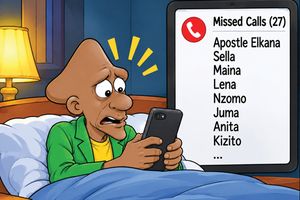
Last Friday, I had made it clear that teachers would be reporting to school during the December holidays. I had prepared a duty rota, pinned it on the noticeboard and communicated the same on the staff WhatsApp group. I was particularly pleased with myself. For once, I felt we were going to do things differently. But, as I would soon discover, not everyone shared my enthusiasm. The first casualty of my holiday productivity programme was my peace of mind. On Saturday morning, my phone started buzzing. I had several missed calls and messages from teachers. Some wanted clarification on the rota, others wanted to know why their names appeared more than once, while a few were simply asking whether the noticeboard had been updated.
"Dre, I have seen the rota. I am not available on the dates indicated." I asked her why.
"Personal commitments, Dre. Surely, I don't have to explain my private life to the school."
I considered reminding her that the government was paying her salary, but decided against it. I had learnt that some conversations were better postponed until Monday. Then there was Sella, who wanted to know whether teachers who had already made travel arrangements would be exempted.
"That is not the point, Dre."
I wondered why teachers always wanted to travel during the holidays. Didn't they have homes? Didn't they have families? What was wrong with spending a few days at Mwisho wa Lami preparing for the coming year? I decided not to engage further.
On Sunday evening, I posted another message on the staff WhatsApp group reminding everyone to check the rota. Madam Mary responded with a thumbs-up emoji. I was encouraged. At least someone understood. Then she followed it with another message:
"Mr HOI, will there be lunch when we report during the holidays?"
I ignored her. Monday arrived. I had decided to honour my appointment with the KNUT Secretary-General. I would face KNUT mundu khu mundu (man to man). Before leaving, I instructed the school watchman to ensure that the rota remained firmly pinned on the noticeboard. I had a feeling someone might remove it. At precisely 10 o'clock, I arrived at the KNUT offices.
The Secretary-General, Juma, was seated behind his desk. There were two other officials in the room, one of whom I recognised as the local branch treasurer. It was clear that these were people who did very little, but were very good at collecting money from teachers. There was neither an in-tray nor an out-tray on their desks. I wondered what exactly kept them busy all day.
"Dre, welcome," Juma said, without getting up.
"Thank you," I said, taking a seat.
"We have received several complaints from teachers at Mwisho wa Lami concerning your decision to compel them to report to school during the December holidays."
"Compel?" I interrupted. "Juma, I think that is a rather strong word. I have simply introduced a structured productivity programme."
"Call it whatever you want, Dre. The teachers are on holiday."
"Are they on holiday, or are schools closed to pupils?" I asked.
"Dre, are you aware that teachers have families, children and personal responsibilities?"
"Of course I am aware. I also have a family. But surely, we cannot allow personal convenience to take precedence over professional responsibility."
"Yes, but I also believe that professional preparation is part of our responsibility."
I paused. I had anticipated this question, but I had not prepared a sufficiently elegant response.
"Because there are things that need to be done within the school environment. We need to prepare schemes of work, review departmental performance, organise teaching resources and ensure that the school is ready for the New Year."
There followed considerable back and forth, with neither side willing to concede. Seeing that the discussion was headed nowhere, I decided to make my position clear.
"Leadership is not a popularity contest," I declared.
"Let me tell you something, Dre. You are not the first head teacher to think he has discovered a new way of managing teachers, and you will not be the last. But you cannot introduce your own rules simply because you have decided that teachers are taking too many holidays. For your own safety, you have one week to cancel this arrangement, or you will face the full force of KNUT. We are a hard nut to crack, remember!"
He then ushered me out. I was happy to be out. As I walked away, I checked my phone. There was a WhatsApp message from Mrs Atika, posted on the staffroom group. It was a photograph of herself enjoying what appeared to be a rather elaborate breakfast.
"Enjoying retirement. Some of us have finally discovered the meaning of life." I stared at the photograph, but was interrupted by a call from an unfamiliar number. It was the Sub-County Director's office.
"Dre, I understand you have introduced a holiday attendance rota for your teachers."
"Please hold on. We have received a complaint. I would like you to come and explain the arrangement."
First KNUT. Now the Sub-County Director. I was beginning to wonder whether I had introduced a school programme or declared a national emergency. When I arrived at Mwisho wa Lami, the watchman informed me that several teachers had already called to ask whether the rota was still valid.
"Tell them it is," I said.
I walked into my office and found a letter on my desk. It was from Anita, informing me that she had travelled to Nairobi for medical reasons and that I should not expect her in school during the holidays. Medical reasons? I wondered whether the holiday productivity programme had suddenly become a health hazard. I decided to put the matter aside and concentrate on more pressing issues. I drafted a letter to the Sub-County Director explaining that teachers were expected to fulfil their professional responsibilities throughout the school calendar, including during school holidays. I clarified that I had not asked them to report every day, but had merely proposed selected days for professional preparation and general school maintenance.
I was determined to make my case. Unfortunately, the rota was proving more popular on paper than in practice. Last week, only Erick and I reported to school. Erick came on Tuesday and Thursday, while I made an effort to be present daily, even if for just half an hour. On Friday, KNUT wanted to see me again. Juma reminded me that I had been given until that day to respond to their concerns.
"I thought I explained everything to you during our last meeting," I told him.
"Dre, I will not engage you any further. I have said what I needed to say. You will face the full wrath of KNUT on Monday. Act now or expect fireworks!"
He disconnected. I stared at my phone. Fireworks? I had set out to ensure that the government got value for money. Instead, I was about to spend the entire holiday explaining why I wanted teachers to work during the holidays.
I am ready for KNUT. I am ready for anything. If teachers believe that I will abandon my vision simply because a few people have threatened me with fireworks, they clearly do not know Mwalimu Andrew.