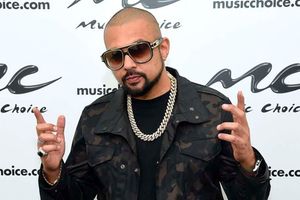
Nigerian singer and entrepreneur Mr Eazi, known for hits like “Leg Over,” “Pour Me Water,” and “Skin Tight,” has accumulated more than 1.6 billion streams on Spotify across tracks on which he is credited, while his YouTube channel has attracted over 626 million views. Beyond his music, he is the founder of emPawa Africa, a talent incubator that launched in 2018 by selecting 100 artistes from 10,000 entries across 14 countries, and the venture firm Zagadat Capital.
Your new song, “Comfort” featuring Moliy (“Shake It To the Max” fame), has been gaining attention. What inspired it?
I saw a video of my niece dancing to Tyler, the Creator. She's about six or seven years old, and I thought, “Whoa, she's not dancing to my record.” I needed to continue being the coolest uncle in the world. I wanted to make songs that my niece could listen to and dance to.
My label, emPawa, was involved in putting out his first album through a licensing deal with Legacy Life, the label associated with producer Killbeatz. Beyond our friendship, we've also worked together on the business side. When we ran the emPawa programme in South Africa, King Promise was one of the mentors.
Nigerian singer and entrepreneur Mr Eazi, known for hits like “Leg Over,” “Pour Me Water,” and “Skin Tight,” has accumulated more than 1.6 billion streams on Spotify across tracks on which he is credited, while his YouTube channel has attracted over 626 million views.
Photo credit: Pool
I went to Harvard because I wanted to understand the business of entertainment and sports. I realised that sports, comedy, music, film and even TikTok are all entertainment. I started looking at them as part of one industry and asking how I could bring what I learnt back home.
You once wanted a small, private wedding. What changed your mind?
I still had a small, private wedding. We had 90 people, which I think is quite small. In Nigeria, my sister had about 1,500 people at her wedding. So, 90 is really small. It was still a small and private wedding.
I'll be honest with you. My wife and I had been together for a long time, so rather than being surprised, we were discovering this new journey together, step by step.
Maybe there will be fewer breakup songs. There will be fewer sad love songs and more bright love songs.
I'd finished recording The Evil Genius, and that's just what flowed out of me at the time. I really appreciate that project. I'm really grateful for that project.
Nothing, to be honest, because everything that has happened has brought me to this point. And it's a very blessed point. I'm grateful for all the highs and the lows.
Nation inside (82)
Photo credit: Pool
Does music still make you the most money, or have your businesses overtaken it?
I'd give it all to music because music is the start of everything. When you're building a 20-storey building, the most important thing is the land.
Number one is the sound. If the sound catches me, that's important because sound is everything. You could put all the money in the world into a song, but if people don't connect with it, they don't connect with it.
Oluwatosin Oluwole Ajibade aka Mr Eazi.
Photo credit: Pool
I think funding is still a major challenge for African artists. The more you find out how much money goes into promoting music, the more you realise how many talented artists the world isn't hearing because they haven't been able to get funding to hire the right teams.
I think one mistake artists make is giving up too early. I say that even from my own experience.
Beyond the music, what do you want to be remembered for?
Just having a positive impact on the world.