For Catholics, November is traditionally dedicated to remembering and praying for the dead, a devotion that centres on the belief that prayers offered by the living can help souls undergoing purification in Purgatory reach heaven.
The practice is rooted in the Catholic belief in the Communion of Saints, which holds that the faithful on earth, the souls being purified and those already in heaven, remain spiritually united. It is the belief that death does not completely cut the bonds between members of the Church.
But why do Catholics pray for the dead? What happens when a Mass is offered for someone who has died, and can prayers from the living make a difference to the departed?
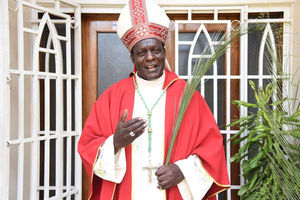
During this year's All Souls' Day commemoration on November 2, Bishop Cleophas Oseso of the Catholic Diocese of Nakuru offered an explanation of the Church's teaching, urging the faithful not to substitute material expressions of grief for spiritual care.
“The dead need our prayers because there is something within every human being that remains eternal, and that is our soul,” he said. “A deceased person cannot consume food or even spend money; they cannot appreciate the lavish coffins we provide for them. The only thing they crave for is our prayers. I pray that when our time comes, there will be someone to pray for us.”
Congregants during an evening Mass at Holy Cross Catholic Church in Lavington, Nairobi, on July 10, 2026.
Photo credit: Wilfred Nyangaresi | Nation Media Group
For families who have lost loved ones, the practice is not merely a religious obligation but also an expression of continuing love. The practice is anchored in the doctrine of Purgatory, which the Church describes as the final purification of those who die in God's grace but are not yet fully purified before entering heaven. It is not a second chance at salvation, nor is it hell, but a purification of the soul.
Purgatory (from the Latin word purgatorium, which means “to purge”) remains one of the major theological differences between Catholicism and many Protestant traditions. While Catholics affirm the doctrine, most Protestants and Evangelical denominations, basing their argument on scripture, maintain that the soul's final destiny is heaven or hell. 16th-century Protestant reformers such as Martin Luther rejected the doctrine altogether.
One of the scriptural passages used to support this practice is 2 Maccabees 12:38–46, which recounts Judas Maccabeus offering prayers and sacrifices for fallen soldiers, in the belief that they could be freed from sin. The passage concludes by describing praying for the dead as a holy and wholesome thought.
Bishop Peter Kimani Ndung'u of the Diocese of Embu has spoken of the unity between the living and the dead through prayer, affirming that those who have departed remain part of the communion of believers.
As clergy, religious men and women, and hundreds of Christians gathered at St Peter and Paul Cathedral in Karurina, Embu, to commemorate All Souls’ Day in a solemn Mass dedicated to departed bishops and priests buried at the cathedral’s cemetery, Bishop Kimani urged the faithful to continually pray for departed souls.
“Death is not the end, but a transition to eternal life with God,” he reminded the congregants in his homily, encouraging them to live righteously as they prepare for the afterlife.
The Church's understanding of how such prayers benefit the departed has evolved over time. However, it finds expression in the Masses Catholics request for deceased relatives and friends. A Mass offered for someone who has died is not merely a memorial service. It is a Eucharistic celebration, with the faithful asking God to receive the departed into His mercy.
Families may request Mass shortly after burial, on the 40th day, during anniversaries of death, birthdays or All Souls' Day (annually on November 2), when the Church remembers the faithful departed. Some continue the practice for years, long after the immediate period of mourning has passed.
For Catholics who wish to have a Mass offered for a departed relative, the process is simple. They can approach their parish office or sacristy, where they may be given an envelope to write the name of the deceased and indicate their intention. The envelope is returned with a monetary offering. The priest will then mention the deceased’s name during the Eucharistic Prayer, just before the Communion Rite.
“Every year I entrust my dead family members to God. I offer Mass for them so that wherever they are, they may receive God’s pardon and mercy, and that God may welcome them in the light of his face. It gives me some comfort because praying is the only thing I can do for them and is the only way I can show them love. We Catholics believe that the soul never dies, so I know that the souls of my loved ones receive and benefit from my prayers,” says Mr John Otiso, a faithful at St Catherine of Siena Catholic Church, Kitusuru, who has been offering Mass for his departed family members every Sunday since the beginning of this month.
Not an attempt at communing with the dead
This responsibility is not, however, an attempt to communicate with the dead. Catholic teaching does not encourage the faithful to summon spirits or seek messages from them.
The distinction is important especially in Africa, where Christian beliefs about death coexist with cultural traditions around the departed. The Catholic practice is directed towards God, not the departed, asking Him to show mercy to the deceased and bring them to the fullness of eternal life.
For families who have lost loved ones, remembering the dead in prayer offers a way to live with grief without feeling that the relationship has ended. Prayer becomes an expression of love, but also of hope; the hope that the person who has died is held in God's mercy.