The year is 2005. At St Mary’s School in Nairobi, a young Muthoni Ndonga — now widely known as Muthoni Drummer Queen (MDQ) — is preparing for what will be her first independently produced show. She is not yet a household name, but she already carries a strong sense of conviction. Her band is made up of friends: instrumentalists and singers who double as backing vocalists and collaborators. Together, they plan to perform 17 songs, 10 of them original compositions.
With no formal machinery behind them, the group markets the show themselves. Each member tells friends, who in turn spread the word further. Through sheer persuasion and belief, they even manage to convince Big Ted to sponsor the lighting and sound. What unfolds is far more than a typical school performance.
The show features lighting cues, interludes, choreography, costume changes and deliberate engagement with the audience. The team handles ticketing, feeds the artistes, sets up backstage changing rooms, organises security and ensures basic amenities such as toilets for the crowd. When the final curtain falls, the audience is generous in its praise. For Muthoni, the night affirms something she has long felt: that music, and the careful curation of experience around it, is where she belongs.
Looking back, she recognises that the foundation of Blankets and Wine was already taking shape. “Blankets came to me as a full idea,” she reflects years later. “It’s as though I downloaded it from the ether in its totality. The work since then has been about bringing it to life. What I hadn’t accounted for was how long it takes to actualise something you know should exist.”
Muthoni Ndonga is the organiser of Blankets and Wine
In 2006, Muthoni auditions for the first season of Tusker Project Fame (TPF), a reality television competition that promises visibility and industry access. She is eliminated just before the finalists move into the house, a moment that is disappointing but not derailing. During the judges’ preparation sessions, she connects with David Muriithi, better known as DJ D-Lite — an auditor by training and a music industry insider by passion.
Known for his accessibility and generosity, DJ D-Lite becomes an important early mentor. Muthoni asks questions relentlessly, eager to understand the mechanics of the industry she hopes to thrive in. He sends her reading material, shares insights and allows her to use him as a sounding board. She absorbs everything, determined to make sense of the ecosystem beyond the stage.
Unwilling to relinquish her dream of being a working musician, Muthoni goes on to start a showcase gig at a bar in Westlands. Every other week, she stages two shows: one night focused on neo-soul, the other on her own catalogue. The format is deliberate. Audiences come curious and often leave impressed, bringing friends along the next time and purchasing CDs after performances.
The experience offers a lived lesson: people are open to unfamiliar music when it is presented thoughtfully. Over the course of a year, Muthoni learns by doing — budgeting, marketing, scheduling rehearsals, preparing sets and delivering performances consistently. At the time, she works as a programme assistant at ICRAF and pre-finances the showcases with Sh50,000 from her salary. The money goes into rehearsals, band fees, costumes, flyers and CD printing, with the hope of recouping costs through ticket sales and a percentage of bar revenue. Tickets sell for Sh300.
Gradually, cracks begin to show. Returns thin out, and Muthoni realises she doesn’t fully understand how the bar operates. She has relied on trust rather than clarity. “When I started losing money, I knew I was at an inflection point,” she says. “Two or three gigs in, it was clear this wasn’t going to be sustainable.” She also becomes aware of another challenge: every few months, she would need to present an entirely new body of work to keep audiences engaged.
In 2007, an opportunity came through the British Council, which selected her for the Bring the Noise residency in London. Working alongside UK artistes and producers, participants are given two weeks to create a show from scratch and perform for an audience unfamiliar with their work. The experience shifts Muthoni’s understanding of music festivals fundamentally.
She learns that festivals are not merely performance platforms, but meeting points for communities. Each artiste represents a distinct audience, and festivals work by collapsing those communities into shared space. “In your own community, you might be very popular,” she explains, “but you’re suddenly placed alongside people who have never heard of you. What that taught me is that people don’t need to know who you are. They just need to be convinced to come. Once they’re through the door, the music does the convincing.”
The residency leads to performances in London, Yaoundé, Kampala, Addis Ababa and Nairobi. The exposure gives her language, confidence and a clearer sense of how to build a repeatable, discovery-driven programme.
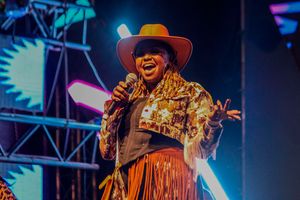
Muthoni the Drummer Queen.
Back in Nairobi, she applies these lessons. During her final month running the Westlands showcase, Sauti Sol open for her. For the first time, she experiences the relief of stepping fully into the role of performer while someone else holds the stage. Friends suggest she try something different — a daytime show in a non-club environment, where audiences must actively choose to attend, and where she can define the experience from the ground up.
Muthoni senses the city is ready. Nairobi has clubs and concerts, but she imagines a third space — an outdoor music festival on a Sunday afternoon, stretching into early evening. A space where people can dress freely, bring pets, pack picnics or buy food on site, sit on the grass or on camping chairs. A space that is intergenerational, where one could attend with friends, a partner or even a parent. At the time, Sunday entertainment options are limited, with few alternatives to established club nights.
She is also interested in presenting a curated lineup rather than centring a single artiste, allowing audiences to expand their musical tastes organically. Serendipity intervenes when a friend’s aunt, recently retired, opens an outdoor spa and invites young creatives to help activate the space. Tayiana Garden Spa becomes the first venue for Blankets and Wine — a moment, Muthoni laughs, where preparation meets opportunity.
With conviction, she presents her vision to DJ D-Lite, explaining how the layout and ethos of the event could work within the space. From that point, Blankets and Wine begins to take form. Today, the platform celebrates 17 years of existence. One of Muthoni’s favourite memories is helping raise funds for Maia Von Lekow’s project after an announcement made on stage following her performance.
As the festival grows, so do its ambitions. By 2011, a South African artiste appears on the lineup every quarter. In 2012, sponsorship from South Africa allowed for a broader international presence. By 2013, Blankets moves to Carnivore Grounds, and audience behaviour begins to shift. Increasingly, attention centres on international headliners, sometimes at the expense of Kenyan artistes.
In 2014, the team experimented with multiple stages for the first time — including a literary space, a hip hop karaoke area and an all-Kenyan drum stage. The experiment is poorly received. “It was difficult to understand why listening to Kenyans felt like a downgrade,” Muthoni reflects, noting the rise of Afrobeats and Bongo Flava during that period. They even attempted a two-day festival, but by 2015, Blankets and Wine is put on sabbatical in Nairobi.
Between 2014 and 2016, Muthoni toured extensively with Swiss producers, performing at festivals across Europe. “In 96 per cent of the festivals we played, it was because booking agents liked us at showcase presentations,” she says. Being immersed in festival environments renews her belief in discovery platforms. Together with her partners, she decides to reduce the frequency of Blankets editions, opting for two or three carefully curated shows per year. From 2016 to 2019, they averaged two festivals annually.
The pandemic brings a hard reset. With live events halted, digital distribution surges, and the volume of Kenyan music being released and consumed increases dramatically. Kenyan house music and its producers stand out. This shift inspires the creation of Onja Onja as a second stage within Blankets. The team locks in an annual calendar and returns in December 2022 at their largest venue yet — Laureate Gardens in Kasarani.
Resilience and leadership
Timing proves critical. While Sundays continue to make sense generally, December’s “Kenyan Summer” reveals that the first Sunday of the month is a misstep. Lessons from a successful late-December 2019 show guide adjustments. The pressure is immense: after nearly three years without production, failure would have been devastating.
Muthoni the Drummer Queen took on stage at the American hip hop recording artiste Talib Kweli show that took place at Ebony lounge on October 23, 2014. PHOTO | CHARLES KAMAU
Earlier in 2022, Muthoni welcomed her first child with partner Musa Omisi. Motherhood reshapes her understanding of risk, resilience and leadership. It also makes her more open to accepting help. When challenges arise, she turns to an advisory board made up of people with long business experience, allowing her to contextualise setbacks beyond the immediacy of crisis.
Her support system — partner, siblings and close friends — provides care, grounding and reassurance. While she acknowledges the effort she has put into building her career, she is equally clear about the role of grants and funded programmes in her growth. In 2019, she founded perFORM Music Incubator, a multidisciplinary music business and artiste development programme designed to upskill professionals across Africa’s music ecosystem. Trainees transition into work opportunities at the festival, reinforcing the platform’s ecosystem approach.
Even now, she observes persistent gaps within the industry — from contract literacy and negotiation skills to technical preparedness and time management. These gaps reaffirm the need for infrastructure, education and long-term investment.
As for releasing new music, Muthoni confirms that her long-awaited project with Blinky Bill is set for 2026. She resists the pressure of constant output, believing in the necessity of fallow time. “You don’t have to be always on,” she says. “Art needs quiet. Some truths are hard to relive night after night, but they matter.”