An unexpected DNA result can do more than settle a biological question. It can force someone to question relationships, family history and even their own identity.
For someone who receives an unexpected paternity or relationship test result, experts say the first response should not necessarily be confrontation or an immediate decision about the future. The DNA result should first be properly understood and, where there are genuine concerns about its accuracy, independently verified.
Dr Joseph Mwaura, founder and CEO of Labtest Zote Diagnostics, says modern DNA tests for primary relationships such as paternity and maternity are highly reliable, with accuracy of more than 99.99 per cent when standard procedures for identifying sample donors, collecting and transporting samples, and processing them are followed.
He says advances in molecular diagnostic technology, including polymerase chain reaction (PCR) and next-generation sequencing, have also made DNA testing highly accurate.
Dr Mwaura explains that paternity reports do not normally describe results as simply “positive” or “negative”. Instead, a report may state that a person “cannot be excluded” or “is excluded”.
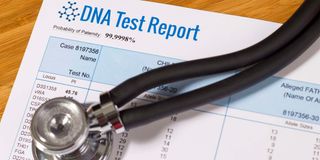
“The probability of paternity is a statistical figure showing how strongly the genetic evidence supports the possibility that the tested man is the biological father. In a typical paternity test, an inclusion may have a probability of paternity of 99.99 per cent, while an exclusion is reported at zero per cent,” he says.
An exclusion, according to Dr Mwaura, means the genetic evidence obtained is not compatible with the tested man being the biological father.
Dr Mwaura says rare biological circumstances can complicate DNA testing. One example is chimerism, an extremely rare condition in which a person can have genetically different cell populations.
“Chimerism, though extremely rare, can potentially cause false negative results,” he says, adding that repeat tests using different sample types can help clarify such cases.
If someone remains convinced that a DNA result does not make sense, Dr Mwaura recommends seeking a second opinion rather than immediately accepting or rejecting the finding.
“Second opinion tests are advisable if the concerned parties are genuinely concerned about the results,” he says. If both tests are conducted under standard protocols, he adds, the results should tally.
Dr Mwaura also advises people to consider the laboratory they use, particularly where the result could have legal or major family consequences.
“DNA testing is a weighty matter,” he says, advising people to research the regulatory and reputational standing of a laboratory.
In Kenya, Dr Mwaura says, people should ensure the laboratory is registered or licensed by relevant authorities, including the Kenya Medical Laboratory Technicians and Technologists Board and the Kenya Accreditation Service.
But confirming the biological finding is only one part of dealing with an unexpected DNA result. The emotional consequences can be just as significant, says consultant psychologist Serah Wanjiru, founder and CEO of Unique Divine Touch Counselling Consultants.
“When DNA results challenge what someone has always believed about their family, the psychological impact can be quite significant,” Ms Wanjiru says.
The first response may be shock or disbelief, followed by anger, sadness, betrayal or confusion. For some people, the experience can shake their sense of identity.
“They may start asking, ‘Who am I?’, ‘What else have I not been told?’ or ‘Were the relationships I believed in genuine?’” she says.
There may also be a grieving process because the person may be mourning the loss of a family story or understanding they have carried for years.
“Don't make major decisions or confront family members while you're still in shock or overwhelmed,” she says.
Instead, she recommends giving yourself time to process the information, making sure you understand the result and seeking clarification from the relevant testing professionals where necessary.
She also advises speaking to someone trustworthy who can listen without judging, escalating the situation or encouraging impulsive decisions.
“Most importantly, remember that you don't have to resolve your entire family situation in one day,” she says.
If someone decides to discuss the result with a partner or family member, Ms Wanjiru recommends choosing a private and calm setting and approaching the conversation from a position of seeking understanding rather than immediately assigning blame.
Instead of saying, “You lied to me,” she suggests saying: “I have received these results, and I'm struggling to understand what they mean. I would like us to talk about them.”
She also advises people to explain their own emotions rather than immediately assigning blame, while giving the other person an opportunity to respond.
“There may be information or circumstances that you don't yet know about,” she says.
Where emotions are particularly intense, Ms Wanjiru recommends postponing the conversation or involving a psychologist or counsellor to provide a safer environment.
Ms Wanjiru says warning signs include persistent anxiety or sadness, difficulty sleeping, loss of appetite, withdrawing from family and friends, difficulty concentrating and struggling with normal work and daily responsibilities.
Intense anger, frequent emotional outbursts, using alcohol or other substances to cope, increasing isolation or thoughts of harming oneself or someone else are also reasons to seek professional help, she says.
“DNA can answer a biological question, but it cannot by itself answer the emotional question of who has been a parent, who has provided love and care, or what a family means to a person,” she says.