A man seeking to overturn his conviction in a defilement case has secured a crucial victory at the High Court after a judge allowed him to introduce DNA evidence that was unavailable during his trial.
The decision could add a fresh dimension to an appeal in which the appellant insists he was wrongly implicated and has long disputed claims linking him to a pregnancy that resulted from the alleged offence.
In a ruling delivered in Kitale on June 4, the court granted an application by the appellant, identified as SVM, seeking orders for a DNA test to determine whether he is the biological father of a child born to the complainant.
The judge directed that DNA samples be collected from both the appellant and the child before being submitted to the Government Chemist in Kisumu for forensic analysis.
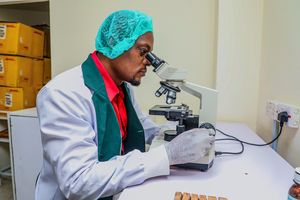
A court has granted an application by an appellant seeking orders for a DNA test to determine whether he is the biological father of a child born to the complainant.
Photo credit: Pool
The samples will be taken at Kijana Wamalwa Referral Hospital, while a competent witness will present the results before the court as part of the appeal proceedings.
The ruling follows an application filed by the appellant under Article 50 of the Constitution and Section 358 of the Criminal Procedure Code, which allows appellate courts to admit additional evidence in appropriate circumstances.
In his application, SVM argued that the DNA evidence he seeks to introduce did not exist during the trial because the complainant had not yet given birth.
He maintained that the evidence is relevant to the issues raised in his appeal and could help establish facts that were not capable of being determined when the case was heard before the trial court.
According to court records, the complainant testified that the appellant had sexual intercourse with her on several occasions between December 2024 and March 2025.
She was categorical during the trial that the appellant was the only person with whom she had engaged in sexual relations.
The appellant, however, denied the allegations and maintained throughout the proceedings that he was innocent.
He further claimed that he knew the person responsible for the pregnancy and argued that a DNA test would help clear doubts surrounding the circumstances of the case.
In his supporting affidavit, the appellant told the court that the timing of the pregnancy and the eventual birth of the child were important factors that could assist in determining whether the allegations against him were truthful.
He argued that since the child was born after the trial had already been concluded, the interests of justice required that the evidence now be considered by the appellate court.
Through prosecuting counsel Grace Rop, the State argued that the appellant had been accorded a fair trial and had been given every opportunity to challenge the prosecution's evidence.
The prosecution further noted that the complainant was already pregnant during the trial and only gave birth after judgment had been delivered.
According to the State, the proposed DNA evidence was neither necessary nor likely to affect the outcome of the appeal.
Prosecutors argued that paternity is not among the legal ingredients required to prove offences under the Sexual Offences Act.
The State also relied on previous court decisions that set out strict conditions for the admission of additional evidence at the appellate stage.
Among the principles cited were that the evidence must be relevant, compelling, unavailable during the trial despite the exercise of due diligence, and capable of having a significant bearing on the outcome of the case.
The judge found it significant that the child whose paternity is now in question was born only after the trial court had delivered its judgment.
That fact, he said, meant the evidence sought by the appellant was genuinely unavailable during the hearing of the case.
He further observed that the appellant had consistently denied responsibility for the pregnancy and had maintained that another person was responsible.
Given those circumstances, the court found that the proposed DNA evidence could have a bearing on issues raised in the appeal.
“In criminal matters the primary consideration in the exercise of any discretion are the principles of a fair trial,” the judge said.
He added that the additional evidence sought by the appellant was relevant and unlikely to prejudice any party involved in the proceedings.
“The forensic evidence is relevant and it will assist this court in determining this appeal,” the judge ruled.
The decision clears the way for forensic evidence to be placed before the appellate court before a final decision is made on the appeal.