For 20 years, Alex Ingosi lived with his wife without paying her dowry. It was not because he did not want to marry her or because her parents had refused. Rather, according to his Luhya culture, there was another obligation he had to fulfil first — paying dowry for his firstborn son, whom he had fathered with another woman and never married.
At 47, Alex, who lives in Nairobi’s Kawangware and does casual jobs, has now paid dowry twice: first for the son he had out of wedlock 22 years ago, and later, partially, for the woman who became his wife and the mother of his other four children.
“I have paid dowry twice according to our Luhya culture because I had my firstborn son with a woman I was in a relationship with, but I did not marry his mother. I had to first pay dowry for that son, then later I paid dowry for my wife whom I am living with,” Alex told Nation Lifestyle.
His story began 22 years ago when he had an intimate relationship with a colleague in Kakamega. They had hoped to marry, but her parents did not approve of their relationship because the woman came from a different community. When their son was born, the child's mother eventually took him to Alex's family home, where he was raised.
Alex says his son has since become an integral part of his family, with his wife helping raise and educate him alongside their four children.
“The boy’s mother lived with him for a very short time before she got married elsewhere, but I did not allow her to go with my son because in our culture, children, especially sons are left with their father.”
Alex’s parents took care of his son, and when the boy began school, Alex brought him to Nairobi where he was living at the time and took over the responsibility of raising him.
“My wife loves my firstborn son so much, and she has supported his education through to Form Four. His biological mother has not paid even a single cent for our son’s school fees. I am now looking for money to pay his college fees then allow him to go on with his life.”
Despite his wife’s full support in raising his son, the father of five says parenting has not always been easy, particularly because his son grew up without his biological mother. The challenges became more apparent during his teenage years, especially when it came to discipline.
Alex Ingosi, a painter and resident of Kawangware, during an interview at Nation Centre in Nairobi on September 10, 2026.
Photo credit: Wilfred Nyangaresi | Nation Media Group
“If I am struggling to discipline him as his biological dad, it will certainly be worse for his stepdad,” he says.
“When my son was in Form Two and Three, he used to visit his mother during school holidays but he would always come back saying that they were always quarrelling.”
Alex explains that his Luhya culture did not permit him to pay dowry for his wife before settling his firstborn son’s dowry — a tradition that saw him live with his wife for 20 years before finally fulfilling the obligation.
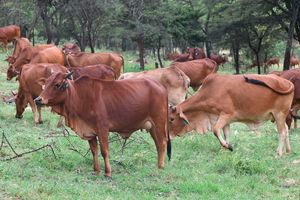
“For my son, I took Sh20,000 so that they could buy a cow because their home is very far from my homestead. For my wife, I recently paid for two cows and some money, but I have not finished paying,” says Alex.
“Our culture does not allow a man to go to the home of a woman he has fathered a child with if he has not married her. Since I could not go there myself, I talked to my two brothers and my firstborn son, and they went to take the dowry on my behalf.”
What Alex did is not unique. This is according to John Muti Lumala, a Luhya elder who says that many men in his community have paid dowry for their children born out of wedlock.
“That is what a true Luhya man does. If you don’t marry the mother of your child, the dowry is paid to the child’s maternal family in the presence of witnesses. As Luhya, we take responsibility for our children; they do not leave with their mothers,” Lumala says, adding that the dowry price varies depending on the gender of the baby.
“If the baby is a girl, the father is supposed to pay three cows and Sh15,000, while if the baby is a boy, the father is expected to pay two cows and Sh1,000 or Sh5,000. The dowry is given to the children’s maternal parents who raise those cows.