For many Kenyans, the journey to home ownership begins long before they identify the perfect house. It starts with a calculator.
A two-bedroom apartment in Nairobi may cost Sh6 million, while a modest maisonette in satellite towns such as Syokimau, Kitengela or Ruiru could fetch between Sh8 million and Sh12 million.
Yet the purchase price is only one part of the equation. The bigger question is how much the buyer will eventually pay after years of servicing a mortgage.
Surprisingly, two families buying similar houses at the same price can end up paying vastly different amounts every month and millions of shillings apart over the life of their loans.
While one borrower secures an affordable fixed-rate mortgage through a Kenya Mortgage Refinance Company (KMRC)-supported lender, another may take a conventional commercial bank mortgage with a higher interest rate or variable pricing.
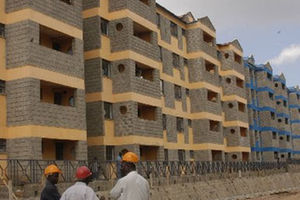
Only 4 per cent of Kenyans have the income to afford a mortgage of Sh10 million amid the rise in home prices.
Photo credit: Shutterstock
Although the gap may appear small at first glance, financial experts say it significantly affects monthly repayments and the total cost of home ownership.
The Kenya National Bureau of Statistics' (KNBS) latest Residential Property Price Index shows that residential property prices continued to rise during the first quarter of 2026, increasing by 4.8 per cent year-on-year and 0.6 per cent compared to the previous quarter.
The steady rise means prospective homeowners are paying more for houses while also grappling with financing costs. Against this backdrop, the debate is no longer simply about buying a house but rather finding the right mortgage.
According to Johnstone Oltetia, the Chief Executive Officer and Managing Director of Kenya Mortgage Refinance Company (KMRC), one of the biggest reasons mortgages have traditionally remained expensive is how banks finance them.
"Mortgages are long-term loans, but many financial institutions rely on short-term customer deposits to fund them. That mismatch raises the cost of lending and ultimately makes home ownership unaffordable for many Kenyans,” he tells DN2 Property.
KMRC was established to address that challenge precisely by providing banks and deposit-taking saccos with affordable longterm funding, allowing them to extend home loans over longer periods at lower and fixed interest rates.
Unlike conventional mortgages where borrowers often worry about changing interest rates, KMRC-backed loans offer fixed single-digit interest rates for the entire repayment period, which can stretch up to 25 years.
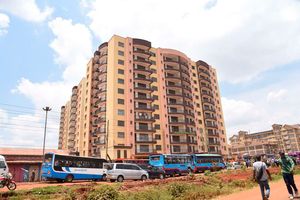
Kenya Mortgage Refinance Company has increased the monthly income limit for borrowers to Sh200,000.
Photo credit: Fotosearch
For homeowners, this means certainty. Rather than wondering whether monthly repayments will increase after every interest rate review, borrowers know exactly what they will pay from the first month until they clear the loan.
“The fixed-rate structure allows households to budget confidently because their monthly repayments remain predictable throughout the life of the mortgage,” says Oltetia.
Longer repayment periods also reduce the monthly financial burden by spreading repayments over more years. For first-time buyers struggling to raise deposits, KMRC-supported products provide another advantage.
Eligible borrowers can access financing of up to 105 per cent of the property's value, allowing them to cover not only the purchase price but also associated costs such as stamp duty, legal fees and insurance.
These additional costs often prevent aspiring homeowners from completing property purchases even after qualifying for mortgages. Since commencing operations, KMRC has refinanced 6,143 mortgages worth Sh32.4 billion, supporting thousands of Kenyan households to become home owners through participating banks and saccos.
However, affordable mortgages do not mean every lender charges the same interest rate. Mortgage pricing varies widely across Kenya's financial sector.
Commercial banks determine mortgage rates based on several factors, including their cost of funds, prevailing market interest rates, borrower creditworthiness, loan tenure and broader economic conditions.
Some lenders offer fixed-rate mortgages for a limited period before switching to variable rates, while others maintain floating rates throughout the repayment period.
This explains why borrowers shopping for mortgages often receive different offers despite having similar incomes and purchasing houses of comparable value. According to Oltetia, lowering mortgage costs requires more than reducing interest rates.
“It requires reducing the underlying cost of long-term housing finances. That is why KMRC focuses on expanding access to long-term refinancing, bringing more lenders, including saccos, into affordable housing finance and advancing risk-sharing initiatives that enable lenders to serve more households,” he adds.
Many Kenyans are balancing paying mortgages and paying monthly rent.
Photo credit: Shutterstock
His remarks come as Kenya's financial environment continues to improve. The Central Bank of Kenya has steadily eased monetary policy over the past year to encourage lending to businesses and households. Although policy rates have fallen, analysts note that commercial lending rates have not declined at the same pace, meaning many borrowers are yet to fully benefit from cheaper credit.
Housing experts argue that borrowers should not judge mortgages solely on the advertised interest rate. A cheaper-looking loan may ultimately become more expensive once processing fees, legal charges, valuation costs, insurance premiums and account maintenance charges are added.
Some mortgages also attract penalties for early repayment, limiting borrowers who wish to clear loans faster after their financial circumstances improve.
For this reason, experts advise prospective homeowners to compare the total cost of borrowing rather than focusing only on the headline interest rate. Another important consideration is whether the mortgage carries a fixed or variable interest rate.
Variable-rate mortgages may initially appear attractive because they sometimes begin with lower interest rates. However, repayments may increase if market rates rise.
Fixed-rate mortgages, on the other hand, provide stability because repayments remain unchanged regardless of market movements. For salaried workers and young families operating on tight household budgets, predictability often outweighs marginal differences in interest rates. The importance of affordable financing becomes even clearer when viewed against Kenya's housing market.
Property prices have continued to rise steadily, particularly in fast-growing urban centres where demand is strong. KNBS says residential property prices have been driven by sustained demand across apartments, maisonettes and standalone houses, reflecting continued interest in home ownership despite economic pressures.
Meanwhile, inflation continues to squeeze household incomes. The latest KNBS data shows annual inflation stood at 6.4 per cent in June 2026, with increases in food, transport and housing-related costs accounting for more than half of consumer expenditure. Rising living costs leave many households with less disposable income to save for deposits or service expensive mortgages.
For investors on variable-rate mortgages, even small increases in interest rates can lead to substantial increases in monthly repayments.
Photo credit: Shutterstock
This has made affordability one of the defining issues in Kenya's housing sector. Historically, mortgages in Kenya have largely been associated with high-income earners because of stringent lending requirements and relatively high borrowing costs.
Yet housing finance is gradually evolving. One of the biggest changes has been the growing participation of saccos. Traditionally, mortgages were almost exclusively provided by commercial banks.
Today, more deposit-taking saccos are partnering with KMRC to access long-term refinancing, expanding affordable home financing beyond conventional banking institutions. Industry observers say this increased competition could gradually lower borrowing costs while extending mortgage products to middle-income earners who previously struggled to qualify through commercial banks.
The shift is also expected to support the government's broader housing agenda by making home ownership more accessible.
Even so, affordability is not determined by financing alone. Prospective homeowners must first assess their own financial position.
Financial planners recommend that monthly mortgage repayments should not consume an excessive proportion of household income, leaving sufficient room for school fees, medical expenses, emergencies and retirement savings.
Borrowers should also build emergency funds to cushion themselves against unexpected events such as job losses or business interruptions. Property experts further advise buyers to compare several lenders before signing mortgage agreements.
Questions worth asking include whether the interest rate is fixed or variable, the repayment period, additional fees, penalties for early settlement, insurance requirements and whether refinancing options exist should market conditions improve. Ultimately, choosing the cheapest mortgage is not always the smartest decision if hidden costs significantly increase the total amount repaid.
Likewise, a slightly higher interest rate accompanied by flexible repayment terms or lower fees may prove more economical over the life of the loan. For many Kenyans, the real challenge is not finding houses for sale but finding financing that allows them to buy without stretching household finances beyond their limits.
Affordable mortgages cannot reduce house prices, but they can substantially reduce the cost of borrowing. As residential property prices continue to rise and the cost of living remains high, access to predictable, long-term and competitively priced financing may determine whether aspiring homeowners finally receive their house keys or postpone the dream indefinitely.
Borrowers should compare lenders carefully, understand the full cost of financing and choose products that match financial circumstances.
The difference between an affordable mortgage and an expensive one could amount not merely to lower monthly repayments, but to millions of shillings saved over the lifetime of a loan and the peace of mind that comes with owning a home without overwhelming financial strain.