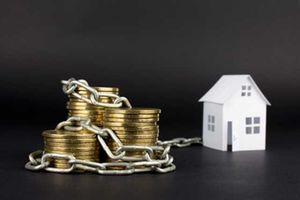
For many Kenyans, owning a home remains one of life’s biggest financial ambitions. It is often viewed not just as shelter, but as security, social status and a long-term investment.
Yet, for anyone stepping into the property market, the question still remains whether it is wise to pay cash for a house or take a mortgage. At first glance, paying cash seems like the obvious winner. It means no debt, no monthly repayments and no interest charges that can inflate the cost of a home over decades.
But as Kenya’s housing market evolves, experts say that what makes financial sense depends not only on what one can afford, but also on how one wants their money to work.
The 2023/24 Kenya Housing Survey shows housing affordability remains one of the biggest barriers to ownership, while access to formal housing finance remains limited. Kenya’s mortgage market is still relatively shallow, with mortgage-to-GDP being at about 3 to 3.5 per cent, a fraction of what is seen in more mature markets. But uptake keeps growing.
The conversation is shifting from the purchase price to the 'lifecycle value' of the home.
Photo credit: Shutterstock
The number of mortgage accounts rose to 30,016 in 2024, while the value of outstanding mortgage loans climbed to Sh279.3 billion. At the same time, the average mortgage size fell to about Sh9 million, suggesting more buyers are entering the market at relatively lower price points. Even so, many Kenyans continue to rely on cash, informal savings or incremental building rather than mortgages.
Data from the Kenya National Bureau of Statistics (KNBS) shows a significant share of real estate borrowing still goes into land acquisition and self-construction, reflecting a long-standing culture of building gradually rather than borrowing heavily. That context makes the mortgage-versus-cash question even more relevant.
Caroline Wanjeri, Director of Mortgage Business at KCB, says that buyers who have enough cash to purchase property outright often enjoy strong advantages.
“If you have cash and are buying a completed house that you have inspected and confirmed, it is generally cheaper because you avoid interest costs altogether,” she says.
Cash buyers, she adds, can often negotiate better prices with developers, move faster in transactions and avoid the long-term burden of debt. In a market where property financing can stretch over 20 or 25 years, avoiding interest can save millions of shillings.
Wanjeri further explains that cash can be especially attractive when purchasing completed units, rather than relying on off-plan or instalment arrangements that have exposed some buyers to losses.
“Many Kenyans have burnt their fingers paying in installments for projects they lose visibility over time. You pay, but you may end up with a delayed or incomplete house,” she says.
A borrower will save interest running into millions of shillings over the life of the mortgage if one decides to make early repayments.
Photo credit: Shutterstock
That caution resonates in a market where trust and due diligence matter as much as financing. Still, while paying cash appears cheaper, financial experts argue it may not always be the smartest move from a wealth-building perspective.
Financial advisor Munene Mureithi says the real question should not be whether one can afford to pay cash, but whether tying up all that capital in one asset is the most productive use of money.
“The most sophisticated investors rarely ask, ‘Can I afford to pay cash?’ They ask, ‘Where will this money work hardest?’” he says.
That is where the argument for leverage comes in. He notes that instead of sinking all available capital into a house, some investors prefer using a mortgage to acquire property while preserving part of their cash for other investments. The logic is simple. If money left uncommitted can earn returns higher than the cost of borrowing, then using debt may make financial sense.
“Paying cash can feel safe, but it can come at the cost of foregone returns. If your capital can earn more than your borrowing cost, then borrowing becomes a strategic decision,” says Mureithi.
Architect and green building expert Nickson Otieno agrees, pointing out that while paying cash to own a home can be financially prudent, it is not always advisable because it depends on whether you are prioritising immediate stability or long-term flexibility.
This thinking is increasingly relevant in a market shaped by inflation and changing investment opportunities.
High mortgage rates slow down mortgage uptake.
Photo credit: Shutterstock
Kenya’s inflation stood at about 4.4 per cent as at March 2026, making the cost of idle money a real consideration. Cash sitting dormant loses purchasing power. For some investors, that strengthens the case for keeping capital deployed across different assets instead of locking it all into property.
Wanjeri explains that is why some buyers may consider partial borrowing, combining cash and mortgage financing while preserving liquidity.
“You may put some money into the house and retain some in other investments. Wealth creation is often about building a portfolio, not putting all your eggs in one basket,” she says.
KNBS data shows Kenya’s real estate sector grew 33.7 per cent between 2019 and 2023, reinforcing property’s role as an important investment class. But experts caution against treating property as the only route to wealth.
Mureithi argues that strong financial planning means balancing real estate with other assets, from Treasury bills and fixed deposits to stocks and business investments.
“Wealth is built through how efficiently capital is deployed, not simply by owning one big asset,” he says.
That does not mean mortgages are automatically the better choice. Debt only works when it is disciplined.
Mureithi describes mortgage debt as “good debt” only when it is backed by predictable cash flow and a clear strategy.
“It becomes risky when it is based on optimistic assumptions, like believing income will never fall or property values will always rise,” he says.
Only 4 per cent of Kenyans have the income to afford a mortgage of Sh10 million amid the rise in home prices.
Photo credit: Shutterstock
Wanjeri agrees, observing that many Kenyan buyers make the mistake of stretching themselves beyond what they can comfortably repay. “As a rule of thumb, your mortgage repayment should never exceed a third of your income,” she says.
That rule becomes critical in a country where income volatility remains a reality for many households. She also advises borrowers to reduce principal aggressively whenever they can.
That discipline can make a huge difference over a 20-year mortgage. Kenya’s mortgage market itself is also evolving in ways that may influence the decision. Historically, fluctuating lending rates discouraged many borrowers, but products backed by the Kenya Mortgage Refinance Company (KMRC) have introduced longer-term fixed-rate options.
Wanjeri says some KCB mortgage products now range between 9 and 9.9 per cent fixed for up to 25 years.
“That means certainty. It does not matter what happens in the market, your rate remains fixed,” she says.
That predictability has made borrowing more appealing for some buyers who previously feared interest-rate shocks. For investors buying property for rental income rather than owner occupation, the analysis becomes even more layered.
Here, experts say the decision should go beyond financing costs and include rental yields, tax efficiency and expected appreciation.
Wanjeri says investors should assess whether rental returns can comfortably support debt service, while Mureithi warns against assuming property appreciation alone will justify borrowing.
“Real estate can be a strong store of value, but appreciation is often overestimated so a disciplined investor should evaluate total return, including rental yield, capital growth and what alternative investments could deliver,” Mureithi says.
That is particularly relevant when comparing borrowing costs against other investment opportunities.
Whether paying cash or taking a mortgage, buying property involves legal fees, valuation costs, insurance, taxes and ongoing maintenance.
Wanjeri says borrowers today are required to receive full disclosure of cumulative borrowing costs before signing.
“You must understand the total cost of credit and the implications before committing,” she says.
Insurance is another often overlooked part of the equation. Because mortgages are long-term commitments, job loss, illness or damage to property can disrupt repayment.
Wanjeri points to mortgage-linked protections such as retrenchment cover and life insurance as important safeguards.
“There are risks people don’t always think about, but those protections matter over a 20-year journey,” she says.
Kenya Mortgage Refinance Company has increased the monthly income limit for borrowers to Sh200,000.
Photo credit: Fotosearch
Then there is the question many aspiring buyers ask: if you had Sh5 million or Sh10 million today, should you pay cash for property?
“At that level, focus should shift from ownership to income efficiency,” he says.
Properly invested, he argues, such capital could generate income while preserving principal, potentially supporting rent or even servicing a carefully structured mortgage.
It is a view that challenges the deeply held belief that outright ownership is always the superior financial move.
Architect Otieno also introduces an angle often missing in mortgage-versus-cash conversations; the quality and future resilience of the asset itself.
He argues that buyers focus too much on purchase price and mortgage rates while ignoring whether a property will remain financially viable over time.
“Traditional investors look at price, rent and returns, but those only tell part of the story,” he says, noting that smart buyers must now factor in sustainability, resource efficiency and life cycle value.
That means asking not just what a property costs today, but how much it will cost to run, maintain and adapt over decades. For Otieno, a cheaper property is not necessarily the better investment. A building with poor energy performance, inefficient water use or low-quality materials may be cheaper to buy but more expensive to own.
“Resource efficiency is not abstract sustainability language. It is about reducing operating costs and improving long-term value,” Architect Otieno adds.
The overall cost of homeownership tends to be higher than renting even if your mortgage payment is lower than the rent.
Photo credit: Shutterstock
In a nutshell, it is true that cash may be ideal for buyers seeking simplicity, lower costs and peace of mind, but it is also true that mortgages may make sense for those pursuing leverage, diversification and long-term wealth creation.
The right answer depends on whether the purchase is for a family home or investment, how stable one’s income is, what other opportunities exist for capital, and how much risk one is comfortable taking.
To sum it up, Mureithi says, “Wealth is not built simply by owning assets, rather, it is built by ensuring every shilling is deployed to its most productive use. In simple terms, you need to ask yourself whether your money is truly working as hard as it can.”