Are you cooking kienyeji vegetables the right way?
Scroll down to read the article
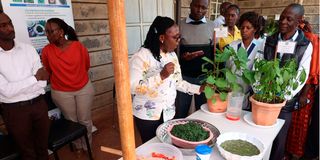
Dr Anne Aswani Musotsi,a lecturer of nutritional sciences at Masinde Muliro University of Science and Technology, speaking at Githunguri Level V hospital in Kiambu County on June 24, 2025, during the African Indigenous vegetables in Urban Agriculture meeting for teenage mothers. EVANS HABIL|NATION.
Previously, indigenous vegetables were mostly found in outdoor and open-air markets, but today, the delicacies are sold in supermarkets. The shelves are emptied pretty fast in the evening as people aim to get their daily dose of leafy greens.
Some common examples include Amaranthus (Terere), Spider plant (Saget/Saga), African nightshade (Managu/Sucha/Osuga), Cowpea leaves (Kunde), Jute Mallow (Mrenda/Murere), and Pumpkin leaves. They are popularly called mboga kienyeji.
Kenya exports about 5 per cent of locally grown and produced African Indigenous Vegetables (AIVs), which means 95 per cent is consumed locally. Some common examples include Amaranthus (Terere), Spider plant (Saget/Saga), African nightshade (Managu/Sucha/Osuga), Cowpea leaves (Kunde), Jute Mallow (Mrenda/Murere), and Pumpkin leaves. They are popularly called mboga kienyeji.
“People are gradually becoming cautious of lifestyle-related diseases and are turning to organic food, such as traditional vegetables, to boost their health,” says Dr Anne Aswani, a nutritionist from Masinde Muliro University of Science and Technology.