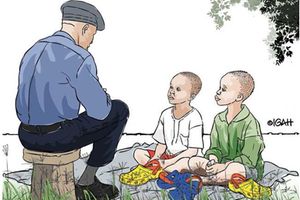
On Father's Day this year, David Maeri, a rapper and father, released a heartfelt song titled Better Man, dedicated to a new generation of fathers.
“For nine months we spoke when you were in the womb, so you knew my voice in the hospital room, when I held you, I held my future in my hands ….,” goes the lyrics.
David represents the new generation of fathers who are not afraid to show emotion and are present in every stage of their children’s lives.
Indeed, gone are the days of the stern, unapproachable African fathers. A new generation of modern dads, millennials and Gen Zs are embracing hands-on, emotionally expressive fatherhood. They’re changing diapers, attending PTAs, and trading canes for heart-to-heart conversations. This cultural shift is redefining masculinity in Kenya today. So why did David choose this parenting approach?
“I was raised in a loving and stable home, and I wanted to continue in this legacy. I decided to be more intentional by educating myself on parenthood and psychology to raise my child from a point of knowledge,” David says.
For the rapper, the bond with his son started way before birth. “While my son was still in the womb, I would speak to him often, calling out to him in a deep baritone, ‘son!’ When he was born, I went to visit him in the hospital. As I walked into the room, he was asleep. I called out to him in the same tone that I would speak life and words of affirmation to him.” That emotional connection deepened over the years
That has been his parenting style, being present at every stage of his son’s life, from the major milestones to the mundane moments.
Has he felt judged for being "a present and expressive dad"?
“Quite the opposite. People are pleased to see a good example of fatherhood. If being involved means my child knows they’re loved, then being involved is a strength.”
“There are times when I need to be firm and apply discipline, calmly, without anger, when the moment calls for it. Parenting isn’t about choosing between strength and vulnerability; it’s about knowing when each is needed.”
Fathers now follow parenting blogs, join fatherhood support groups, and post their own caregiving experiences.
Photo credit: Shutterstock
"Once, my child did something that would have earned me instant punishment as a boy. But this time, we sat together. I asked simple questions and listened. He confessed, and we discussed why it mattered. Hours later, he returned unprompted to apologise again. In that moment, I realised: this approach built more trust than any punishment ever could."
The father of one consciously addresses childhood gaps. "Money was a tense topic growing up. Now, I teach my son healthy financial habits through saving, spending, and sharing jars."
From a simple assessment, it is clear his son's emotional intelligence is remarkable.
“One day, frustrated by an unrelated matter, my tone slipped. My son immediately mirrored my own teaching: 'Daddy, don't say that'—words I'd used during his big emotions. That moment revealed the power of gentle parenting: it's not just managing emotions, but equipping children with tools they'll use for life. Seeing him internalise this moved me deeply.”
According to experts, Kenyan Gen Z and millennial fathers are leading a hands-on parenting revolution by being fully present, intentional, and breaking stereotypes at every turn.
Dr Geoffrey Wango, a senior lecturer in counselling psychology at the University of Nairobi, observes: “This gentle fatherhood movement marks a historic pivot. Gen Z and millennial Kenyan men are rejecting authoritarian parenting for emotional connection and active nurture.”
"Historically, African fathers were seen as stern providers, distant disciplinarians focused solely on financial duty and moral authority. Today's involved fathers shatter that mould, championing emotional availability, hands-on caregiving, and empathetic connection.”
Pastor Simon Mbevi, a renowned motivational speaker, author, and relationships counsellor, echoes Dr Wango’s observation: “We’re witnessing a profound shift from rigid, authoritarian parenting ('my way or the highway') to an approach based on relationship, presence, and unconditional love."
According to Pastor Mbevi, this shift responds to the pain of past parenting models. "We've moved beyond commands to conversations, building relationships rooted in mutual respect, deep understanding, and authentic connection."
Dr Wango points out that in Kenya, this change is visible among urban fathers who, influenced by education, exposure to global parenting narratives, and evolving gender roles, are intentionally reshaping paternal identity in ways that promote connection rather than control.
Faith traditions have also redefined fatherhood, Mbevi observes.
Research shows that children raised in emotionally supportive environments demonstrate higher cognitive flexibility, better academic performance, and stronger empathy
Photo credit: Shutterstock
"Where fathers were once distant 'kings of the castle' valued solely for authority, provision and protection, scripture reveals a more nuanced calling. Ephesians 6:4 warns fathers not to provoke their children, but to nurture them. I teach the five Ps of biblical fatherhood: Present - Engaging fully in their lives. Provide - Meeting all needs (material to emotional). Protect - Safeguarding their physical and digital well-being. Priest - Modelling faith and values. Prophet - Guiding with wisdom and timely correction.”
This model, he says, is fatherhood as God designed, both strong and sensitive.
Psychologically, emotionally engaged fatherhood yields profound benefits, the experts confirm.
“For children, engaged fathers foster secure attachment, which enhances emotional regulation, self-esteem, and cognitive development. Paternal involvement contributes to better academic outcomes and social competence. For partners, the equitable sharing of caregiving responsibilities reduces stress and improves relational satisfaction, promoting healthier family dynamics. At the societal level, hands-on fatherhood challenges entrenched gender roles and supports the development of more empathetic, emotionally literate communities,” explains Dr Wango.
What's driving this parenting revolution?
According to Dr Wango, social media exposes men to new parenting models, globalisation introduces progressive values, and evolving gender norms dismantle old stereotypes, even in traditionally patriarchal societies.
“Fathers now follow parenting blogs, join fatherhood support groups, and post their own caregiving experiences, thereby normalising emotional presence. Globalisation brings alternative masculinities into view that value partnership, communication, and vulnerability,” says Dr Wango.
Similarly, gender equality advocacy and educational reforms have challenged rigid gender roles, encouraging men to see parenting not as a feminine task but as a shared responsibility.
Dr Wango says research shows that children raised in emotionally supportive environments demonstrate higher cognitive flexibility, better academic performance, and stronger empathy.
David has experienced some of these benefits.
“My child is learning to ask for help, to name their feelings, and to try again,” reveals David.
Studies by the African Population and Health Research Centre show that paternal warmth and open communication are positively linked to adolescents' academic and psychosocial well-being, indicating the transformative power of emotionally attuned fatherhood.
Many mothers welcome the shared parenting roles, finding relief in the emotional and logistical support from their partners, says Dr Wango.
This shift not only lightens their caregiving burden but also fosters a deeper sense of partnership in family life. However, the positive impact of shared parenting is often short-lived due to evolving cultural dynamics, which contribute to rising divorce and separation rates. Ironically, while globalisation has encouraged more collaborative parenting, potentially improving child-raising practices, it has also introduced pressures that strain family structures.
Additionally, some women, particularly those raised in traditional households, struggle to reconcile these changes with ingrained gender expectations.
Despite these challenges, a growing number of Kenyan mothers are advocating for more inclusive fatherhood, as seen in community dialogues and women’s empowerment programmes.
"The push for shared parenting reflects a broader shift toward gender equality, even as cultural tensions persist," says the psychologist.
On the flip side, critics caution that "gentle parenting" may undermine discipline, fostering permissiveness rather than resilience. They argue that without clear boundaries, children might struggle with authority or accountability later in life.
Dr Wango acknowledges these concerns, emphasising, "The solution lies in balance, merging empathy with firm boundaries allows children to feel emotionally supported while developing self-discipline."
In his book Parenting: Counselling in the Home, Dr Wango emphasises the importance of respectful discipline, one that is grounded in mutual understanding and emotional connection, as the key to nurturing long-term positive behaviour rather than short-term compliance driven by fear.
For young fathers who want to embrace this approach but hesitate under the weight of community expectations, he offers practical encouragement: "Begin with small but meaningful acts like attending to your child’s daily needs, teaching basic manners, or sharing meals. Be present at school events, Sunday school, or even routine moments like diaper changes and bedtime stories. Let your family see the joy and purpose in your role."
Seek solidarity with other engaged fathers, whether through local groups or online forums, to reinforce your commitment. Most crucially, have open dialogues with your partner and family about the father you aspire to be.” He cautions that change takes time, emphasising that consistency is key.
For fathers struggling to fully embrace their role, Pastor Mbevi offers this profound perspective:
"Fatherhood is a big deal. As a dad, you shape your children's identity and model healthy masculinity - for both your sons and daughters. Your voice becomes the steady anchor that affirms their purpose, especially during teenage years. While you may be replaceable at work, remember: you are the only father your children will ever have. In the end, fatherhood will likely prove to be both your most challenging and most rewarding calling."
"Our religious institutions must create safe, judgment-free spaces where men can heal from childhood trauma. Unaddressed wounds inevitably influence present parenting. Churches should implement both trauma-recovery and parenting programmes.”
The path forward demands nothing less than a complete reimagining of masculinity, suggests Mbevi.
“True manhood isn't found in stifled emotions, domineering commands, or cultivated fear,” he notes. Authentic masculinity stands firmly on three pillars: Honour that is anchored in integrity, duty that is expressed through responsibility and care that is demonstrated by compassion.
We must shed these suffocating stereotypes. Our parenting, indeed, our very identity as men, flourishes when we dare to bring our full, authentic selves to the journey. This is masculinity redeemed,” he shares.
The movement toward present, intentional fatherhood in Kenya represents more than just changing parenting techniques; it's a cultural recalibration of masculinity itself.
As more fathers like David demonstrate, strength and tenderness aren't opposing forces, but complementary aspects of effective fatherhood.