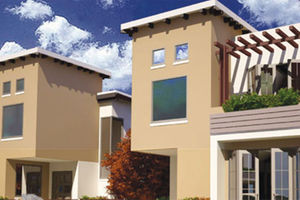
Businessman Francis Murithi was clear that he needed a maisonette when he started house hunting after receiving his retirement benefits in May last year.
It was his dream retirement home until market realities dawned on him - sink all his retirement nest egg on home purchase or downgrade his ambitions.
But Francis is not alone. He joins a growing number of Kenyans who are snapping up bungalows as costly apartments, villas and maisonettes drive the shift.
“When I looked at the prices out there for maisonettes, I realised it was not in my league. I even thought of buying land and constructing, but then someone told me to check out bungalows, and for sure, the price was more realistic to my budget,” said Francis.
Francis’ sentiments are echoed by a Kenya Bankers Association (KBA) research and mortgage uptake study showing that the dominance of apartment sales is shrinking in favour of bungalows.
Apartment sales stood at 40.3 percent in March compared to 35.8 percent in December, while bungalows grew their share from 21.5 percent to 25 percent in the period under review.
The average cost of a bungalow stood at Sh8.9 million in December compared to the price of an apartment of Sh15.9 million, says KBA.
Maisonettes averaged Sh28.1 million, with villas being the most expensive at Sh38 million, added the bankers' lobby.
Real estate investment requires careful planning and significant financial resources.
Photo credit: Shutterstock
“Transaction volumes shifted noticeably toward the low-market segment and affordable units like bungalows, driven by persistent household affordability constraints and changing preferences,” said KBA in their housing index report, released in February.
“Bungalows’ market share increased to 25 percent, up from 21.6 percent in the third quarter of 2025. Additionally, Maisonettes maintained a sizable share at 34.2 percent, while townhouses remained marginal, reflecting both price sensitivity and changing household preferences,” added KBA.
The uptake of apartments decreased to 35.8 percent from 40.3 percent of total transactions in the previous quarter.
The lower price of the bungalows is in tandem with them having less plinth area than the other house models and lower use of steel.
“The current economic situation favours consideration of bungalows because of the cost of materials. When talking of maisonettes, steel is a factor, and the price of steel is ever going up and the use of steel in bungalows is low,” said Architect John Inya.
“The advantage that maisonettes offer is that they use less plot area, but now people are compromising on green space to save on cost,” he added.
Kenyan homes are being forced to adjust their spending habits due to a decrease in disposable income, following the government's increase in statutory deductions while employers held their pay constant.
Worth noting is that the shift to more bungalow purchases has resulted in the average mortgage size dropping for the first time in seven years.
The Central Bank of Kenya (CBK) data shows that the average home loan decreased to Sh9 million from Sh9.4 million in 2023 as the number of mortgage loans increased by 756 mortgages to 30,016 accounts. The value of mortgage loans issued rose to Sh279.3 billion as at December 2024 up from Sh270.4 billion a year earlier with the growth attributable to new loans issued during the 12 months.
The average price charged on mortgages was 14.9 percent, with the loans running for between 5.3 years and 18 years.
Average cost of a bungalow stood at Sh8.9 million in December compared to price if an apartment at Sh15.9 million.
Photo credit: Sutterstock
A shrinking payslip and reduced disposable incomes has also pushed workers to seek smaller mortgages.
Last year, marked the fifth year in a row that workers have endured falling real wages, including a negative 4.1 percent in 2023.
The renewed squeeze on Kenyans living standards came in a year when the economy grew at the slowest pace since the Covid-19 pandemic four years ago, hobbled by floods that damaged crops, costly bank loans and disruptions that followed anti-government protests against the Finance Bill.
The average monthly real pay fell from Sh62,256 in 2020 to Sh55,451 in 2024, translating to an erosion of Sh6,805.
Workers' disposable income has shrunk further on additional taxes and levies, including the housing tax and the controversial social health insurance levy.
The affordable housing law requires employers in the formal and informal sectors to deduct 1.5 percent of gross monthly pay to workers and match the contributions towards the housing levy.
The levy sparked outcry from the opposition and many Kenyans, who feel burdened by the raft of taxes introduced under President William Ruto.
It was implemented nearly at the same time as the health insurance levy, which requires Kenyans to contribute 2.75 percent of their monthly salaries towards a social healthcare programme. Contributions to the National Social Security Fund (NSSF) have also been increased twice in under two years. This means that thousands of workers have breached the legal requirement that demands they take home at least a third of their salary following multiple cuts on their payslips.
A mortgage of Sh9 million repayable at 14.9 percent over 12 years requires monthly installments of Sh134,500. This means those earning less than Sh300,000 monthly will not qualify for the Sh9 million mortgage.
Commercial banks have been lobbying the government to lower tax cuts on employees to open their payslips to accommodate additional credit.
Kenyans are snapping up bungalows as costly apartments, villas and maisonettes drive the shift.
Photo credit: Shutterstock
In terms of housing size, Villas recorded the largest average plinth area, followed by apartments, maisonettes, double storey houses and Bungalows.
The average plinth area of a bungalow was 2,094 square feet, which was less than half the area of an average villa at 4,747 square feet.
Data from The Kenya Bankers pointed to the middle class preferring larger houses than the other income classes.
“Regionally, average plinth areas varied considerably, as Region 1, Region 2 and Region 3 stood at 2,060.4 square feet, 4,960.9 square feet and 3,533.0 square feet respectively” said KBA.
The bankers zone houses in regions depending on price, market segment and affordability, not geographically, with region one including areas such as Athi River, Mlolongo, Mavoko, Nakuru, Ngong, Eldoret and Nyeri. Region two includes Thindigua (Kiambu Road), Kiambu, South B, South C, Kabete, Komarock, Imara Daima, Membley, Buruburu, Rongai, Waiyaki Way while region three is the more affluent estates such as Kileleshwa, Kilimani, Lavington and Muthaiga.
The demand for bungalows was said to be driven by home dwellers, with national data showing bungalows are the most owned type of house in both rural and urban set ups at 76.3 percent and 69.1 percent respectively.
“Most people get to qualify for a good mortgage or start construction of their homes when they are past the age of 35 years, and at that point they are considering the future where doing stairs could be a problem,” said Mr Inya, drawing from his experience as an architect.
“They also have experience from people who put up maisonettes, and then in a short while the children leave and they are left with unutilised space,” he added.
Apartments are attractive to investors looking for rental yields or converting them to short-stay rentals.
More than half, 56.3 percent, of Kenyans said they preferred renting apartments, with only 20.8 percent preferring bungalows and 11.5 percent own-compound houses not sharing facilities.
Many Kenyans aspire to own a home but are hamstrung by low income levels and a shortage of quality, affordable houses.
Institutions surveyed by the banking industry have previously suggested the use of alternative building technology to make houses more affordable and reduction of fees like stamp duty and tax waivers for first time buyers, to spur mortgage uptake.
The government has introduced an affordable-housing project which aims to put 250,000 quality and lower priced units to the market each year to help more Kenyans achieve the dream to own a home. Pace of completion of the homes has, however, been slow, with uncertainty on the number of units completed, even with the government claiming 140,000 houses have been constructed in the last two years.