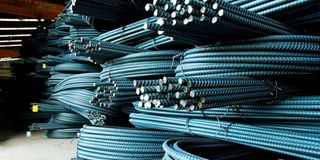
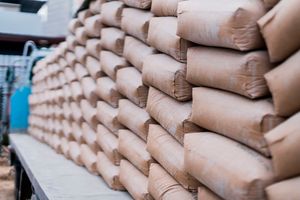
Growth in the construction sector has lifted demand for building materials such as cement and iron roofing sheets, with manufacturers ramping up output.
Latest data from the Kenya National Bureau of Statistics (KNBS) shows that production of sheets and cement grew by about 20 per cent, attributed to a rise in activities over the period under review.
Manufacturers of key building materials have been raising production to keep pace with surging demand. Production of galvanised sheets rose 2.4 per cent in the 11 months to November to 299,476 tonnes from 256,804 tonnes recorded a year earlier.
Corrugated iron sheets. Production of galvanised sheets rose 2.4 per cent in the 11 months to November to 299,476 tonnes from 256,804 tonnes recorded a year earlier
November had the highest production of roofing sheets at 31,663 tonnes, followed by October with 30,340 tonnes produced. These are record production quantities attained in a single month.
Additionally, demand for cement rose in the 11 months to November by 20 per cent to 9.34 million tonnes from 7.79 million tonnes the year before.
This was accompanied by a 17.2 per cent increase in cement production to 9.49 million tonnes from 8.096 million tonnes in a similar period last year.
The parallel rise in both production and consumption of cement and roofing materials highlights a construction sector growth pattern, supported by ongoing public infrastructure projects, private real estate developments, and a gradual recovery in housing activity.
The record monthly production levels suggest manufacturers have ramped up output to meet sustained demand, positioning the sector as a key driver of industrial growth during the period.
Affordable Housing Project in Elburgon, Nakuru County on July 12, 2024.
Photo credit: File | Nation Media Group
KNBS data also shows that the cost of construction inputs surged at the fastest pace in nearly two years during the quarter ending September 2025.
The Construction Input Price Index (CIPI) rose by 1.27 per cent, climbing from 119.75 points in July to 121.27 points by September, marking the sharpest quarterly increase since December 2023. The CIPI measures the price changes in the inputs used in construction, such as materials, labour, and equipment. The index helps to track overall construction costs.
Rising prices of steel, reinforced bars, sand, bitumen, and electrical fittings and other essentials for residential, commercial, and infrastructure projects were the main drivers of the rise, reflecting both global supply pressures and local market dynamics.
Homa Bay affordable housing project in this photo taken on May 29, 2025.
Photo credit: George Odiwuor | Nation
A recent update by the Architectural Association of Kenya (AAK) shows that the price of putting up homes, including bungalows, maisonettes, and luxury apartments, has climbed sharply in the 10 months to October 2025.
The unit cost of a bungalow and maisonette, for instance, grew by about 12 percent in the 10 months to October, driven by high fuel costs and inflation, piling fresh pressure on Kenya’s housing market. Putting up a bungalow now costs Sh54,780 per square metre, while the cost for a maisonette is Sh59,868 per square metre.
Construction costs across all major residential building categories continued to rise between 2024 and 2025, the association has said, at a time when only a tiny fraction of households can qualify for costly mortgages.
“The cost of constructing a standard bungalow increased from Sh48,750 per square meter in 2024 to Sh54,730 in 2025, representing a 12.27 percent rise. Middle-class maisonettes recorded a more moderate increase of 11.28 percent, moving from Sh53,800 to Sh59,868 per square meter,” said AAK.