Many Kenyan parents are navigating a journey they never anticipated: raising children with autism. From noticing developmental delays to seeking a diagnosis and accessing specialised care, families are nowadays speaking more openly about their experiences as autism becomes visible in homes, schools and communities.
But does this mean more Kenyan children are being born with autism? Parenting spoke to experts who say early diagnosis and public awareness are possible explanations.
For families, however, the question goes beyond whether autism numbers have grown in recent years or not. It is about getting answers, accessing support and ensuring their children have opportunities to thrive.
For Laura Busolo, the journey began when her son developed jaundice three days after birth. At six months, she noticed he could not sit and sought medical attention. He began therapy.
“It was mainly my maternal instincts, coupled with the fact that I am a clinical officer, that made it easier for me to identify the delays and challenges and seek intervention in time. We continued with therapy for about two years, and that is when he started walking,” Laura says.
By the age of four, her son, who has autism and signs of cerebral palsy, was still unable to speak. Laura and her husband continued with occupational therapy and physiotherapy, both at home and in hospitals. The financial burden was huge, particularly because the family was living in Meru County.
“We would have to travel to Nairobi every Friday for speech therapy and spend the night there so that the baby could have another session on Saturday before we travelled back to Meru. When our baby was six years old, we relocated to Kisumu, but again, we could not find a speech therapist. Eventually, we found one,” she says.
Their experience inspired the couple to establish Levi's Haven Centre, a therapy facility and integrated school. They also organised support groups with special needs teachers, counsellors and other families.
In 2020, the centre had 18 children with autism. Today, that number has doubled to 36, ranging in age from two and a half to 18 years. Some eventually transition to vocational schools.
“There is a rise in autism, but I cannot tell whether it is because of better screening or because more children are being born with autism. What is clear is that the numbers are higher compared with when we started.
Nowadays, we are seeing many more children being diagnosed, something that was very rare back then,” Laura says.
For Victor Owino, recognising the signs in his son came much later, when the child was two and a half years old.
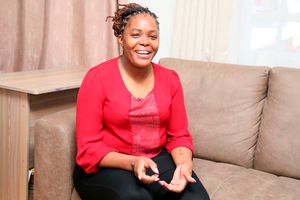
Victor Owino noticed that his son was autistic when the baby was two and a half years old.
Photo credit: Pool
“My wife did not experience any complications during pregnancy, and the birth was very smooth. As time went by, I started thinking about the developmental milestones a baby is supposed to achieve. I realised that he should have been talking, but he was not. I became concerned, but initially dismissed it as normal speech delay,” Victor tells Parenting.
Victor sought medical help, and his son began speech therapy and attended daycare. Getting a definitive diagnosis was difficult as two doctors gave different opinions.
“One doctor diagnosed him with autism, while another did not. Even though the doctors could not agree, my only interest as a parent was what was best for my child. We decided to start therapy,” he recalls.
The journey has become easier with support from family and community, although the cost remains high. At one point, his wife had to stop working to care for their son. Victor says the family also made their home safer and more accommodating.
At eight, his son is preparing to join Grade Two. Although he does not use language in the conventional sense, he can express his needs, read and do mathematics.
“Initially, he could not speak at all, but now, because he attends school, he can express himself and say a few words,” Victor says.
For Dr Sylvia Moraa Mochabo, accepting her children's diagnoses was a longer journey. The mother of three has two sons, aged 16 and 14, who are both autistic. She admits that denial delayed their access to therapy.
Dr Sylvia Moraa Mochabo says that her middle and lastborn sons aged 16 and 14 are both children with autism.
Photo credit: Pool
“It was my father who first pointed out that my middle child's head was not stable. With my lastborn, I was even more in denial because I was so involved in caring for my middle child that I did not realise my youngest was experiencing similar challenges,” she says.
She recalls becoming frustrated when her middle child struggled to distinguish between the letters B and D, not understanding that he was autistic.
Her younger son was later assessed after doctors recommended screening, but accepting the results was difficult.
“My two boys are 18 months apart. When I went for a review with my middle child, the doctors asked whether they could also screen my lastborn for autism. I initially declined because I could not afford it.
They then offered to do it for free and asked me to return the following day. I went, thinking nothing much of it. But when the results came out, I could not accept them. I said, ‘There is no way this child is autistic. He is normal.’ That is what I told myself for nine years,” she says.
As a neurodivergent individual, Dr Sylvia says she experienced considerable stigma, particularly during her first marriage, which eventually ended.
“One of the things that created tension in my marriage was being questioned about which of us had autism in our family. The genetic aspect brought a lot of tension and stigma towards me.
We are creating awareness to help people understand that it is nobody's fault. I am now happy to see more men getting involved in raising their children and trying to be part of the solution. That was not always the case in the past. The narrative is changing, and we hope it continues,” she says.
Seven years ago, she founded Andy Speaks for Special Needs Persons Africa to champion advocacy and awareness. She later established the Neurodivergent Society of Kenya to empower young adults to advocate for themselves and participate in policymaking.
“At the society, we bring the young people together for fun days and encourage them to participate in policymaking. We sit on committees and share our real-life experiences and recommendations with lawmakers so that these can be included in legislation,” she explains.
Dr Sylvia says Kenya still lacks reliable autism data, partly because stigma keeps some families from speaking publicly. She attributes the apparent increase in diagnoses to greater awareness and parents paying closer attention to developmental milestones. In the past, cultural assumptions that boys simply take longer to speak often contributed to late diagnosis.
She says more must be done to promote early intervention and inclusive education, with awareness beginning in childhood. “Medical professionals should educate parents about attending routine child-health visits so developmental differences can be identified early.”
The question of whether more children are developing autism or whether more are simply being identified remains central to the debate.
Dr Elizabeth Kuta, a consultant paediatrician and neonatologist at Aga Khan Hospital, Kisumu, believes the growing number of children being diagnosed is largely attributable to improved screening and clinical awareness.
Dr Elizabeth Kuta is a consultant paediatrician and neonatologist at the Aga Khan Hospital, Kisumu.
Photo credit: Pool
In the past, she explains, some parents kept children with autism at home because of stigma and cultural misconceptions. Today, more children are being assessed, with signs often identified during routine interactions with paediatricians between 18 and 24 months.
“We are seeing more autistic children coming to hospital, but I think this is largely because we are diagnosing more children than we used to. We now have better clinical judgement and a higher index of suspicion, meaning more children are being identified,” Dr Kuta says.
Possible signs include speech delays, reduced eye contact and limited social interaction.
“At one year, children are beginning to develop speech, so they should be able to say at least a word such as ‘mama’ or ‘dada’. We do not expect them to speak in complete sentences.
By around three years, they should be able to use a three-word phrase, such as ‘give me that’. If they cannot do this, we may suspect a speech delay.
“However, there are many other causes of speech delay. We have to assess the child's hearing, understanding and other possible underlying factors.
Some children may be unable to hear properly, which affects their ability to speak,” she explains.
Once a child is diagnosed, Dr Kuta says, supportive interventions can improve communication, development and quality of life. Although autism is a lifelong condition, appropriate support can help children build skills and become more independent.
“Occasionally, some children experience seizures, difficulties with walking and other complications. We normally start with speech therapy, where we teach them how to articulate words, understand language and communicate. It is family-oriented therapy involving the parent, caregivers and the child. Everyone is expected to participate.
Many children are eventually able to develop speech, although it may not be at the same level as that of other children,” she says.
Dr Peter Nthiga, a genomics application scientist at F&S Scientific Limited, highlights the role of genetics in understanding autism.
Dr Peter Nthiga is a scientist from Genomics Application Scientist F&S Scientific Limited
Genomics, the study of an individual's complete genetic blueprint, can help researchers understand how genetic variations influence brain development.
“Modern genomics plays a vital role in understanding how genetic variations affect the way brain cells connect during early development. Preconception Whole Genome Sequencing for couples and newborn genetic screening can help identify genetic markers before pregnancy or at birth, allowing families to seek appropriate support during a child's important developmental years,” he says.
He adds that sequencing technologies can help researchers investigate genetic variations associated with autism and other genetic conditions.
Such advances may contribute to earlier identification, informed reproductive choices and more personalised care.
“The rise in autism today stems from inadequate public awareness and a lack of routine childhood checks. There are also biological factors such as having children later in life, which increases the likelihood of spontaneous genetic mutations and natural changes in a child's DNA.
Autism Spectrum Disorder is a natural variation in brain development driven largely by our DNA,” Dr Nthiga told Parenting .