I have lived in Kenya as a refugee for the past 10 years. Although far from home, I have been blessed with a family as a single mother, with three children, two of whom are of school-going age. However, my children report various challenges in accessing education both from teachers, general public and sometimes fellow pupils. What can I do to help them settle in well?
In Kenya, every child has a fundamental right to attend school and learn in a safe, respectful environment, regardless of nationality, immigration status, or refugee status. This right is anchored in the "best interest of the child" principle under Article 53(2) of the Constitution and Section 8 of the Children Act, 2022, requiring a child’s welfare to be the primary consideration in all decisions affecting them. Consequently, school administrators, teachers, and staff are legally prohibited from denying admission, excluding a child, or subjecting them to ridicule, shame, or degrading treatment based on their background.
This right to education has deep constitutional foundations and statutory protections. Article 53(1)(b) of the Constitution and Section 13 of the Children Act guarantee free and compulsory basic education for all children in Kenya; refugee status is never a valid reason to refuse admission or interrupt learning. The Basic Education Act, 2013 operationalises these rights by outlawing discrimination, mental harassment, and administrative barriers. Therefore, documentation challenges must be handled sensitively, not used to humiliate or isolate a child. Within the framework of Article 27 of the Constitution, any such exclusion constitutes intolerance and discrimination. This institutional prejudice is entirely unacceptable as it directly jeopardises the child’s right to inherent dignity protected under Article 28.
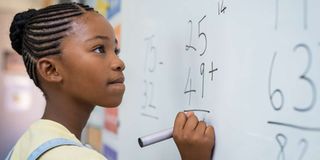
Teenage students in a classroom. The law protects the inherent dignity of every child.
Photo credit: POOL
Furthermore, the Children Act, 2022 shields children from abuse and emotional harm. If a teacher’s words or actions cause fear, shame, or exclusion, the matter must be treated as a serious child protection concern rather than a minor internal discipline issue. Because schools are presumed safe spaces for children to find refuge, opportunity, and identity, institutions must implement child safeguarding policies aligned with the Teachers Code of Conduct.
This protection is reinforced by the Refugees Act, 2021, which explicitly recognises refugees' and asylum seekers' access to essential public services. The Act mandates that public authorities remove undue barriers to education, involving the Department of Refugee Services (DRS) and the Ministry of Education. This inclusion aligns with Kenya’s Shirika Plan, which deliberately mainstreams refugees into government services and ensures educational tracking through the National Education Management Information System (NEMIS).
Kenyan courts have repeatedly affirmed that refugees and asylum seekers enjoy full constitutional protection. In Kituo Cha Sheria & 8 others v Attorney General (2013), the High Court held that refugees possess constitutional rights to dignity, equality, and fair administrative action, ruling that all state measures must comply with refugee law. Similarly, in Haki Na Sheria Initiative & 2 others v Cabinet Secretary, Ministry of Interior [2025] KEHC, the High Court explicitly condemned discriminatory administrative practices targeting children linked to refugee status, reinforcing their equal entitlement to public services like education.
When a refugee or asylum-seeking child faces discrimination, exclusion, or denial of education, a progressive series of steps should be taken. First, gather all relevant paperwork, including refugee or asylum-seeker documents, birth certificates, school reports, and fee records, while documenting specific incidents of ridicule or exclusion. If the school refuses admission, request their reasons in writing. Next, send a formal letter to the head teacher or principal explaining that the child is being excluded or harassed due to their refugee background. This letter should demand that they confirm admission, halt harassment, and arrange a protective meeting; a signed, dated copy must be kept for the records.
Should the school fail to act promptly, escalate the matter to the Sub-County or County Director of Education, who oversees local basic education institutions. If the complaint involves professional misconduct by a specific teacher, report them to the Teachers Service Commission (TSC). To broaden the response, reach out to the DRS, UNHCR, or their designated education and protection partners, utilising local refugee education or protection desks if living in a camp or settlement. Additionally, human rights and legal complaints can be lodged with the Kenya National Commission on Human Rights (KNCHR) and the Commission on Administrative Justice (Ombudsman).
As a final resort, seek legal aid to file a court case to enforce the child's rights under Article 22(1) of the Constitution, which grants locus standi to anyone approaching the court when the Bill of Rights faces threats, abuse, or violations. Crucially, the child must remain in school even as the affected parent pursues remedies for these worrying discrimination claims.