Being a board member of a Sacco is a very serious responsibility. People think it is just sitting in meetings, drinking tea, going for per-diem-powered benchmarking trips, approving loans and eating allowances. But those people do not understand governance.
Governance is a complicated thing. And I am not talking about government, nor about being a governor. I am talking about serious academic and intellectual issues that require people of a certain level of IQ.
And to be a Sacco board member, you must have something you bring to the table — tangible contributions. Everyone knows that I bring leadership, ICT, and business acumen skills to Siku Zaijazo Sacco, a teachers’ Sacco that changed its name to accommodate members beyond the teaching fraternity, and which today has more boda boda riders than the teachers who originally founded it.
How I got myself onto the board is a story for another day. But let us not digress. Let us talk about governance.
Last Tuesday morning, for example, we were informed that the external auditor was coming to review the Sacco books before the AGM.
“Good morning esteemed board members,” — this is how the CEO starts all his messages. “Kindly note the auditor will be in the office today reviewing the accounts. If any of you are available, please pass by.”
Being my first time as a board member, I did not fully understand what auditors do or what exactly they were coming to review. But it appeared auditors are dangerous people, because immediately the board WhatsApp group became very active.
“CEO, ensure everything is in order. We cannot be embarrassed. I am not around, but I have asked the Vice Chairman to represent me.”
This message worried me slightly because, in my experience, when someone says “ensure everything is in order,” it usually means things are not in order.
Still, I decided to go to the Sacco office to show leadership and support to the CEO — even though I did not fully understand what the issue was or what was expected of me.
The auditor arrived at exactly 9am, 17 minutes after I had arrived. By then I was already on my third cup of tea.
Auditors are different from normal people. They carry small laptops, speak quietly, and ask questions that make innocent people look guilty.
One board member remembered he had to visit a sick relative in the neighbouring village. Another said he had to attend a funeral far away. The Vice Chairman claimed he had an urgent church meeting. Within 15 minutes, the room was almost empty. Only the CEO, the auditor, and unfortunately… me… remained.
The CEO smiled the way people smile when they know trouble is coming. The auditor scrolled through some numbers.
“Yes,” I said quickly. “Benchmarking is very important in governance.” He nodded.
I began explaining confidently. “We learnt many best practices. Networking also took place.” He typed something. Then he asked another question.
The CEO coughed and tried to explain something. Even I could not understand what he was saying. I am sure even he himself did not believe what he was saying.
“You know conferences are expensive these days, and our board members are not watu wa kawaida, they are experienced, learned people, we have to attract the best”
Nobody spoke. Finally, the CEO said quietly: “Those are… operational matters.” The auditor typed again.
He opened the report. “In your report, you wrote: ‘The Sacco must adopt modern technologies such as cybersecurity, digital transformation, and firewalling.’”
“Yes,” I said confidently.
After a moment, I said: “As the board member responsible for ICT, I must ensure the safety and security of members’ savings. On firewall and firewalling, we need to protect members’ money from any possible fires. That is why we have bought fire extinguishers everywhere in the building. I hope you saw them as you came in.”
“Good,” he said. “Tell me about cybersecurity.”
“It is about the security of members’ money,” I explained patiently. “We hired a security company to offer us security services starting at the gate. You must have seen them.”
“Yes,” he said slowly. “I saw them.”
The CEO looked at me and smiled, happy and relieved that I had answered the question with confidence.
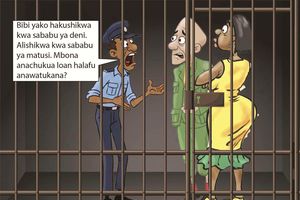
The auditor went on: “One more thing. I see a trip to Malindi by you and a lady called Jane. And another one to Diani by the Chairman, together with a lady called Awinja. Who is Jane, and who is Awinja?”
“These were benchmarking trips to other Saccos,” he said quickly. “In Malindi, I met Irimaka Sacco, while in Diani, I met Sabatam Sacco to exchange notes.”
“Thank you, CEO,” said the auditor calmly. “I understand benchmarking is important in the Sacco industry. I was asking who Jane and Awinja are.”
I also wanted to know. I knew an Awinja and a Jane, there were not Sacco members nor were they spouses of the two. One plus one was two. The CEO did not answer. The auditor typed for a long time.
“No,” said the CEO quickly.
“I can see the purchase of a hundred bags of cement, building wires, sand and blocks.”
“This must be an error,” said the CEO. “Perhaps you are confused.”
“No,” said the auditor calmly, showing him the documents.
“I will have to check with the finance manager,” the CEO said.
I needed no calculator. The Chairman and the CEO were both constructing their houses. I was pained. What pained me most was that I was not part of this project. After three hours of questions, the auditor finally closed his laptop.
“Thank you. I will compile my report for the AGM.” Then he stood up and left. The CEO remained seated, staring at the table.
After a few minutes, he said quietly: “This is not good. We need to find a way out of this.” I asked him how.
“Do not worry,” he said. “I will handle the auditor.”
“What about the story of cement, sand and blocks?” I asked. “Are we constructing something?”
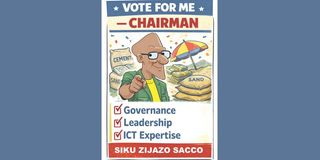
Then he looked at me. “That is why I want you to become Chairman. We will do a lot together. Put your name forward in the next elections.”
“Anyway, let me rush and get the auditor to kill the story,” he said, standing up quickly. “Governance is important,” he added as he hurried out.
At that exact moment, I made a decision. In the next AGM, I will be contesting for the Chairman’s seat. The current Chairman should prepare himself for a duel.