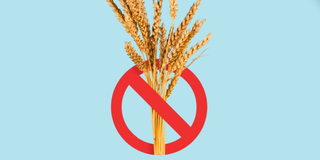
How long can you go without chapati, mandazi, or sugar in your tea?
For many Kenyans, the thought of a diet without wheat and sugar sounds more like a punishment than a wellness hack, but for those who have successfully completed the No Wheat No Sugar Challenge, the reward, they say, is worth the discomfort.
Before Millicent ‘Katunyu’ Mukina, 25, dropped carbs and sugar from her menu in January 2025, she weighed 97kgs.
“I was overweight, I looked much older than I really was, I lost all the flexibility I had when I was younger, and although I’ve always loved my body, I didn’t like what I saw in the mirror.”
Millicent 'Katunyu' Mukina before after she decided to change her diet to lose weight.
Photo credit: Pool
It didn’t help that she was body-shamed by friends and colleagues, left out of plans, and lacking in the confidence needed to wear trendy clothes like crop tops. The last straw was during an uncle’s wedding in December 2024.
“I was among the youngest of my cousins, but I looked like the oldest,” she says. “My aunt was planning a wedding in August of 2025, and I vowed to lose significant weight by then.”
0/30
Assessment Result
Developed by: Geoffrey Onyambu
This vow, coupled with the desire to bypass the history of hypertension and diabetes that ran in her family, led her to the No Wheat, No Sugar Challenge which she took for three months.
“I gave myself 90 days because it felt doable,” she explains. “I didn’t want to be overly ambitious by setting a shorter time frame, and I didn’t want a longer timeframe because that would make me relax and complacent.”
“I used to eat a packet of six queen cakes every day without fail, all of them in one sitting,” Ms Mukina says. “I would also buy myself a one kg cake every month, under the guise of trying different flavours.”
Her body, already accustomed to the carbs and sugars, didn’t take it kindly at first. She experienced withdrawal symptoms such as headaches, irritability, body weakness, dizziness, blurred vision and fatigue.
To deal with this, at first, she turned to sugar cane, but quickly realised that her body couldn’t differentiate between natural and processed sugar.
Millicent 'Katunyu' Mukina after she changed her diet to lose weight.
Photo credit: Pool
Eventually, she stopped having fruits as well, limiting her intake to one banana when her symptoms became too overwhelming.
“I also replaced the chapati with boiled sweet potatoes, cassava, arrowroots and pumpkin,” she says, adding that she paired the challenge with a One Meal A Day diet (OMAD).
“I would drink hot water with a pinch of himalayan salt (to balance electrolytes) in the morning, and water with chia seeds during the day, then have my no carbs meal in the evening.”
Conscious about her eating habits, she came to recognise the two types of hunger that drove her consumption: Emotional hunger, which was the cravings, and physical hunger, which was the body actually needing supplement.
“If the last meal you had was 12 hours ago, that is definitely physical hunger,” she says. “But if you want to eat cake and the last meal was two hours ago, that’s emotional.”
Besides the withdrawal symptoms, Ms Mukina’s body underwent some distinct changes.
“I lost about two kilogrammes within the first week, although I know now that that was water weight,” she says. “By week two, my sleep had improved so much that I was waking up feeling refreshed and energised.”
Today, she weighs 70kgs, having lost 27kgs. She feels lighter, more confident, and socially, she gets invited to everything. As it turns out, the diet wasn’t just a one-time thing. It has become a lifestyle.
Millicent 'Katunyu' Mukina before after she did the 90-day no wheat, no sugar challenge to lose weight.
Photo credit: Pool
His journey without carbs and sugar started in 2016, with a book called The China Study.
“The book follows two medical doctors who went to research on why the diseases of the Western world do not affect a lot of people in China. They came to one conclusion – it was the diet.”
Challenged by the contents of the book, the clergyman, who was already on a 21-day fast, decided to tap into the diet restrictions, taking it even further than the wheat and sugar to cut out red meat and dairy as well.
“Most people think they will die without some of these things, but sugar for example, is an acquired taste. We weren’t born with it. That means it can be dropped,” he says.
The first week was a struggle, but it was not long before the bishop’s sense of taste became so heightened and he began discovering natural sugars in other types of foods.
Substitutes for wheat and sugar
“When you are used to a high sugar content, it muffles your taste buds, but once you withdraw from it, your taste faculties become sharper,” he says.
“When you are on an unhealthy diet, your world of food is pretty limited, but not so with a healthy plant-based diet. I got into foods like arrowroots, plant-milk, broccoli, cauliflower, flour made from oats and even eggplants, which if you cook well, can end up tasting better than meat.”
With this shift, he saw a lot of improvements in his body.
“In less than three months I lost 20kilos and had to give out all my clothes because none of them fit anymore. I was also able to shake off some body discomforts including bloating and haemorrhoids, which happened within the first week, and acid reflux, which I experienced often, is also totally gone.”
He further attests to clarity of thought, increased concentration and energy levels, and a cleansing of the gut. To turn the challenge into a lifestyle rather than a short-term reset, he cites organised shopping.
“This is where you shop to cook,” he clarifies. “I encourage people to buy their foods from the market. And I know some can say that some of these things are costly, but so is medical care.”
Brighton Onyango is a clinical nutritionist who works with the Diabetes and Total Lifestyle Change program (DTLC) at Mama Lucy Kibaki Hospital.
Photo credit: Pool
Brighton Onyango, a clinical nutritionist who works with the Diabetes and Total Lifestyle Change program (DTLC) at Mama Lucy Kibaki Hospital, says that cutting out sugar and wheat does a number of things to the body.
“It regulates blood sugar levels, improves gut health (reduced gas and bloating), reduces hunger and cravings, encourages the body to rely more on stored fats for energy (leading to weight loss), and may help improve acne and reduce Polycystic Ovarian Syndrome (PCOS) symptoms in women.”
Those who would benefit the most from such a challenge, he says, include those who are overweight or obese, particularly those with central abdominal obesity which is characterised by a high waist circumference.
“Sugar and wheat contribute a lot of energy,” he explains. “Once you eliminate that, the body will switch to the fat deposits as a source of energy. In the long run, this reduces the excessive visceral fats, which in turn shrinks the waist circumference and eventually results in weight loss.”
“These could be people with prediabetes, Type Two Diabetes, Diabetes Mellitus, or even Gestational Diabetes,” he says.
“Because they need to regulate their blood sugar levels very keenly, cutting out wheat and sugar helps to increase insulin sensitivity and reduce blood sugar spikes.”
It is also a beneficial challenge for those diagnosed with fatty liver conditions, high blood pressure, high cholesterol levels, strong sugar cravings and women with PCOS.
Not all wheat and sugar is harmful, though.
“Whole wheat contains the nutrient-rich bran and germ components, which support digestion and satiety. Refined wheat (which includes pastries, white pasta, instant noodles, chapati and mandazi) is the main problem,” Mr Onyango states. “It lacks both these components and only contains starch, which causes problems like insulin resistance, increased cravings, and poor eating habits.”
Watch out for the added sugar (table sugar and that found in sweetened drinks and processed foods). The expert adds that while natural sugar like the one found in fruits is generally healthy, moderation is key. Of the biggest mistakes he has seen people make during the challenge, is removing wheat and sugar without proper replacements.
“Protein, healthy fats and fibre are essential,” he says. “Otherwise, people experience low energy, irritability and give up too fast.”
He also suggests gradual reduction rather than abrupt elimination, close monitoring (especially for diabetics), and patience.
“There are so many hidden sugars. Even carbohydrates are sugars, so as you eat, you need to understand how much sugar you consume, where it hides, and what your body actually needs.”