The Odyssey, the world’s greatest travel story
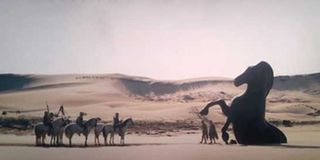

I have just watched Sir Christopher Nolan’s film version of Homer’s 3,000-year-old Greek epic poem, The Odyssey – what must be one of the most famous and perilous travel stories of all time.
I am old enough to have been at a grammar school in the UK when a study of the classics was thought to be the cream of educational programmes. My Latin master introduced us to Homer’s poem and to the much later Latin poem, The Aeneid, that tells a similar story but of a voyage by a Trojan fleeing the destruction of his city by the Greeks. I can still quote the opening words of the Aeneid: “I sing of arms and the man”. I remembered no words of The Odyssey but its title. As a teenager, I wasn’t impressed by what Homer wrote.
But Nolan’s film has excited me in a way no other film has. So, I downloaded a translation of Homer’s text. Here are its opening lines: “Tell me, Muse, of that man of many resources, who wandered far and wide, after sacking the holy citadel of Troy. Many the men whose cities he saw, whose ways he learned. Many the sorrows he suffered at sea, while trying to bring himself and his friends back alive.”


The journey took Odysseus 10 years. The film’s story remains fairly faithful to the original text. It is the story of the Greek king and hero, Odysseus, as he struggles to return to his palatial home on the island of Ithaca after the Trojan War. For the 10 years he encounters mythical creatures, capricious gods, dangerous temptations and violent seas. For the same 10 years, his wife, Penelope, fends off many suitors who believe he is dead. Their son, Telemachus, goes off in search for his father.
To be able to trace the places Odysseus went to on a modern map, I sought help from ChatGPT. I was reminded that The Odyssey is a work of myth rather than a historical travel log. However, it can be said that Odysseus travelled around the central Mediterranean – from north-western Turkiye across the Aegean, south towards north Africa, west to Sicily and southern Italy, around the Tyrrhenian Sea and finally east to the Ionian islands of western Greece.
I am certainly not alone in rating Nolan’s film highly; Rotten Tomatoes’ tomatometer – the most trusted measurement of quality for films – has given The Odyssey its highest score of 95 per cent. For me, it doesn’t have the romance of Casablanca or the personal relevance of Chariots of Fire (because when young I was a distance runner), the sexiness of All That Jazz, but it is a film on an epic scale, with the grandeur of its landscapes and its realistic portrayal of violence – particularly in its many shots of an open boat at the mercy of turbulent seas. It expresses vital values, too – perseverance, loyalty, guilt and humility.
After watching the film, I have been focusing on and reading about the number of techniques that made for its success. First, Nolan didn’t want his film to be computer-generated; he wanted everything to be real. For those incredible sequences on the boat, the production used the largest modern Viking longship, the “Draken Harald Hårfagre” – a ship built to ancient specifications and with traditionally-appropriate materials. It is a ship that had previously crossed the Atlantic Ocean twice and came with a sailing crew who became part of the movie.
The full cast playing Odysseus’s crew had to learn real rowing and sailing. They found out that moving a ship needs gruelling muscle power. Dipping a large oar into the water at speed could easily break ribs or pitch the rower overboard.
On a gentler matter, Anne Hathaway, who played Penelope, had weaving lessons with a specialist in Northern California, who taught her to work with ancient-style looms, at first a simple one and then the much larger one that we see in the film.
As a director, famous already because of his recent film, Oppenheimer, Nolan is meticulous in his approach – something that doesn’t always lead to the kind of creativity we see in The Odyssey.
For example, he insisted that Matt Damon, who played Odysseus, should grow a beard. It was important that he had a face that looked like it could withstand wind and water. In fact, there are no wigs in the film. We see no smooth and clean faces in the soldiers – but faces of sweating men enduring hardships and struggling to keep alive. Every piece of armour was aged by using chemical patinas, real abrasions and real impact. The costume team researched how fabrics degrade under maritime conditions, how saltwater affects bronze, how linen goes limp when worn over years and how dyes fade in the Mediterranean sun.
Nolan chose to be in Iceland in June for the underworld sequences, when there would be the light of the midnight sun over such a barren terrain. Nolan thought its cold, remote landscape would feel as far as possible from Odysseus’s Mediterranean home.
As for affecting the audience’s mood, Nolan didn’t want the usual orchestra that enhances the times of tension. Instead, the composer, Ludwig Göransson, developed the soundtrack around Greek instruments – bronze gongs, the lyre and the aulos flute. The score is distinctive and a more appropriate backing for the sounds of war, the encounters with mystical beasts and battles with storms at sea. For the alarm system used by the Trojans, the film uses large hanging bronze sheets.
Reflecting on how it was when watching the film, I realise it had only limited effect on my emotions. It didn’t bring me close to tears as, for example, Robin Williams did in Dead Poets Society, or strike terror as did Alfred Hitchcock’s Psycho.
In The Odyssey, it is the amazing spectacle that can take your breath away – its landscapes and actions. It lasts three hours, but it seemed to be only half that time.
Follow our WhatsApp channel for breaking news updates and more stories like this.


