I asked a bunch of college mates what Easter looked like in the ‘80s and ‘90s — back when God was feared, parents were obeyed, and happiness was homemade, usually with borrowed sugar and borrowed time.
The stories came tumbling out, like clothes from an old suitcase: wrinkled, mismatched, but full of character.
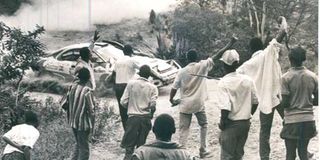
Let me start with the Safari Rally. Because Easter was never Easter without the dust, the roar, the thrill of it. It was the one time you were allowed — encouraged, even — to stand by the roadside all night, half-asleep, half-hungry, [because we were always in need of food] fully hopeful that you’d see something — anything — zoom past. And when Björn Waldegård’s car came screaming down the hill like thunder wrapped in headlights, that would be the highlight of your holiday.
We stood there, blinking, hearts pounding like the engines we couldn’t name. But we didn’t care so much about the cars and their engines, it was the names of the rally drivers that were sacred: Patrick Njiru, Shekhar Mehta, Joginder Singh, Michèle Mouton, Juha Kankkunen, Vic Preston Jnr. Our fathers and mothers, but especially our fathers, cherished the names that a child would be born nine months later, named Joginder.
You didn’t just watch the rally — it became an Easter tradition because the men, the fathers, created family traditions.
Then there were the Jehovah’s Witnesses. They came knocking during Easter like clockwork, dressed too formally for our dusty estates, clutching their booklets with determined smiles. We were children. We feared them, the way you fear people who don’t flinch. We were sure they had the power to turn us into something or nothing just by saying “Good afternoon.” The irony is, they were probably trying to save us from ourselves.
We went to watch the head-on-magic trick or the Air Force jets flying past, the closest thing we had to magic. For teenagers, it was the Omega One disco. It was an obsession. Even canes couldn’t cure it.
We called them discos then, not clubs, and they were sacred. Omega One disco was the thing that moved from Kisumu to Nairobi like the wind. Kosa uchekwe — was the slogan. In 1994, youth in Kitale caused chaos when the District Commissioner banned night discos at the ASK Showground. In Kisumu stadium, the wall was literally brought down by young people who refused to let it stand between them and Franco Luambo Makiadi, a Congolese singer that our fathers made us fall in love with even through adulthood. Real men, they made us believe, don’t listen to Electronic Dance/EDM — just Rhumba.
A friend’s father was a DJ in the 80s or 90s in Kitale and he’d vanish into the famed Blue Moon club with his friends on Friday, and he’d only resurrect on Easter Monday, smelling of sweat, music, and something you couldn’t name then. But now, we’ve come to understand was stubborn joy.
When men vanished on Good Friday, one questioned them. It was allowed. That was the world then.
Njia ya Msalaba (the Way of the Cross) was another memory. You followed the procession, not out of piety, but out of peer pressure and curiosity. In the village, if there was a crowd, you joined it. You never knew if you’d find food at the end. Or drama. Or a miracle. We followed mourners, circumcision parades, political rallies — whatever moved. Movement meant hope or just a way to kill boredom.
The rich kids, remember Easter in cream-coloured suits, always ill-fitting. The trousers were tight at the waist and comically baggy on the legs. They went to lunch in hotels, drank Fanta orange, and posed for photos that they are now holding as memories of their childhood.
Me? I grew up Seventh Day Adventist, so Easter passed me by. We never gave attention to Easter as other churches do. Neither did I join the village processions. My father, a licensed gun-holder who’d always tuck his two guns in his cargo pants, hated if we joined the “local boys” as he’d call them.
But outdoors defined the millennials and Generation X. We hated being indoors. We created memories the old-fashioned way. Outdoors was freedom — torn clothes, dusty feet, laughter you could hear from a distance away.
We started working. We cooped up our children indoors. We bought them smartphones and stocked pantries with snacks to beat the indoor boredom. I don’t even know when we started saying “pantry.” We started booking Easter vacations in expensive hotels but only to stay glued to our phones.
We work hard because poverty traumatised us. We hustle for the peace of knowing our children will never have to share a soda among four cousins during Easter. But in our striving, we forgot to pass down the magic to our children.
And I wonder — 30 years from now, what will our children say when someone asks them what Easter felt like? Will they speak of real, raw joy or just comfort?