When Sharon Njoki began planning a getaway last year, her heart was set on a game drive. But with the Maasai Mara looking too expensive, she started looking elsewhere. Her search eventually led her to Samburu, a destination she had never visited but had always been curious about.
“I wanted something fun, a road trip with great scenery and beautiful views,” she says. “I had heard of the national reserve in Samburu, and someone had recommended a hotel in the area, so it had been on my list for a while.”
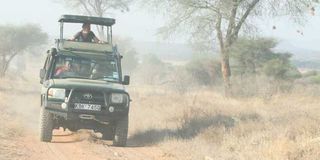
Over the Easter weekend, she and a friend joined a group road trip, setting off from Nairobi at 6am in a Land Cruiser with seven other travellers. After three pit stops and about seven hours on the road, they finally arrived.
“The common perception is that Samburu is this desert area with little life, so it was quite interesting to find that it is actually quite vibrant and lively,” says Njoki.
For Sharon Njoki, Samburu offered a fun, affordable adventure.
Photo credit: Pool
With only one agenda in mind, Njoki spent the evening and much of the following day doing exactly what she had travelled to Samburu for – game drives.
“The hotel I stayed in was within the reserve and quite a distance from the town itself, so I didn’t really get to explore Samburu outside it, but I really enjoyed the game drives.”
For Njoki, an entrepreneur at Prici Luxe, Samburu fit into her working budget. For Sh30,000 per person, the package she picked covered transport, accommodation, and meals on a full-board basis. She and her friend spent an additional Sh10,000 on miscellaneous expenses, including transport to and from the meeting point, breakfast on the first day of travel, and purchases at one of the curio shops along the way.
As more Kenyan travellers venture beyond the well-known tourist destinations, many are discovering that destinations in Northern Kenya have much more to offer than wildlife sightings alone. That was certainly the case for Monicah Wangari, who has been to Samburu twice now.
Monicah Wangari, a content-creator and hiker with Mona Trails, has visited Samburu twice.
Photo credit: Pool
“The first time was right before Covid-19 struck. I took a matatu with a friend from Nairobi to Isiolo, and then another to Archer’s Post. From there, we took a taxi to Sabache Camp, which is at the foot of Mt Ololokwe. That was around 3pm in the afternoon.”
From the campsite, the pair set off on a roughly three-hour hike up Mt Ololokwe, accompanied by local guides. After reaching the summit, they pitched camp, had dinner, and spent the night, rising early the following morning to catch the sunrise.
“It was a very foggy morning, so we didn’t manage to see the sun rising,” says Monicah, a hiker with Mona Trails. “But the views of the surrounding landscape were still visible, and they were stunning. It was amazing being up there.”
Although they did not encounter any major logistical challenges, Monicah recalls that the matatu from Isiolo to Archer’s Post was slow and overcrowded. On the return journey, they also had to wait nearly four hours for the matatu to Nairobi to fill up before departure. The two-day adventure cost about Sh15,000 per person for food and camping, while transport for the pair came to roughly Sh7,500. Her second trip was in May this year as part of a content-creation excursion sponsored by a local travel agency.
“I was excited when I saw that we would be going to Samburu National Reserve. It had been on my bucket list ever since I made a friend in 2024 who is passionate about wildlife. She always had fascinating facts about different kinds of animals, and her enthusiasm eventually rubbed off on me.”
Having done extensive research before the trip, Monicah was particularly eager to see a gerenuk, a rare antelope known for its elongated neck.
“There are five animals that Samburu is especially known for,” she explains. “There’s the long-necked gerenuk, the reticulated giraffe, whose markings differ from those of the more common Maasai giraffe, and the Grevy’s zebra, which also has a distinctive pattern. Then there’s the Somali ostrich, whose thighs are blue in colour, and the Beisa oryx, a big, grey antelope with long, straight horns.”
While the first day was largely spent travelling and settling into their lodge, the following morning delivered exactly what she had hoped for.
“We left the hotel at around 6am for a game drive. Over the next two hours, we managed to see all the Samburu specials, as well as a cheetah with her cub. We also got to see the Ewaso Nyiro River.” After returning to the lodge for lunch, the group headed out again later that afternoon for another game drive.
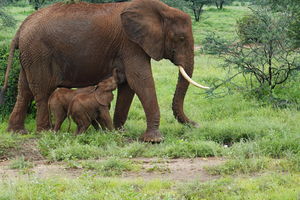
“This time we saw elephants, lots and lots of them, including their babies. I think the only other place I’ve seen such numbers was in Amboseli.”
As darkness fell over the reserve, the experience shifted from wildlife viewing to a cultural immersion. The group dined under the stars, listened to a local narrate the community’s origin story, and rounded off the day with a stargazing session through a telescope.
“The Samburu believe they came from Venus,” Monicah recounts. “According to the story, God created a ladder from there to earth, which is how they descended here.”
On the third and final day, the group drove towards the foot of Mt Ololokwe, stopping to take in the sweeping views before beginning the journey back to Nairobi.
“It’s a trip I would make again. My only advice would be to pack for hot weather, as the days get really hot, and to split your game drives into morning and evening sessions. Samburu National Reserve is not as big as the Mara, so a full-day drive doesn’t really make sense. You can do a morning drive, relax, or explore other activities during the day, then head out again in the evening.”
The return journey was largely uneventful, save for a routine police checkpoint where passengers were required to briefly alight and present their identification cards before going on their way.
Tracy Gakii, administrator at Tripple Tee Travellers, says interest in Samburu has been growing among young travellers seeking affordable weekend adventures.
Photo credit: Pool
For tour operator Tracy Gakii, the growing interest in Samburu comes as little surprise. As an administrator at Tripple Tee Travellers, she has organised four group trips to Samburu since late last year, with another scheduled for next month.
“When tour operators start going somewhere, you know there is something there,” she says. “It’s a fun destination with beautiful views. I particularly love the sunrises.”
Long before she began selling the destination to clients, Tracy had experienced it herself. She and three friends pooled money, hired a driver, and set off on a two-day, one-night road trip.
Ostriches at the foot of Mt Lolokwe in Samburu County on September 8, 2025.
Photo credit: Boniface Mwangi | Nation Media Group
The itinerary began with a visit to Mt Ololokwe before the group spent the night at a campsite overlooking the Ewaso Nyiro River. The following morning featured a game drive and a swim in the natural pool at Buffalo Springs within the reserve before they began the journey back to Nairobi. The trip cost between Sh12,000 and Sh15,000 each. However, Tracy notes that costs fall significantly when travelling in larger groups. Today, Tripple Tee Travellers offers a similar all-inclusive package for Sh9,500 per person.
“We use an overland truck, which most people love, and organise fun bonding activities during the journey,” she says. “These include music, dancing, and games.”
Beyond the increasing number of tour operators selling the destination, the growing interest is also reflected in Tripple Tee Travellers’ numbers. While the company’s first trip attracted about 30 travellers, the most recent one drew 40 bookings. The majority of their clients, Tracy notes, are young people, mainly Gen Zs and the younger millennials. “You don’t even need to ask for a leave from work to enjoy Samburu,” she urges. “We leave on Saturday and by Sunday evening, you will be back, ready for work on Monday.”