Picture this: For months, colleagues, family members, friends and fellow congregants have watched your growing baby bump. Then suddenly, you disappear from routine interactions. The next time they see you — perhaps months later — the first words out of their mouths are, “Congratulations.” Before you can even respond, they ask, “How is the baby doing?”
Although such questions are usually well-intentioned, they can reopen deep wounds for mothers who leave hospital without their babies. The pain of responding to these innocent enquiries is one that Phidiliah Kibirisho Mwendwa, Mactilda Makana and Dr Joyce Wangari Ngugi know all too well. For these three women, pregnancy loss brought grief, isolation and unanswered questions. Yet their journeys also reveal extraordinary resilience and, eventually, the joy of motherhood after heartbreak.’
In 2010, on New Year’s Eve, as fireworks lit up the sky and shouts of celebration rent the air, Phidiliah Kibirisho Mwendwa was enduring one of the darkest moments of her life.
At 29 weeks pregnant, she was in hospital delivering a baby boy who had died in the womb. “I discovered we were going to have a son when I was 20 weeks pregnant so I did the shopping for a baby boy. We even had a name ready and set the date when we were to baptise him. I attended all clinic visits, but unfortunately we lost the baby.”
Phidiliah Kibirisho Mwendwa.
Photo credit: Pool
From the delivery room, Phidiliah was admitted in a normal ward instead of the maternity section with other new mothers. The first challenge was dealing with breastmilk that was flowing uncontrollably, a painful reminder of her loss. “It wasn’t until my dad called me that it hit me that my baby was dead. “The hardest part was seeing how they handled him. He was put in a garbage bag. That is something I have never forgotten,” she says.
Returning to work did not make things easier. Colleagues constantly spoke about babies and pregnancies, while she spent many evenings alone, holding the new clothes she had bought for her son. “My husband would find me holding the baby’s clothes and quietly leave the room. He never pressured me. He simply supported my decisions, especially when I said I wanted to give out the clothes.” More heartbreak followed. After losing her first baby, Phidiliah experienced multiple miscarriages and failed pregnancies. One ended in a blighted ovum at eight weeks. Another ended when doctors could not detect a heartbeat. “It got to a point I gave up for eight months because I had lost four pregnancies.”
She felt it was pointless for her to be on contraceptives, so she stopped taking them. She got pregnant two more times, but the unfortunate thing happened again after 12 weeks. “I was in tears when I found out. I told the sonographer that I could not go back a sixth time to give my husband the bad news.”
Eventually, a friend encouraged her to seek a second opinion. The new gynaecologist spent two hours answering her questions and helping her process the losses. She became pregnant again, for the eighth time, and this time, things looked promising. However, at the 30th week of the pregnancy, she miscarried. “I asked the doctor, ‘will I ever be a mum?’” By this time, Phidiliah had retained two gynaecologists. One of them advised Phidiliah’s husband to take her for a nature excursion to rest. He also told them to avoid thinking about conceiving. While there, the couple conceived a ninth time.
“Instead of being happy, I sarcastically asked my gynaecologist if I should wait to start bleeding as usual, or for the baby’s heartbeat to stop. But he told me that I would carry the baby to term,” Phidiliah recalls. A week later, she began spotting. “I was put on bed rest, with visits to my gynaecologist every Saturday. My husband took it upon himself to drive me to hospital because I would often have an emotional breakdown on the way there.”
Doctors later discovered she had cervical incompetence, commonly known as a weak cervix. This time, the pregnancy was closely monitored. At 29 weeks and three days, she went into labour. “My daughter was 2.7kg but she was preterm, so she was taken to the incubator,” she says. Fourteen days later, a paediatrician finally placed the baby in her arms. “That was when it dawned on me that I was a mother.”
Today, Phidiliah is a mother of three. “For a long time, I believed babies die. Holding my first child was terrifying. But looking back, motherhood is something I cherish deeply.
A loss that could have been prevented
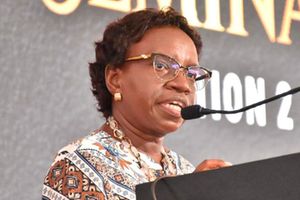
At 24, Dr Joyce Wangari Ngugi and her then husband were eagerly anticipating the arrival of their first child. The couple had planned for the baby to be delivered at a well-equipped hospital, but a last-minute decision by their insurer not to cover maternity services forced them to seek care at a midwife-run clinic — a choice she believes ultimately cost their baby’s life. “We ended up at a roadside clinic operated by midwives that did not have a NICU (Neonatal Intensive Care Unit).
Dr Joyce Wangari Ngugi.
Photo credit: Pool
My labour pains lasted seven hours and the baby swallowed meconium, was very weak and died minutes after birth,” she recalls. Dr Joyce was quickly transferred to Kenyatta National Hospital while her baby was taken to the mortuary.
“I had postpartum haemorrhage and a cervical tear deep in my cervix that required surgery. My breasts were already leaking milk so I had to be on medication.” When she eventually left hospital, her sorrow intensified as people started asking her about the baby. “I became selective about who I spoke to because I did not want to keep reliving what had happened. In the end, we asked our pastor to announce in church that people should stop approaching us with those questions,” Joyce tells Parenting .
The church announcement helped, but it did little to shield them from relatives who had known about the pregnancy and continued to ask about the baby. “My parents and siblings were excited because I was among the first in the family to expect a child. Many relatives had also seen me pregnant at family gatherings. Because I was in a multicultural marriage, some members of my husband’s family viewed the loss as a curse. We were required to visit both his maternal and paternal homes for what they described as cleansing rituals.”
Although Joyce attended the “cleansing,” her nine-year marriage eventually ended. “I remarried and I am now seven and a half months pregnant. I am looking forward to a safe delivery. I am determined to have a normal delivery but the doctors keep saying it will be automatic CS (Caesarean Section) because of my age,” says 38-year-old Joyce.
Although well-intentioned, comments such as 'congratulations' or questions such as 'How is the baby doing?' can reopen deep wounds for mothers who leave hospital without their babies.
Photo credit: SHUTTERSTOCK
A prayer answered after five miscarriages
When Mactilda Makana, 39, got married in 2008, she assumed motherhood would naturally follow. When her first pregnancy ended in miscarriage, she thought it was an unfortunate setback. But the losses kept coming. “The first and second pregnancies ended in miscarriage. During the third, I did not even know I was pregnant until I started miscarrying because I was still having my periods despite being three months pregnant,” she says. The heartbreak continued.
“The fourth pregnancy reached about seven months before I lost the baby. With the fifth, I carried the pregnancy to term and delivered a boy, but he died moments later.” By 2011, the strain had taken a toll on her marriage. “My husband and his parents told me they could not put up with someone who was unable to conceive and give birth to children,” she recalls.
After her four-year marriage ended, Mactilda turned to prayer. She also founded Double Blessings Foundation, which supports children from needy families and earned her the nickname “Mother of Many”. “At some point I kept asking why God had allowed that to happen to me, but I also moved closer to Him. I once wrote a letter to Jesus on a piece of paper begging for a child, and I took that letter to our priest.”
Unlike her previous pregnancies, Mactilda sought specialised medical care before trying to conceive again. “A friend advised me to start seeing a gynaecologist before getting pregnant so that doctors could determine what had been causing the miscarriages and stillbirths,” she says. When she conceived for the sixth time, doctors immediately placed her on strict bed rest. “I moved back to my parents’ home. I was told not to bend or strain in any way because of my history of pregnancy loss.” The pregnancy was physically, emotionally and financially demanding.
She attended frequent appointments and was referred to different specialists throughout the eight months. Then, on February 8, 2020, her long journey finally brought the outcome she had prayed for. “I was admitted for 10 days, but on the 10th day the babies stopped kicking. An ultrasound showed that the amniotic fluid was gone, so I had to undergo an emergency delivery,” she recalls. The twins were born prematurely and immediately placed in incubators. One weighed 900 grammes and the other one kilogramme.
“The joy I felt when I realised I was finally a mother could only be expressed through tears,” says Mactilda. Today, her twin daughters are in Grade One.
Dr Ong'ech Odero, the chief medical specialist in Obstetrics and Gynecology Nairobi Reproductive Health services.
Photo credit: Pool
Miscarriages, also called spontaneous abortions, are common, especially in the first trimester. This is according to Dr Ong’ech Odero, Chief Medical Specialist in Obstetrics and Gynaecology at Nairobi Reproductive Health Services. “Many miscarriages happen because the embryo or foetus is not developing normally, and often there is nothing the pregnant person did to cause it,” he tells Parenting . According to Dr Odero, common causes include chromosomal abnormalities, hormonal disorders, chronic conditions such as diabetes and thyroid disease, uterine abnormalities, cervical insufficiency and certain infections.
“The embryo may have too many or too few chromosomes, preventing normal development,” he explains. He adds that the risk increases with maternal age, particularly after 35, while smoking, heavy alcohol consumption, recreational drug use, exposure to toxic chemicals and severe malnutrition can also increase the likelihood of miscarriage. He, however, emphasises that normal activities such as exercising, working, having sex, everyday stress and minor falls do not cause miscarriage. “Seek medical care urgently if there is a heavy bleeding, severe abdominal pain, fever, dizziness or fainting during pregnancy,” Dr Odero advises.
For counselling psychologist Ann Arithi Munyao, whether a pregnancy ends in miscarriage, stillbirth or neonatal death, the grief remains profound. “This is one of those losses that society rarely acknowledges or validates. We call it disenfranchised grief because many people do not fully understand what the bereaved parent is going through,” she says.
Well-meaning comments such as “You can have another baby” can be especially painful. “Any child lost is one too many. Every child counts and there is never a replacement,” says Ann.
She notes that many women continue to carry the emotional weight of pregnancy loss long after therapy sessions have ended. “It is a very sad state and many mothers blame themselves. They believe they should have done something differently.” Ann urges people to be more sensitive when responding to pregnancies and pregnancy loss. “It is really difficult to talk about a lost pregnancy because people often feel judged. Even doctors do not always have immediate answers, and medical explanations may not make sense to a grieving mother,” she says.