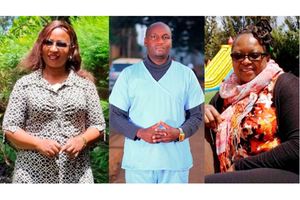
For generations, women were told that fertility begins to decline sharply after the age of 30 and that motherhood should happen early. Yet an increasing number of women are becoming mothers in their late 30s and 40s, while others are choosing to delay parenthood altogether.
The trend is reflected globally. In the United States, nearly half of all women now reach age 30 without having had children, while birth rates continue to fall. According to the US Centers for Disease Control and Prevention, the fertility rate fell to a record low of 53.1 births per 1,000 women in 2025.
In Kenya, too, changing career paths, financial priorities, relationships and personal choices are reshaping traditional timelines for motherhood. But while more women are having children later in life, conversations about pregnancy after 35 remain clouded by myths, fear and social pressure.
Nancy Wanyonyi, 43, remembers how in her late 20s, questions about marriage and children followed her everywhere.
“At 28, people kept asking me when I would get married and have children. I had almost given up on marriage but I was considered to be in my prime age,” she says.
The pressure intensified after her brother’s death in 2006, as it left her as the only child in the family. “People would tell me, ‘you have to bear children to continue the family lineage.’ My parents did not pressure me as much as other people did.”
Nancy met her husband in 2017 when she was 34. Two years later, she became pregnant with her first child. “For my first pregnancy, I did not struggle in any way,” she recalls. “The journey was smooth, although at around two months, I developed back pain. I got a checkup but nothing alarming was found.”
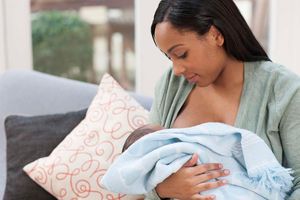
Medical experts emphasise that pregnancies for women over 35 are not automatically dangerous, and often just require closer monitoring.
Photo credit: Shutterstock
She also experienced occasional spotting, which doctors managed with medication. Her first child was eventually delivered through a caesarean section after the placenta failed to detach properly. In 2020, aged 38, she conceived again but later miscarried.
Doctors advised her to consider fertility medication because of her age, but she was uncomfortable with the idea.
A few months later, she became pregnant again and welcomed her second baby in 2021, aged 39. “The only issue I had was carpal tunnel syndrome. My wrist tissues would swell and compress the nerves on my hands, making them numb and weak. This was brought about by hormonal changes and fluid retention,” she says.
“Immediately after delivering, it disappeared.” By 2025, aged 42, Nancy was expecting her third child, and once again, she experienced no major complications.
“After I gave birth, I was discharged within three days. I feared going to the hospital because I thought something would happen to me or my baby. I knew of people who went to give birth but never made it out.” Nancy says that any pregnancy poses serious health risks to the mother no matter her age.
She adds that contrary to what society says, having children later in life can offer children a level of stability that eludes some younger parents. “When I see a woman getting a child in her late 30s, I see a mature woman who knows what she wants and is capable of starting and taking care of a family, both financially and psychologically.”
While Nancy's pregnancies were largely uncomplicated, Christine Ngigi's path to motherhood involved repeated loss, difficult pregnancies and years of uncertainty. Christine had her first child at 38 and her second at 41.
“It was not by choice. I just did not have a stable partner in my 20s and early 30s.” When she got married in 2019, she conceived almost immediately, but she was not able to carry it to term. “At first I still had regular periods, although scans confirmed that I was pregnant."
Older mothers often report feeling more mature, financially secure and emotionally stable than many younger parents.
Photo credit: Shutterstock
At around 16 weeks, doctors told her the pregnancy was not progressing as expected. Her gynaecologist prescribed medication to boost her progesterone levels, but a few weeks later, a different gynaecologist at a different hospital confirmed that the baby no longer had a heartbeat.
A year later, Christine conceived again. This time, she sought medical care immediately she found out. Still, she developed hyperemesis gravidarum, a condition marked by severe nausea and vomiting during pregnancy.
At 37 weeks, she suddenly developed high blood pressure, forcing doctors to perform an emergency caesarean section.
A few months later, she conceived again but miscarried again. At the time, her firstborn was about three years old, and the family had relocated to the United States because of her husband’s work.
Adjusting to life abroad while navigating pregnancy complications was difficult, especially because of the high cost of healthcare.
Because of her history of miscarriages, doctors closely monitored the pregnancy but were cautious about prescribing medication too early.
“They told me pregnancies are different and they could not just administer hormonal drugs,” she says.
When she was around five weeks pregnant, she experienced spotting and at the hospital, doctors couldn’t detect the unborn baby’s heartbeat.“They did not want to tell me directly that I was losing the baby, but I miscarried again at around eight weeks.”
Three months later, aged 41, Christine conceived again. This time, doctors were especially cautious because she was over 35 and had experienced two miscarriages. Her pregnancy was classified as high-risk because of what doctors termed “advanced maternal age".
She eventually gave birth to her second child. “Funnily, my progesterone levels were stable this time, and I did not require supplements.” Apart from nausea and vomiting, which she says were manageable, the pregnancy progressed relatively well.
“I didn’t like the term ‘advanced maternal age.’ It sounded as if I was being criticised for having a baby at that age.”
Changing career paths, financial priorities, delayed marriages, and personal choices are rapidly reshaping traditional timelines for motherhood.
Photo credit: Shutterstock
Friends and colleagues always asked her why she had delayed marriage and motherhood. One day, while attending an interview for a promotion, one of the panelists asked her why she was asking for so much money yet she did not have children.
Still, she believes motherhood happened at the right time. Christine believes becoming a mother in her late 30s gave her a sense of stability she may not have had in her 20s. “Now I am sure of what I want in life,” she says. “I am stable financially and able to give my children the best.”
Still, she acknowledges the challenges that come with parenting later in life, although she believes every woman’s journey is different. “Some of my classmates and peers who had children in their 20s are now free to live their lives because their children are grown. For me, I cannot stay out late because of the children.”
Purity Wambui's experience was different. Motherhood arrived unexpectedly when she had already assumed her childbearing years were behind her. She never imagined becoming a mother to twins at the age of 38.
When she conceived, Purity was on contraceptives and had only skipped them for only two days. “The pregnancy came as a big shock to me, especially when I learnt that I was carrying twins. I wondered whether I would be able to carry the pregnancy to term and whether the children would be healthy. I had heard people say that children born to older mothers may develop complications like cerebral palsy.”
She was also concerned about the large age gap between her older children and the twins. “I did not know how I was going to care for the twins since I was a single mum and did not have a stable job.”
The pregnancy itself also came with complications. “My blood pressure would sometimes go high and other times, low,” she recalls.
At 24 weeks, doctors advised her to stop working and go on bed rest. The babies were both in breech position, so there was no chance of giving birth normally. “The doctors booked me for a caesarean section at 38 weeks because the babies were also big.”
For Purity, motherhood in her late 30s felt different. “When I was younger, I was naïve. I did not know much about motherhood. I did not even know how to recognise symptoms when my children became sick. When I got my twins, I was more mature and had learnt a lot about motherhood,” she says.
Still, the scrutiny from those close to her was intense. “Some would ask why I got pregnant yet I was a single mother and getting older.”
While Purity's experience reinforced her belief that age should not define motherhood, medical experts note that fertility generally declines with age, although many women still conceive naturally in their late 30s and 40s.
Purity Wambui, 41, is a mother of three who gave birth to her twins at age 38.
Photo credit: Pool
So what does science actually say about pregnancy after 35?
Dr Felix Oindi, a consultant obstetrician and gynaecologist at Aga Khan University Hospital, attributes the shift to several social and lifestyle changes. “Many women today are pursuing higher education, building careers, seeking financial stability or waiting until they feel emotionally and socially ready for motherhood.
Urbanisation, changing relationship patterns, delayed marriage and better access to contraception have also contributed to the trend. “In addition, advances in fertility care and growing awareness that healthy pregnancies are still possible later in life have given many women more confidence to delay childbearing,” he says.
Still, conversations around pregnancy after 35 are often filled with fear, much of it fuelled by public perception.
Dr Oindi says while some concerns are valid, many are exaggerated or presented without proper context. “It is true that fertility gradually declines with age, especially after 35 and more noticeably after 40,” he explains. “The risks of miscarriage, high blood pressure in pregnancy, gestational diabetes, chromosomal abnormalities and caesarean delivery also become more common with increasing age.”
However, he says that women over 35 can still conceive naturally and have healthy pregnancies. “This is especially if they are otherwise healthy and receive good antenatal care,” he says. He also notes that the term “highrisk pregnancy” is often misunderstood.
“Pregnancy after 35 is not automatically dangerous. In many cases, it simply means the pregnancy may require closer monitoring, not that complications are guaranteed.”
Some common risks associated with later pregnancies include reduced fertility, miscarriage, ectopic pregnancy, high blood pressure in pregnancy, gestational diabetes, placenta-related complications, premature delivery and chromosomal conditions such as Down syndrome.
Medical experts emphasise that pregnancies for women over 35 are not automatically dangerous, and often just require closer monitoring.
Photo credit: Shutterstock
Dr Oindi stresses that many of these risks can be managed or reduced with proper medical care and preparation.
He also encourages healthy lifestyle habits, including maintaining a healthy weight, exercising regularly, avoiding smoking and excessive alcohol consumption, taking folic acid before conception and attending antenatal clinics early and consistently for any woman planning pregnancy later in life. “A healthy 39-year-old woman can sometimes have a smoother pregnancy than a younger woman with poorly controlled medical conditions,” he says.
He advises women above 35 who are trying to conceive to seek medical advice after six months of trying unsuccessfully, rather than waiting a full year. “We are increasingly recognising the role of male fertility factors,” he says. “Reduced sperm quality linked to smoking, obesity, chronic illness and unhealthy lifestyles is becoming more common.”
Because of this, he says fertility should be approached as a couple’s issue rather than a woman’s issue alone. He believes the most important thing is balanced information rather than fear-driven narratives.
Sabah Salim, a prenatal and postnatal massage therapist, is keen to quash the many misconceptions surrounding fertility and age. “There is this belief that once a woman reaches age 30, she can never have a baby. But we know that as long as someone is physically fit, eating well and balancing their hormones, it is possible. They may face challenges such as pre-eclampsia, depression, diabetes or a higher risk of miscarriage, but these conditions can be managed with medication, lifestyle changes and even prenatal massage. People also assume older women cannot breastfeed. That is not true.”