A farmer in Kiambu delivers a day’s green leaf to the tea buying centre, and the scale reads 14 to 20 per cent less than he or she actually brought. That is one small corner of a shadow economy the government now says costs Kenya more than Sh800 billion a year.
The same networks that shave weight off a farmer’s tea also sell the pesticide that may not protect his crop, the alcohol that may not be safe to drink, and the fertiliser that may be nothing more than filler in a branded bag.
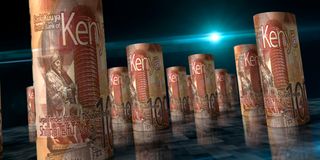
A new government assessment puts a figure on the damage. The National Assessment of Illicit Trade in Kenya, launched in Mombasa on Wednesday, estimates that illicit trade drained Sh826 billion in its 2018 baseline, a figure that crossed Sh1 trillion in later years.
In that baseline year, losses equalled 9.3 per cent of the gross domestic product (GDP). They included Sh153.1 billion in forgone government revenue, 44,198 jobs and Sh123 billion in investment that never arrived.
Many suffer when such vices take root. Among them are manufacturers. The report says affected firms lose an average of 25 per cent of their market share, roughly Sh3.9 million a year each, and report a 25.5 per cent drop in employment. In other words, a legitimate factory that pays its taxes is undercut by a rival that does not, and the workers lose their jobs.
Consumers also pay the price. Dr Robi King’a of the Anti-Counterfeit Authority warned that up to 60 per cent of some alcohol categories and up to 89 per cent of some pesticides on the market may be counterfeit or illegally repackaged.
Another victim is the State pays too. For example, the report says false customs declarations accounted for Sh10.83 billion in detected goods in 2025/26, nearly 80 per cent of the value of all detected customs goods. Total customs detections, it said, reached Sh13.58 billion, with Sh2.27 billion in revenue liability.
Anti-Counterfeit Authority (ACA) Executive Director Robi King’a during an interview at his office on June 10, 2026.
Photo credit: Francis Nderitu | Nation Media Group
One is about the Lwakhakha border post, where 40,971 litres of ethanol were found hidden in modified tankers declared as molasses. The haul was worth Sh26.9 million and protected more than Sh20.5 million in tax.
At Taveta Holili, restricted items worth Sh10.69 million were found hidden in consignments while in Isebania, officers intercepted explosives and cyanide.
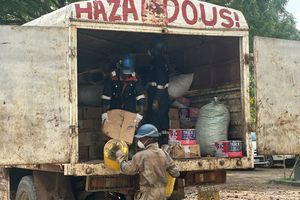
At the Mombasa Port, the Anti-Counterfeit Authority and the Kenya Revenue Authority (KRA) stopped a 23-tonne consignment of counterfeit pesticides. In the same breath, counterfeit goods worth over Sh200 million were destroyed at Athi River.
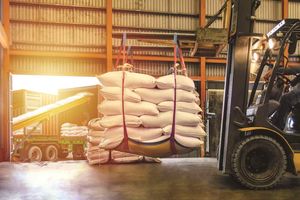
In Shimanzi, a Sh100 million cooking oil operation was uncovered while in Kariokor, 190,000 counterfeit fertiliser bags were seized.
The report also flagged illicit alcohol with fake excise stamps in Nyeri, and government medicines diverted to unlicensed chemists in Kajiado.
Money laundering was also flagged, with the report citing a Financial Reporting Centre case involving about Sh2.88 billion in transactions through a tea exporter, an example of how dirty money can move through legitimate trade.
The report concludes that agency-by-agency raids are not working. It calls for a united multi-agency approach, intelligence-led enforcement, tighter traceability and authentication of products, and action against the money and beneficial owners behind the networks. Dr King’a added that digital enforcement is needed because more counterfeits are now sold online.
Business groups are pushing the same line. The Retail Trade Association of Kenya wants KRA, the Anti-Counterfeit Authority, the Kenya Bureau of Standards and police to agree a joint enforcement plan with a lead agency and clear timelines.
At the symposium where the report was released, the principal secretary for industries said Kenya must become a manufacturer and not just a market.