Premium
No soft life: Childhood joys CBC kids may never know
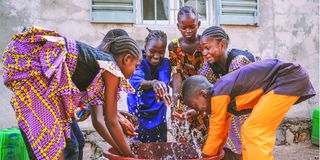
We grew up with scraped elbows and empty pockets but full lives.

What’s something you did growing up that today’s generation will never understand?
I would say the fact that my generation went outside when bored and just did stuff.
We didn’t really know the term boredom.


We had no footballs, so we made them from layers of plastic bags, tied tight with string or yarn stolen from our mothers’ knitted seat covers — or from tattered knickers, for those who wore them. You used what you had.
You’d be six or seven years old, out in the world, learning its rules the hard way. We learnt to think fast, improvise, or make do.
The boys raced cars they had made of wire, wood, and vipekee— what the Competency-Based Curriculum (CBC) generation calls bottle tops, and requests their parents to source for them.
In our times, if you dared tell your mother to help you get anything, she’d just throw a blistering stare— or she’d mutter one word, low and cutting - and you’d be off, ashamed for even asking.
And with that, they taught us from an early age to do it for ourselves — be it to scavenge bottle tops from garbage to make our toys.
You sourced materials, built your car, tested it, and entered the race. You won, you lost, and you fought if someone pissed you off during the race.
Real fights. Fists and scratches. Blood drawn but forgotten by the next day. No grudges. No therapy. Just the unspoken pact that life goes on. That you live to fight another day. Losing didn’t break you. It sharpened you.
The rich children — if they could even be called rich—the ones whose parents were a level higher than peasants; the ones whose fathers had cars and houses, had red leather sofas, and had the signature cowhide coffee tables —played with the poor.
No one cared who had what, because outside, barefoot, sweating in the heat, everyone was equal.
We learned how to share because nobody had enough. Life then wasn’t really about showing off.
Vanity was a word in an old English dictionary, and no one practised it, not like this younger generation that flaunts their parents’ wealth now.
A friend who grew up in Nairobi’s Jericho estate in the ’80s told me how a neighbour whose house had a TV would pull back their curtain just enough so ten children could stand up on stones from outside and watch the TV from the window.
We learned patience. Shoes came at Christmas. Chapati once a year. And we waited.
Not everything was now-now. Gratification had to earn its way.
We grew up with scraped elbows and empty pockets —but full lives. We knew the rules of the street. We lived outside, not behind locked gates and high walls. Life was the teacher.
It pushed us to want to keep going outside and look for more.
Unlike us — and our parents— we adopted new parenting styles.
Now? We raise our children like fine china. We peek at them every ten minutes to check if they’re still alive. We don’t let them out of sight. Maybe it’s insecurity. Maybe it’s something deeper. A fear.
We plan our children’s play — and for how long.
I keep thinking about what this will all mean in the future.
In a few years, there’ll be grown men and women —some of them 33— still curled in the same childhood bed, dreaming of a life that never arrived.
They’ll work when it suits them and sleep when it doesn’t. And they’ll think it’s fine, because we never told them otherwise.
I sigh (to myself) because soon we will start enduring how-did-our-children-become-trust-fund-babies discussions.
But we all won’t be wealthy enough to support them. Dependency will be many parents’ greatest cause of distress. There is also a reason why these children will cling on , financially and emotionally , despite being adults.
We, the parents of this generation, fear showing our children that we are not really wealthy.
We’ve made them believe we’re rich by showing off stolen, fleeting wealth —so they think there’ll always be something to fall back on.
The old gospel — have your own job, your own life, never depend on anyone —has become a whisper, if it’s spoken at all.
Caroline Njun’ge’s column resumes on May 11.