For years, creatine was treated like a muscle-bulking secret reserved for men, whispered about in weight rooms and avoided by women wary of looking “too big.”
But as ideas around women’s bodies shift, more of them are discovering that this supplement isn’t about bulk at all. It is about strength, stamina, recovery and confidence.
The women who consume it say they are not chasing bulk or bravado, they simply want to train better and feel stronger. They say creatine helps them lift heavier weights and enjoy their workouts more.
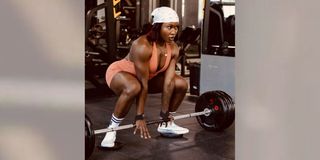
For years, creatine was treated like a muscle-bulking secret reserved for men.
Photo credit: Shutterstock
Nutritionists note a shift in the questions being asked, and gym trainers agree that long-held fears around women and supplements are beginning to soften.
Cynthia Omondi, a fitness enthusiast, started using creatine in 2022. She wanted to become more energetic and enjoy her workouts more.
“As a newbie in the gym, I was having trouble completing my daily workouts, so due to fatigue and all that, I was curious if it would work for me,” she says.
Ms Omondi had been training for about a year, although she admits she was not consistent.
“I needed to build lean muscle, so I wondered whether I could manage progressive overloads if I took the supplement, and it worked for me. It also increased my strength and endurance during the workouts.”
Her curiosity extended beyond hearsay. “After I heard about it, I did my own research. Also, I consulted some of my trainers who gave me positive feedback.
“Using creatine as a pre-workout enabled me to lift heavier than usual, and I was also able to complete my reps. Before, when doing leg exercises, I would lift a maximum of 12kgs, but after I started using creatine, I could go up to a hundred plus kilos.”
Beyond strength, creatine also changed her mindset.
“It gave me confidence. I can endure intense workouts, and that has helped me meet my goal of adding lean muscle.”
Cynthia Omondi, a fitness enthusiast during her training session in Nairobi.
Photo credit: Pool
“When I started going to the gym, I was around 92kg. When you build lean muscle, you also lose fat. I lost some kilos and currently I weigh around 75 kg. I’ve achieved my goals because of endurance.”
Anne Atieno, another fitness enthusiast, first heard about creatine while watching fitness content online.
“What made me curious was that almost every credible athlete was using it and talking about it,” she says.
“In fitness, there is something called hitting a plateau, and that’s what happened. I needed something to boost my performance. My strength has now improved. I can push heavier weights,” Ms Atieno says.
“What stood out for me was how normal it felt. I didn’t suddenly look bulky. I expected bloating, but that was temporary,” she says.
For Ann, creatine has been a gradual enhancer, not a magic fix.
“I know I am capable of lifting a certain amount of weight or more with or without creatine. Nguvu itakuja tu polepole.”
Caren Namenya, a coach, fitness trainer and competitive bodybuilder , works with both men and women seeking various health and fitness goals.
“I had been in training for one and a half years before that. So when I decided to go a level higher I started using creatine,” she says.
Ms Namenya says that even without products like whey protein or glutamine, creatine alone can play multiple roles.
“It gives you strength, it gives you power, it helps with muscle building, it helps with recovery…creatine is a basic supplement that anyone can use.”
The impact, she adds, is noticeable when you use it consistently.
“Physically, you will get stronger in your workouts because creatine is bound to generate quick energy.”
“You will have more strength and more power to go a little heavier than before, and you will have a bit more stamina during your workouts,” she adds.
However, Ms Namenya is quick to state that the changes are not instant.
Caren Namenya is a coach, fitness trainer, and a bodybuilder.
Photo credit: Pool
“If you take it consistently, after one to two weeks you should be able to notice a difference.”
“Most people don’t understand the difference between supplements and steroids. Supplements are there to help you with a little bit of what your food may not provide, or to give you a boost if you haven’t eaten and need energy to start your workout,” she says.
“Creatine doesn’t make someone bulk up. It just increases water retention in the muscles, which can make someone appear slightly bigger, since the muscles will look fuller.”
“Some people say you will get fat if you take creatine. That’s not the case. It only makes you look a bit fuller, which, if you train intensively, is not a bad thing, because your muscles are well hydrated.”
Caren Namenya is a coach, fitness trainer, and a bodybuilder.
Photo credit: Pool
“If someone is not used to a supplement, when you start using it, you may experience a bit of bloating or a running stomach, because you’re introducing your body to something new,” she says.
“After a while, your body adjusts and you’re good to go.”
For seasoned gym-goers, the response tends to be faster and more pronounced.
“If you’ve been training consistently for more than six months and feel constantly fatigued or slow to recover, creatine is a good option. You can take it on both training and rest days.”
Lucy Mwangi, a clinical nutritionist specialising in sports nutrition , says creatine is shifting from a gym-only supplement to a broader wellness tool.
“Creatine is a power source to enhance our energy by enhancing functionality and also longevity. In the past, women were advised to shrink or stay thin, but not anymore. Now the focus is on building lean muscle for strength, functionality and long-term health.”
Ms Mwangi defines creatine as a natural compound made up of amino acids namely glycine, arginine and methionine. She says creatine supplies energy to the brain and to the muscles, and is primarily stored in the skeletal muscle.
She explains that human bodies naturally produce creatine, but women tend to have less.
“The kidney and the liver are the key organs involved in the production of creatine. Women normally have 20 to 30 per cent less of the natural creatine produced in their bodies compared to men, so supplementation helps bridge this gap. When it comes to dietary sources, we normally find it in fish, chicken, and red meat.”
Mwangi Nutrition fitness Founder Lucy Mwangi in Nairobi on January 28, 2026.
Photo credit: Lucy Wanjiru | Nation Media Group
The recommended daily intake, Ms Mwangi says, is three to five grams.
“For people who are sensitive, we advise starting with one and a half to two grams in the first week, then gradually increasing.”
“During the luteal phase when progesterone and oestrogen are high, the body becomes more catabolic. Exercise can feel much harder,” she explains.
“Then there is the follicular phase, which is the low hormone phase. During this phase, the body has adapted and can utilise carbohydrates as energy. Whatever exercise one is doing to strengthen their body, the main source that supports it is creatine. Creatine will support activities that require heavy lifting because of the hormonal shifts we experience during this time,” she adds.
The nutritionist says that during the late luteal phase, creatine helps brain function.
“During this period there is deprivation for most women. Brain acuity is reduced. Creatine acts as a buffer for brain energy. It provides a neutral energy resource for the brain so that the person can adjust during this phase.”
Women who consume creatine say they simply want to train better and feel stronger.
Photo credit: Shutterstock
“During these phases, oestrogen levels go way lower. There is decreased bone mineral density leading to bone loss, osteoporosis, and sarcopenia, which is muscle wasting. Creatine comes in to provide an immediate non-carbohydrate source for ATP (adenosine triphosphate) generation and energy.”
“There will be some weight change, but not that much. During the first few weeks, there will be no change. But during the third to fourth week, that’s around 21 to 28 days, there will be a noticeable change. You will be lifting more than before, and there will be a slight increment in your weight because this is when muscle saturation happens.” Ms Mwangi says.
When it comes to concerns of safety, the nutritionist says that creatine is suitable for all.
“But pregnant women, especially those at high-risk, should consult an obstetrician or gynaecologist. When we take supplements in overdose, or when we haven’t tested for deficits, we might predispose ourselves to toxicity. It is necessary first to screen. Also, for people with kidney or liver issues, consult a health practitioner, because these organs naturally produce creatine.”
She debunks common myths around bloating and bulk. “Bloating only occurs when creatine is taken in excess. It draws water into muscle cells, not under the skin.”
“For long-term use, we have not seen negative clinical markers. Creatine supports lean muscle mass, bone density and overall wellness, particularly for women as they age.