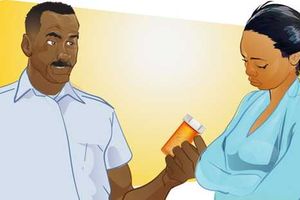
Jane and her husband David walked into the Sexology Clinic, a frustrated couple. Their relationship had been strained for nearly six months. Jane carried serious accusations against her husband, claiming he had caused traumatic injury to her genitals during sex.
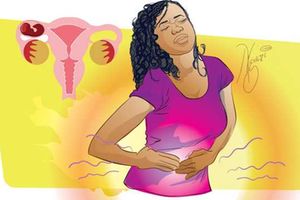
The trouble began after their last sexual encounter. Jane developed wounds she initially thought were bruises from vigorous activity. The bruises became painful, forming blisters. She experienced unbearable burning pain, especially when urine touched the wounds.
Healing took more than a month, and Jane vowed never to have sex with her husband of eight years again unless he promised to be gentle. David, however, vehemently denied the accusations.
“But that is now water under the bridge, doctor,” David explained when they came to the clinic six months later.
“Nature has proved me right. The wounds are back despite six months of abstinence and false accusations.”
He smiled awkwardly, avoiding Jane’s gaze.
“You talk as if you are happy to prove a point. Does it excite you that I have recurrent painful wounds in my private parts? You are a sadist! I regret marrying such a man,” Jane interjected, tears streaming down her cheeks.
I quickly intervened to calm the situation and began by enquiring about their medical and sexual history. I then examined Jane’s wounds. There was a blister and an open sore—classic herpes simplex lesions. I took a swab for confirmatory testing.
Herpes simplex is a virus, the same one that causes cold sores on the lips and around the mouth. When it affects the mouth, it is often dismissed as minor. But when it affects the genitals, it brings deep anxiety.
The virus is highly contagious, usually spread when wounds come into contact with the skin, lips, or genitals of another person. It can occasionally spread even without visible wounds. Once infected, a person remains a carrier.
Under certain conditions—such as fever, stress, weather changes, or reduced immunity—the infection flares up, producing blisters that burst into painful sores. In the genital area, urine contact worsens the irritation and pain.
“Did you say this infection is for life? So it is like HIV, and I will live with it forever? And it is my husband who infected me? Will it damage my womb? Should I ever have sex again?” Jane asked, overwhelmed, tears rolling down her cheeks.
Herpes spreads easily and can remain dormant for long periods before flaring up. It is often impossible to pinpoint the source—it could be sexual transmission, a kiss from a parent, or even a casual peck from a friend.
While it is a nuisance, it should not be equated with HIV. Other than cold sores on the lips or genitals, herpes does not damage the body.
The exception is in cases of weakened immunity, such as HIV or cancer, where the disease can be unusually severe. Pregnant women with active infection also require special care, as transmission to the newborn can be devastating.
Under normal circumstances, however, flare-ups can be controlled with medicine. Antiviral drugs suppress the virus, limiting its effects and preventing frequent outbreaks, though they do not eliminate it.
When wounds appear, they are managed with cleaning, anaesthetic creams, and painkillers. Healing is usually quick, and life need not be disrupted.
“So can you tell my wife that we are free to have sex? That I am gentle and cannot injure her?” David asked with renewed confidence.
“Well, I have no proof of your gentleness!” I joked, and we all burst out laughing.
On a serious note, sex can resume once the affected person is pain-free and the wounds have dried. Jane and David cared for the sores diligently.
Within a week, Jane was symptom-free, and after six months of agonising abstinence, the couple finally resumed intimacy.